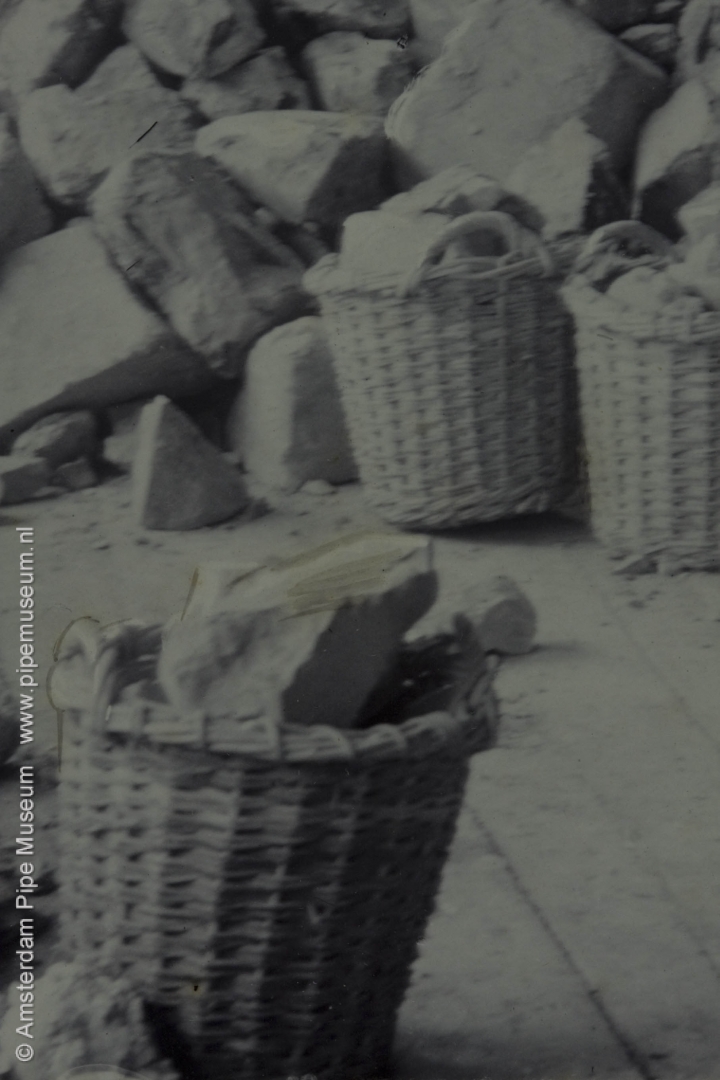
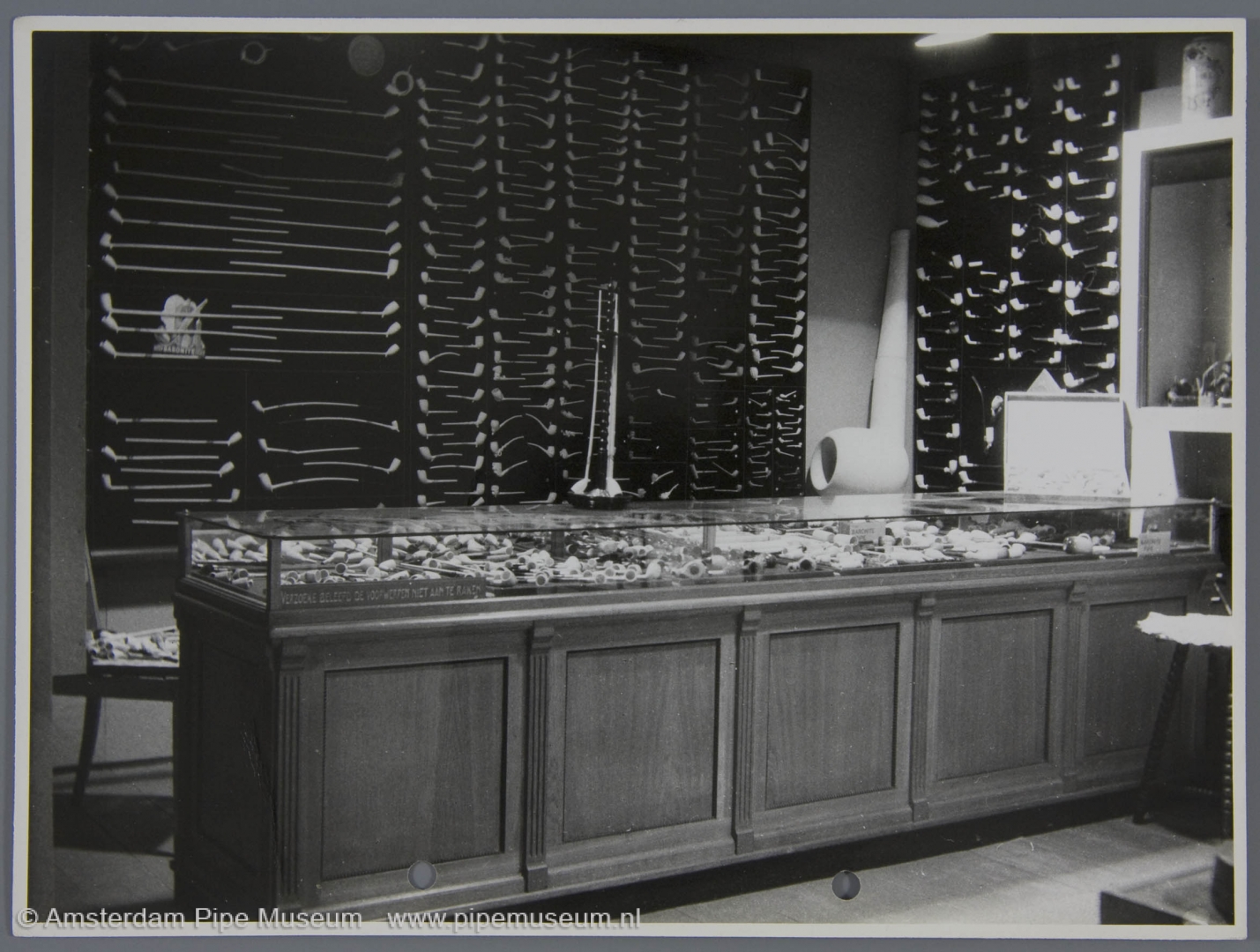
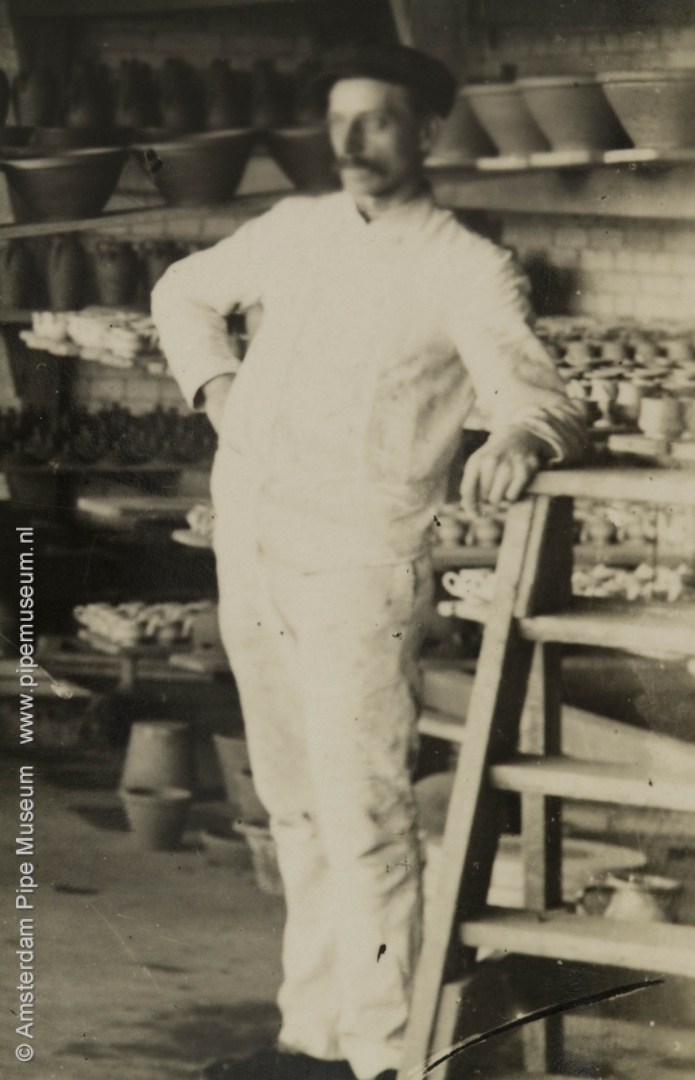
a piece of raw pipe clay as it looks like when the material arrives at the factory, firm Van der Want, Gouda, the Netherlands, 1750-1850

The making of pipes

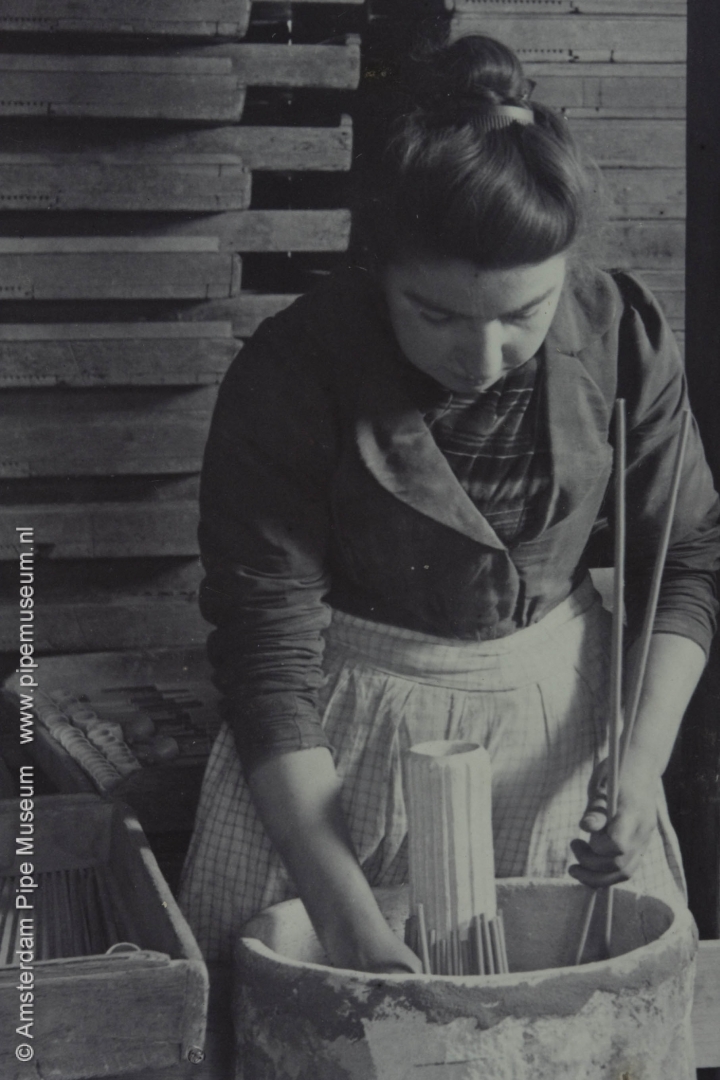
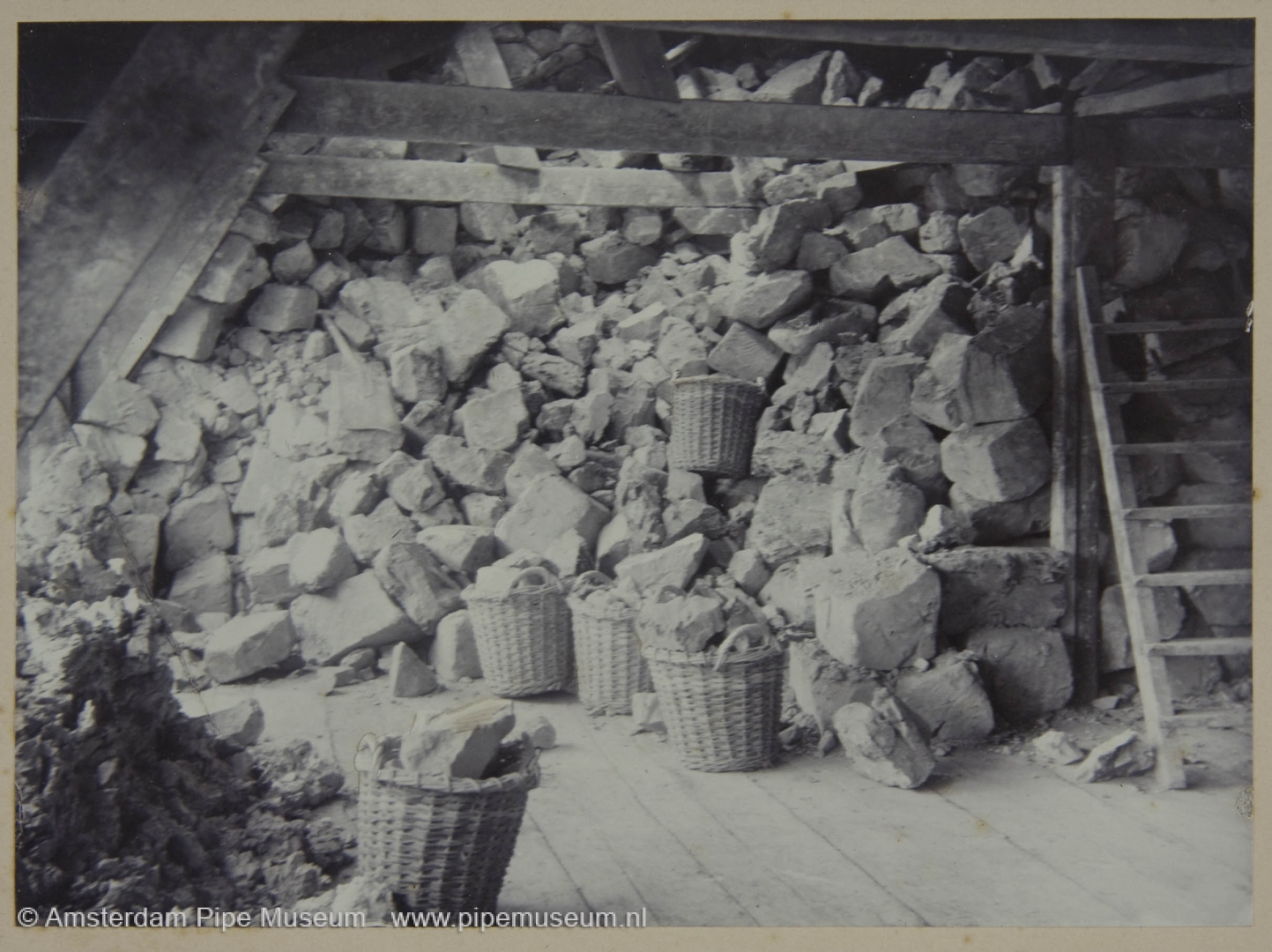
In the Netherlands the production of clay tobacco pipes continued till 1980, lately only for tourist purposes. The raw material for these pipes, white backing pipe clay, is not found in Holland but imported from Belgium and the Westerwald region in Germany. Before the actual making starts, the clay needs to be prepared, being cleaned of organic material and beaten till it becomes smooth.

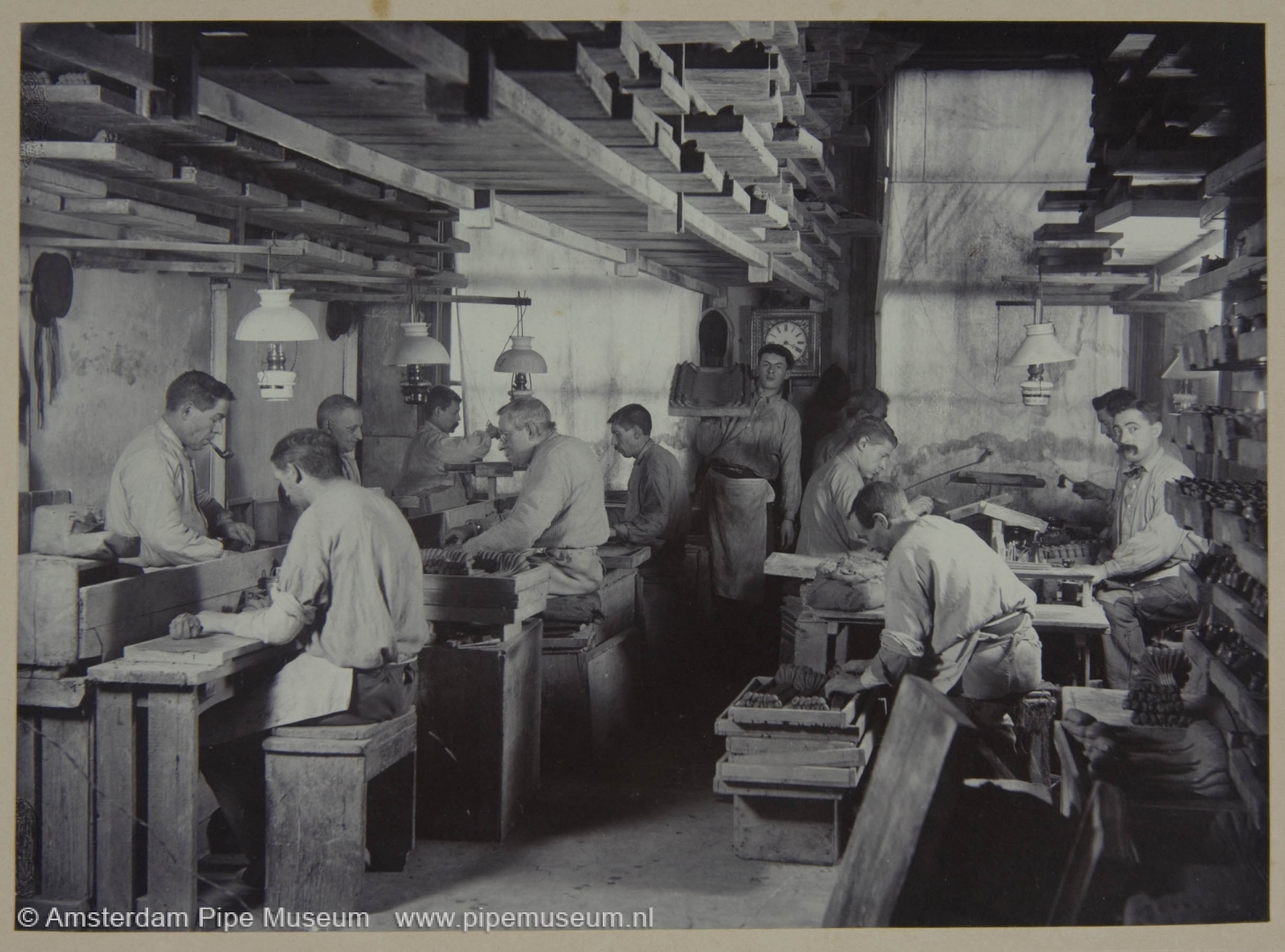
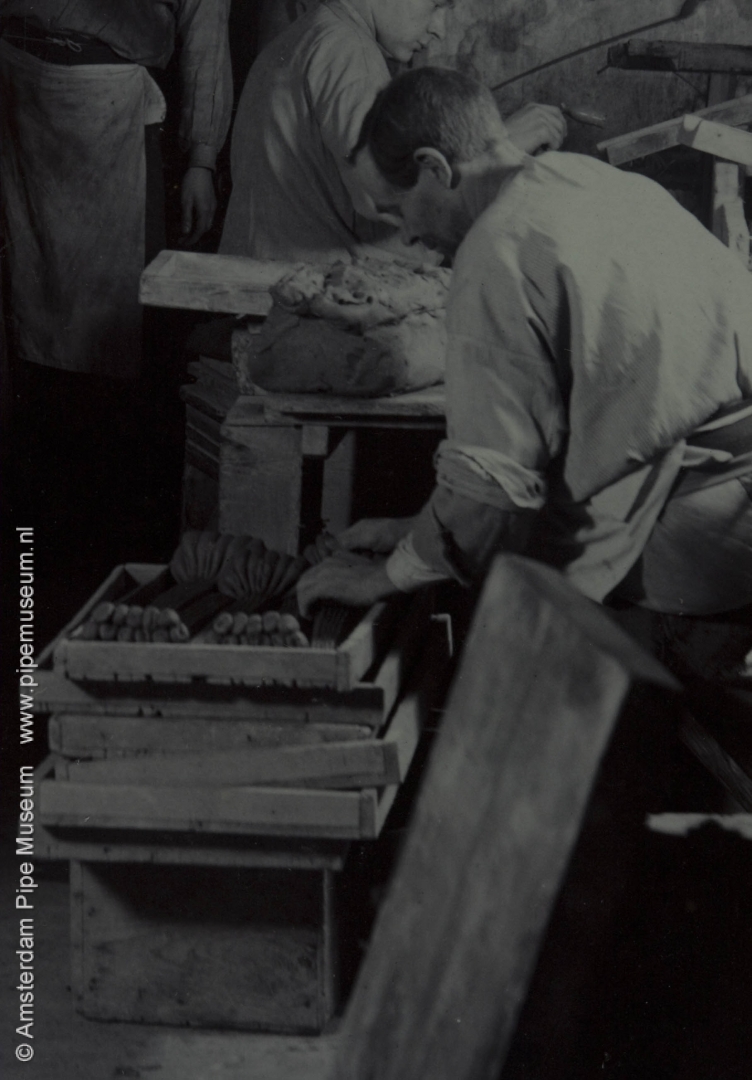
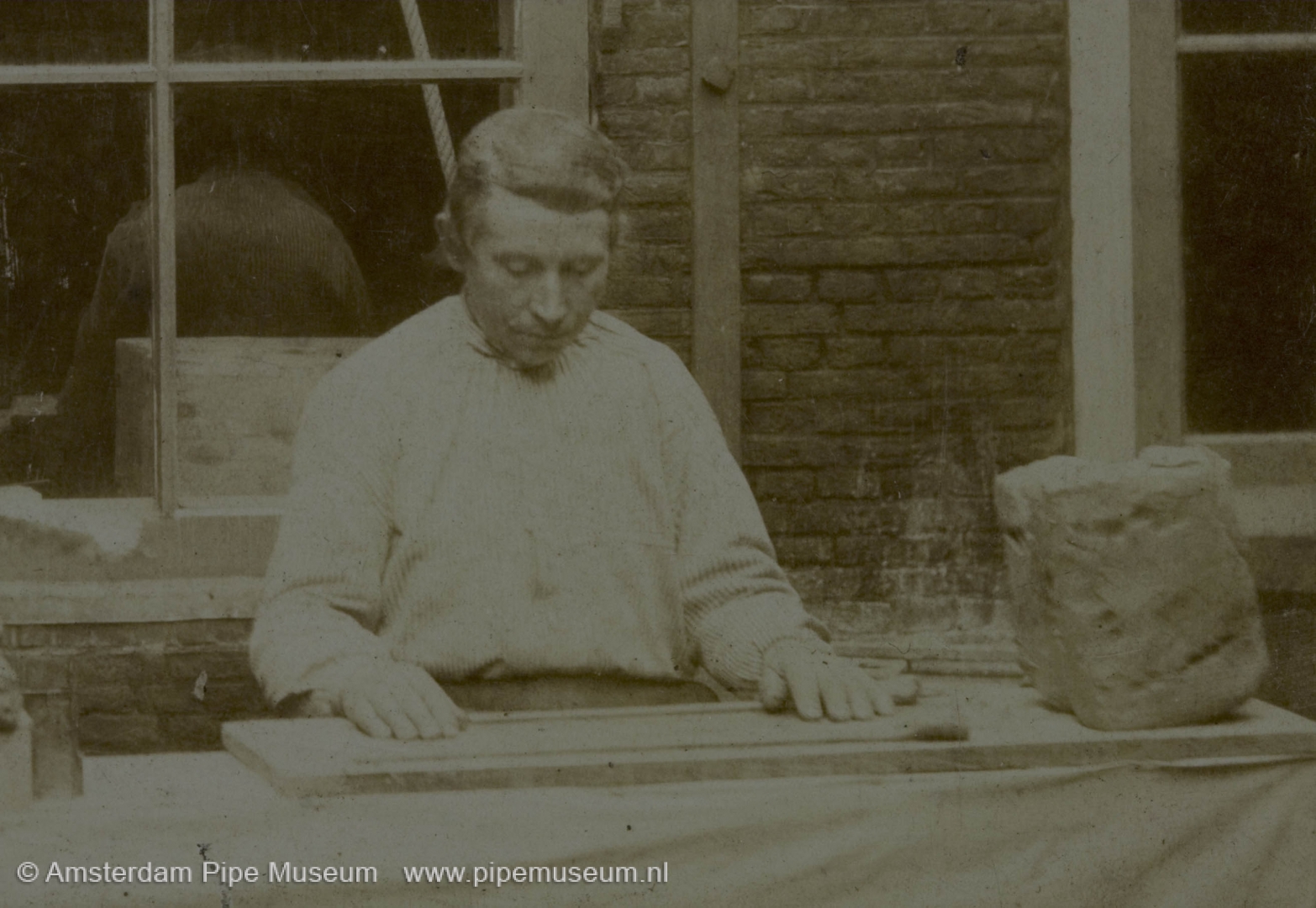
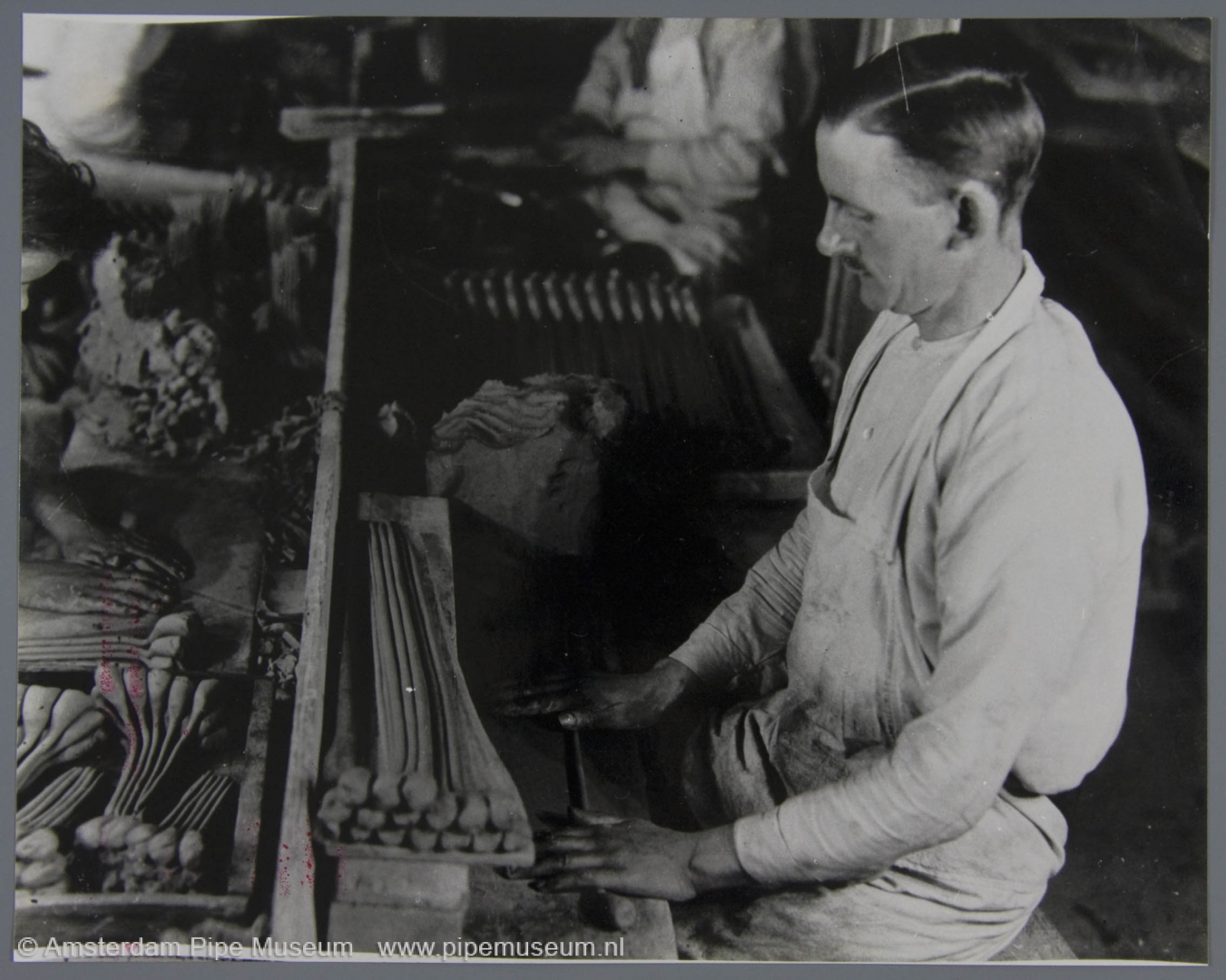
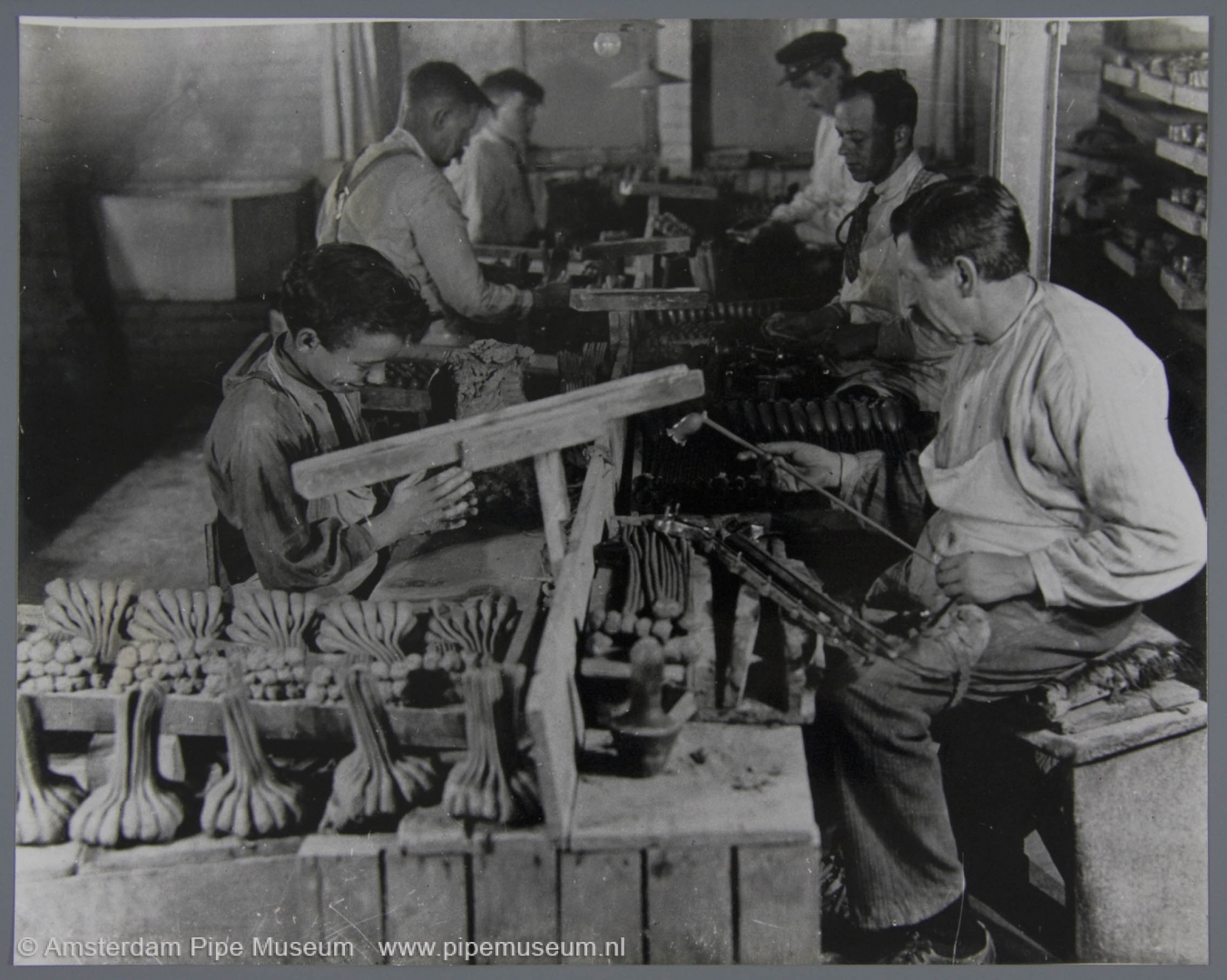
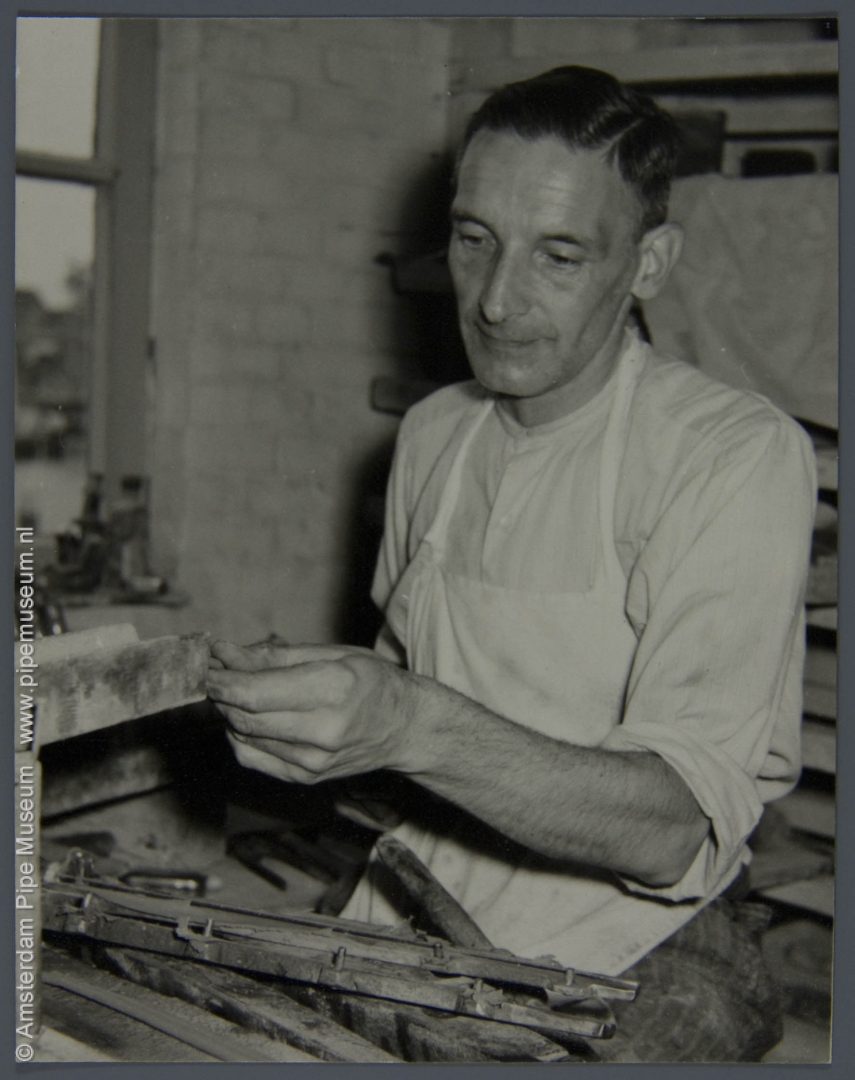
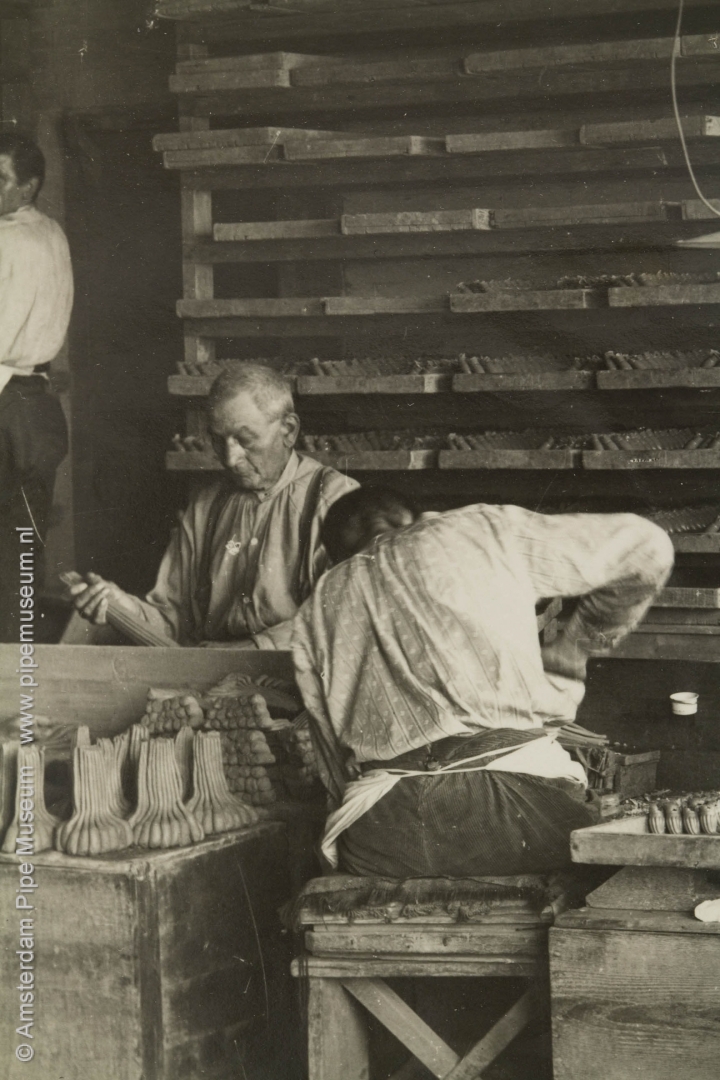
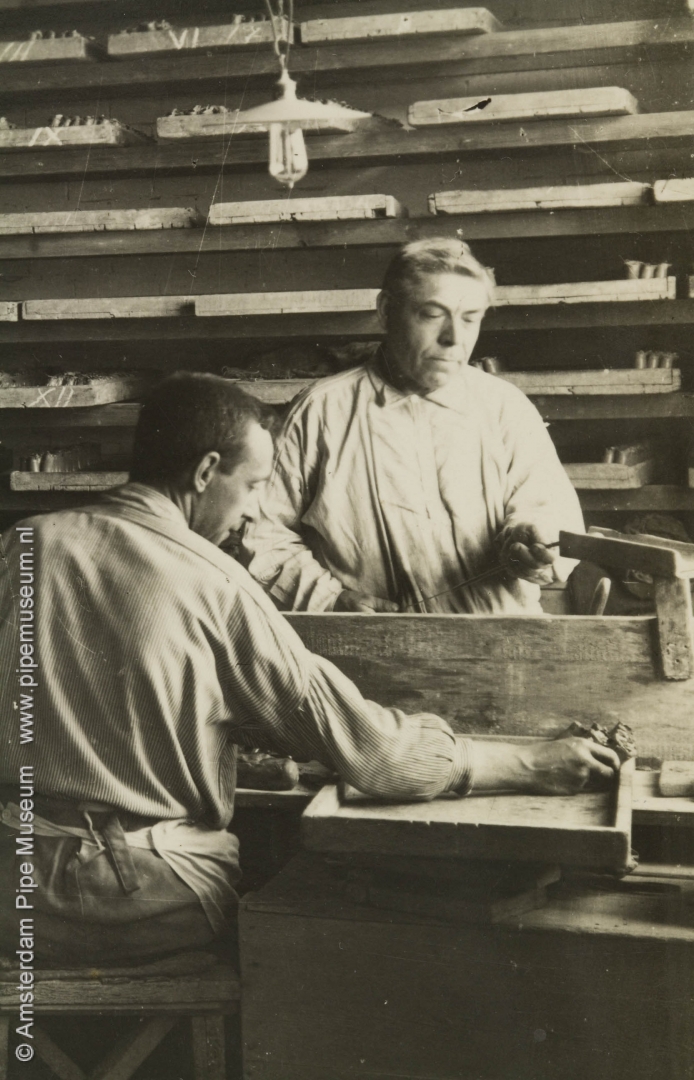
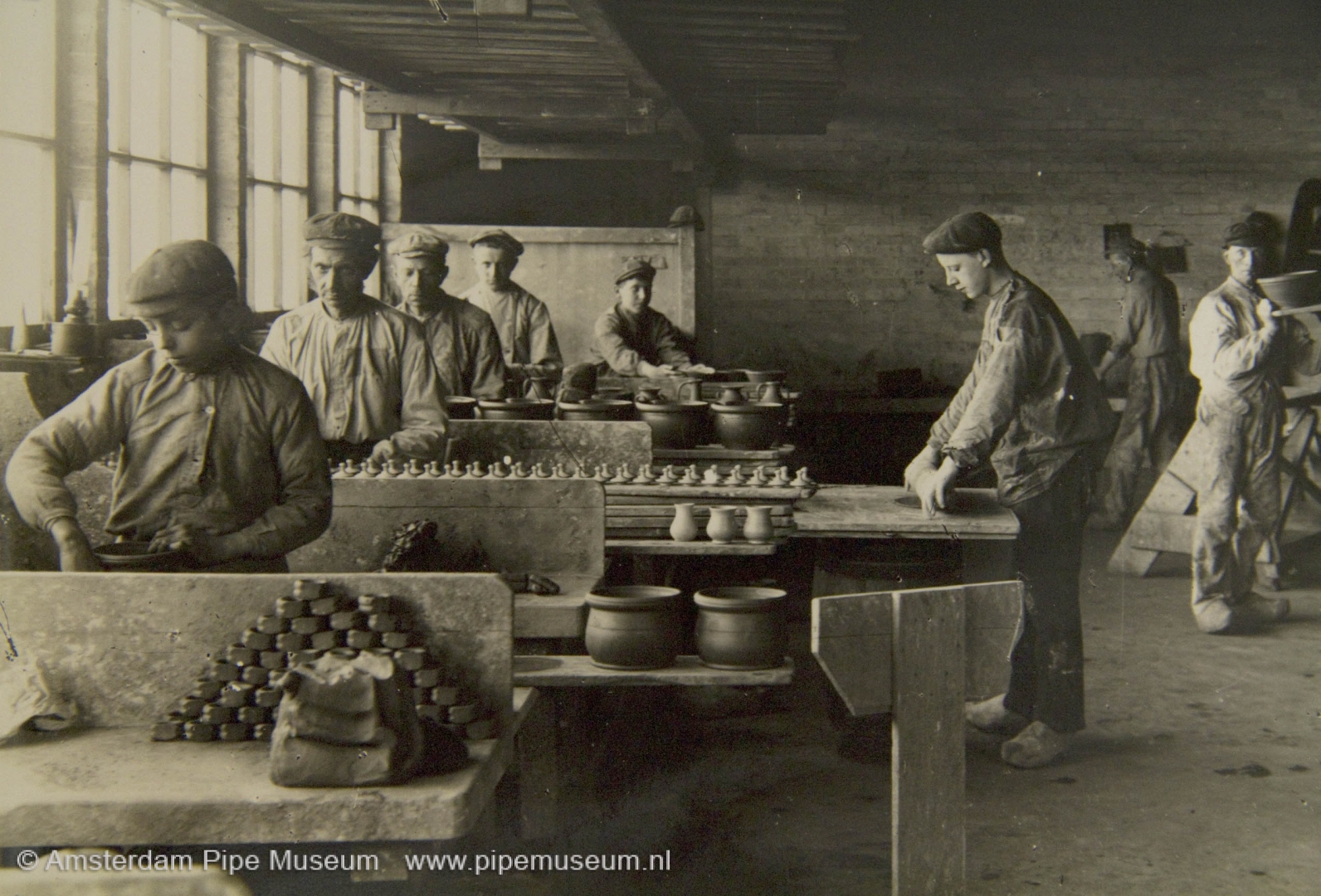
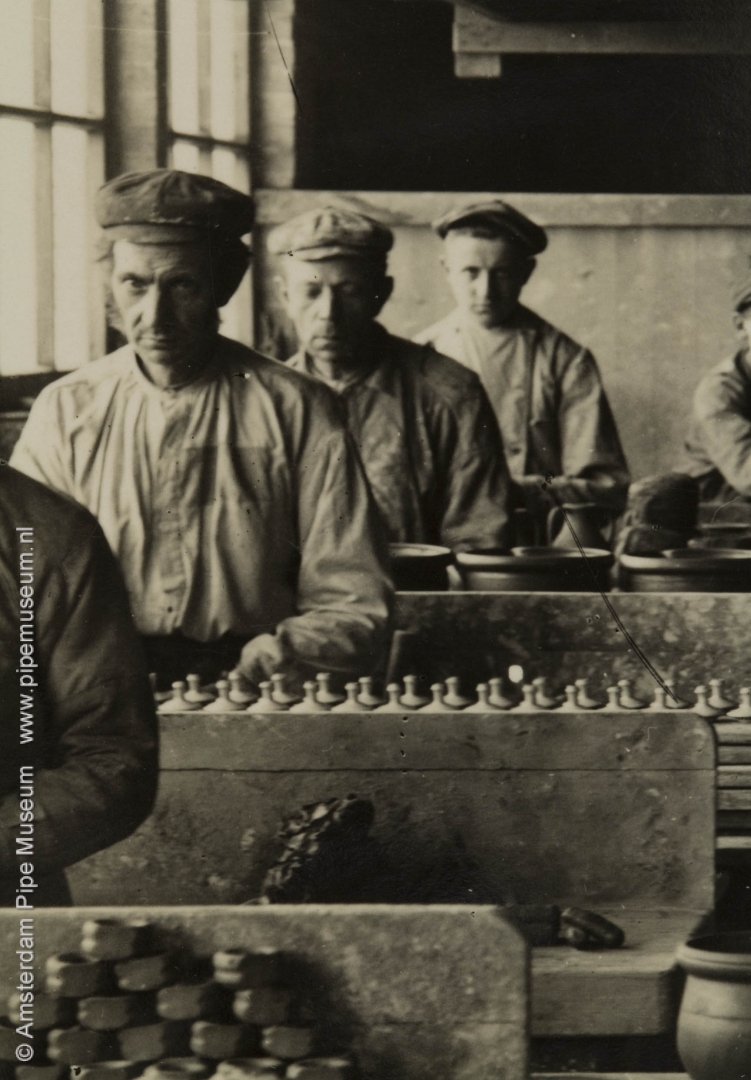
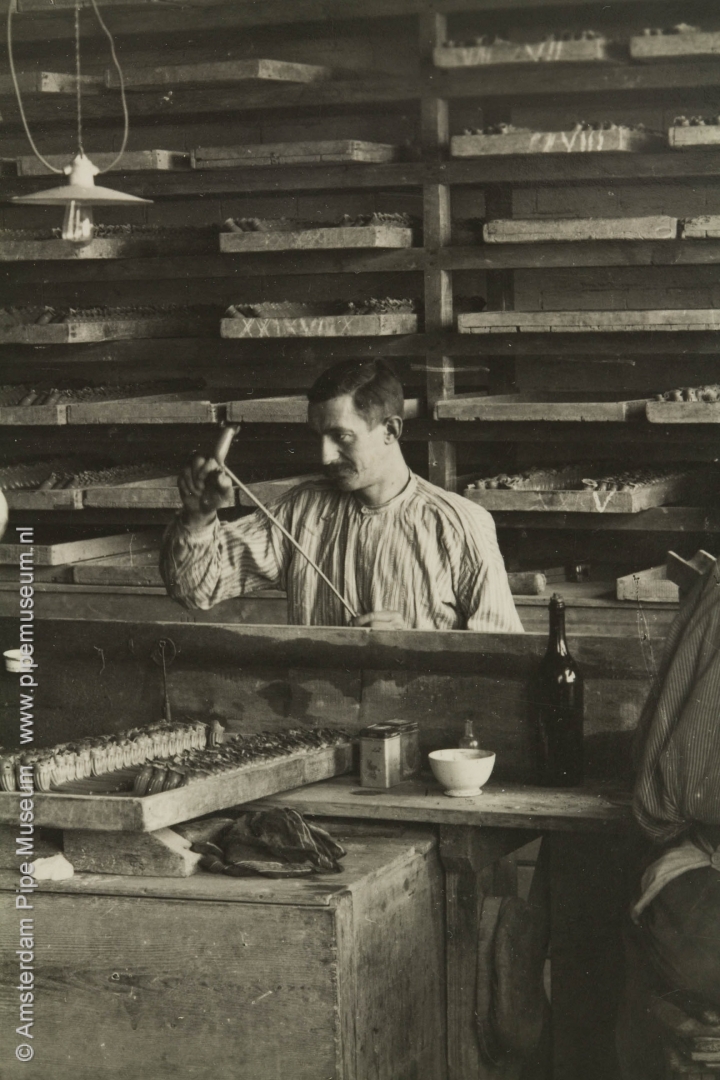
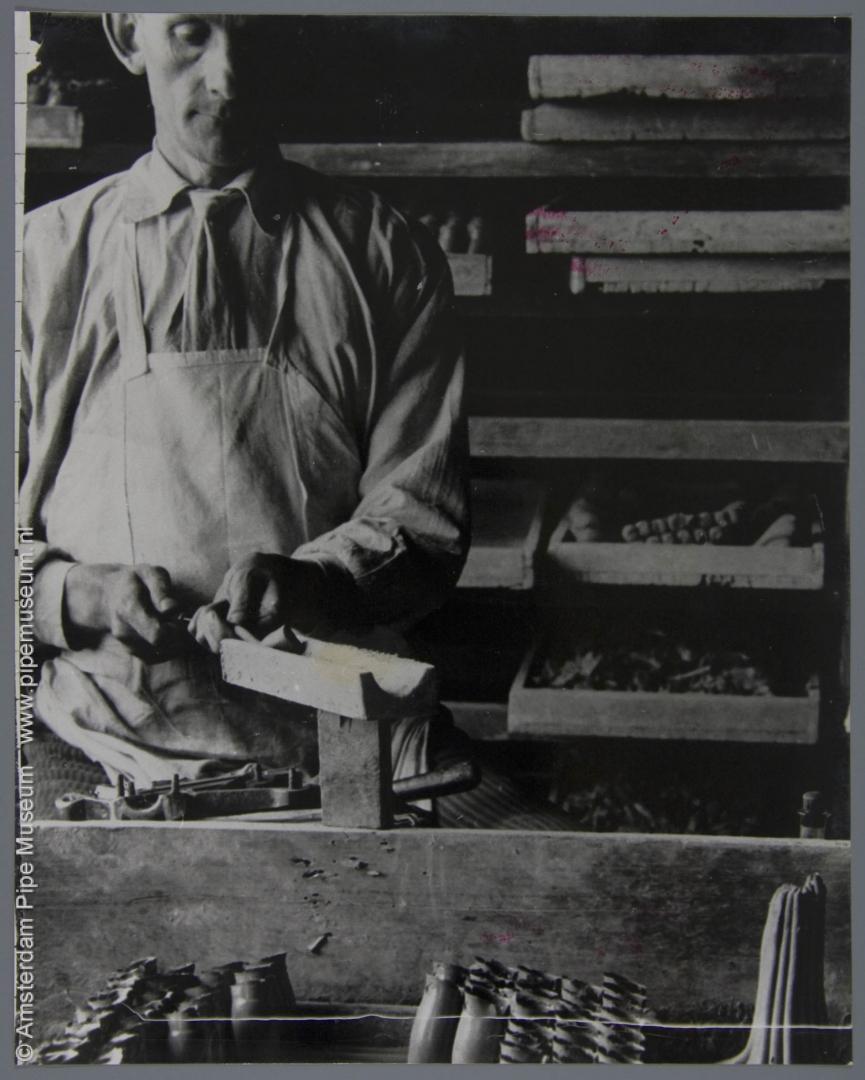
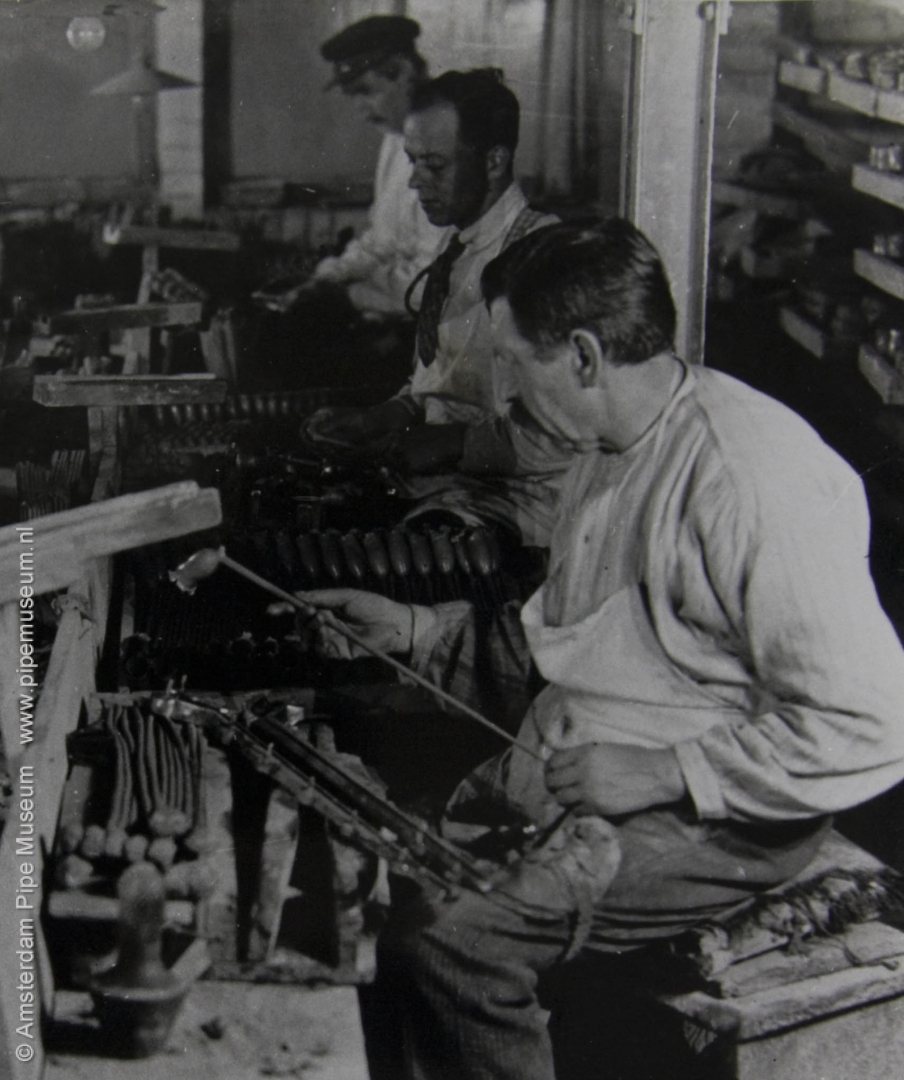
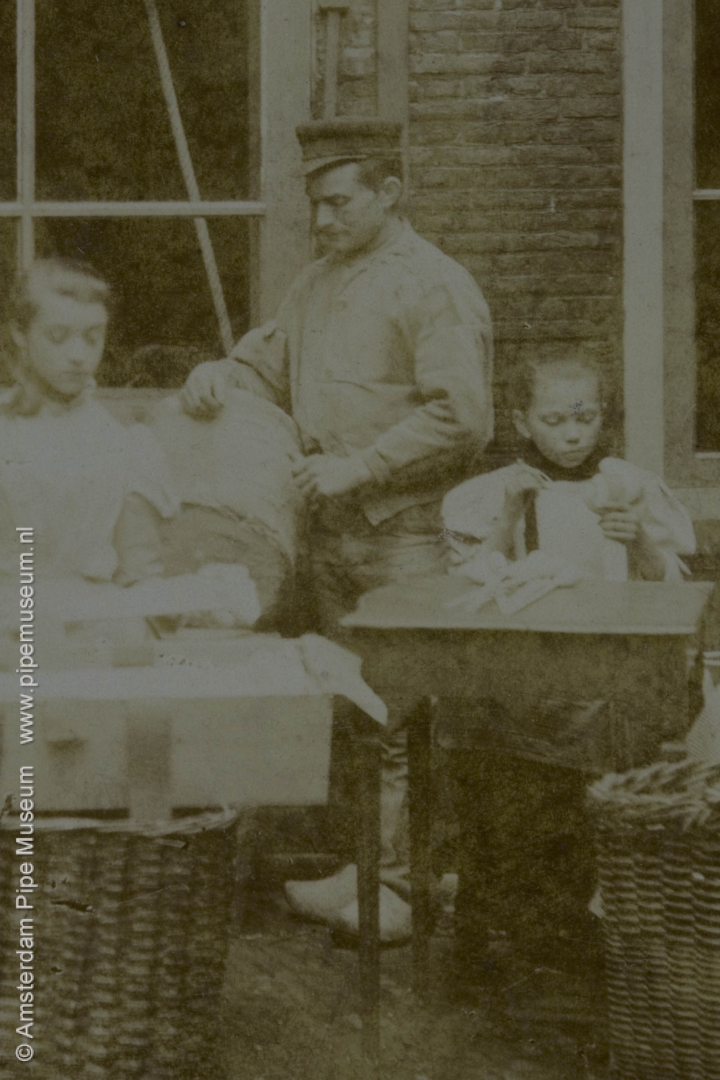
The actual pipe making starts with the making of rolls in which the rough shape of the pipe is already visible. This is done by the so-called 'rolder', a boy or apprentice pipe-maker. The rolls have to dry for a few days, before the next step: moulding of the pipe. This is done by the master pipemaker who is called 'kaster'.

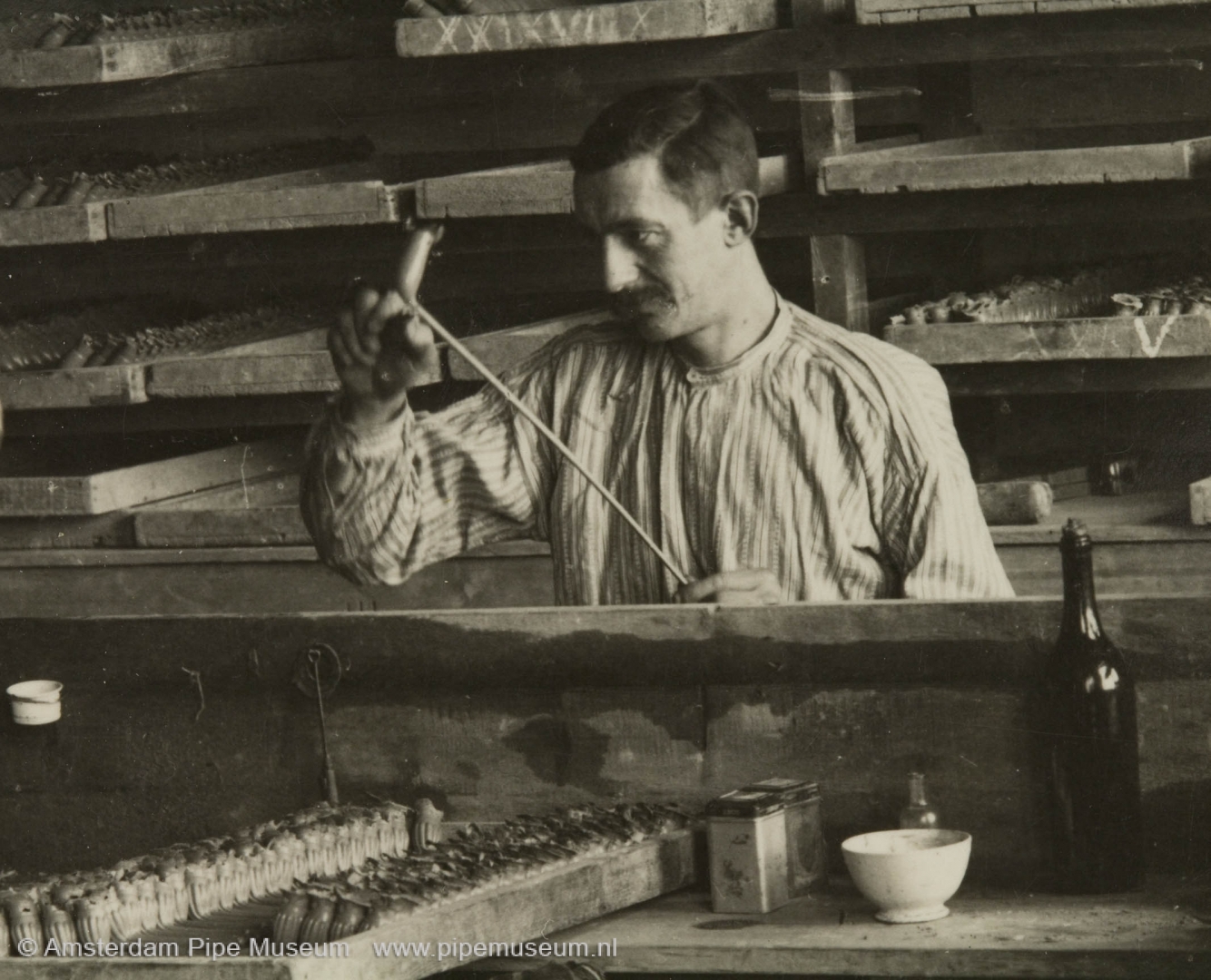
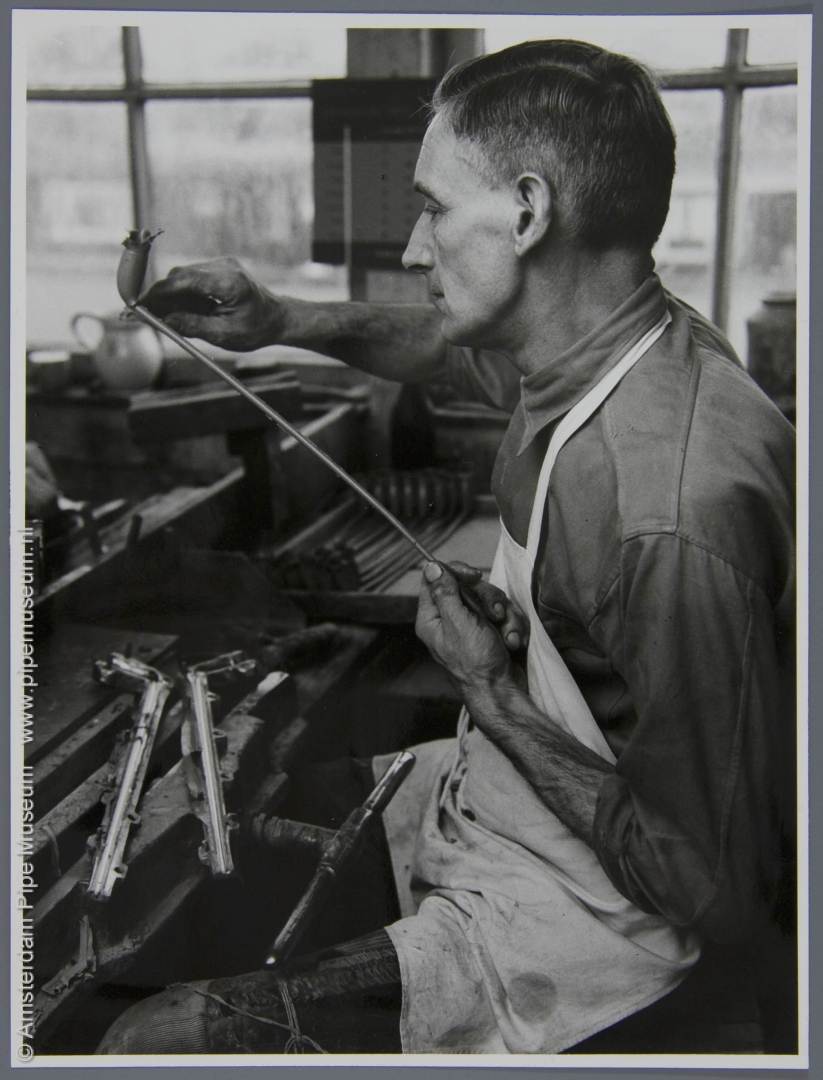
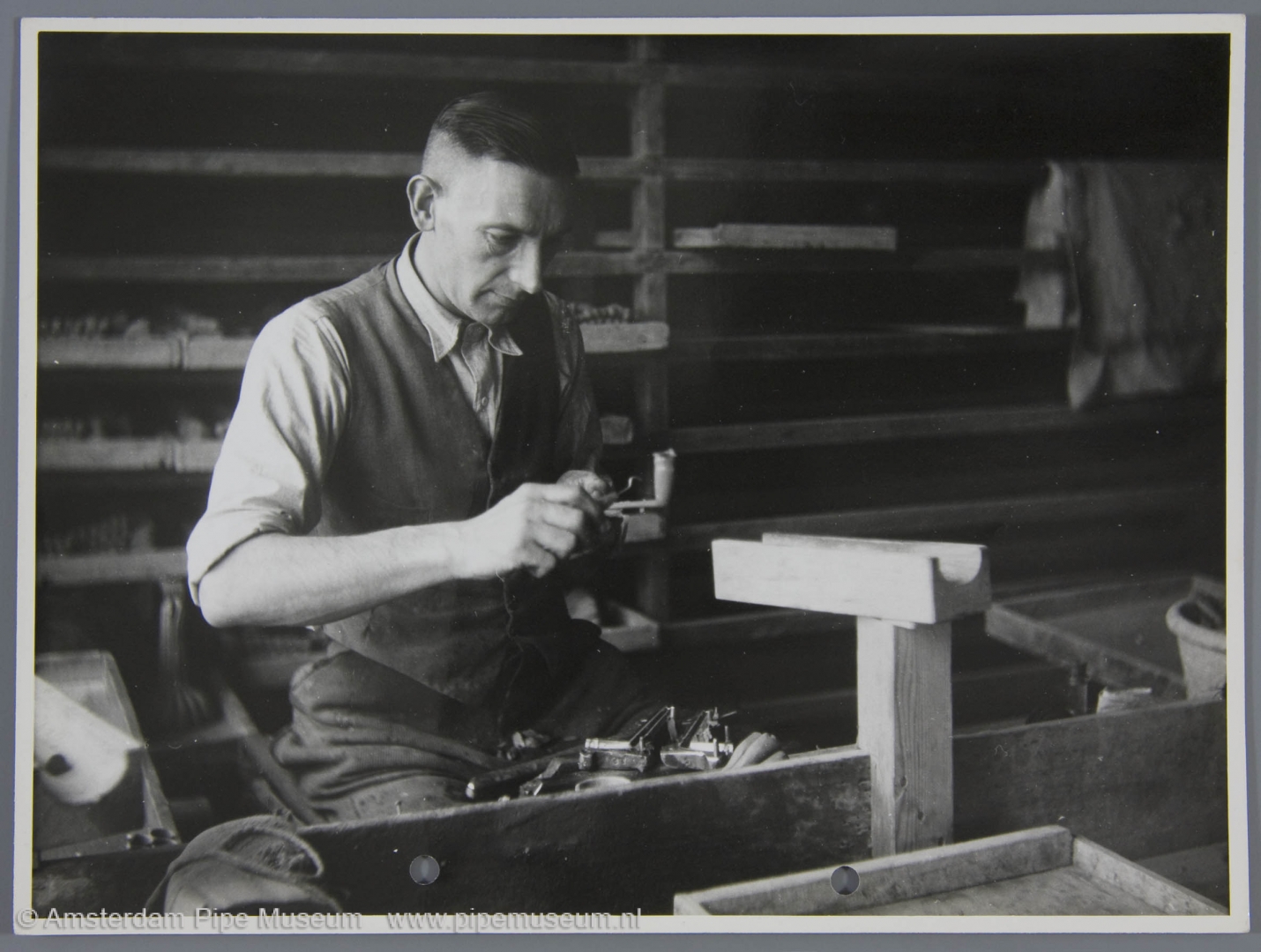
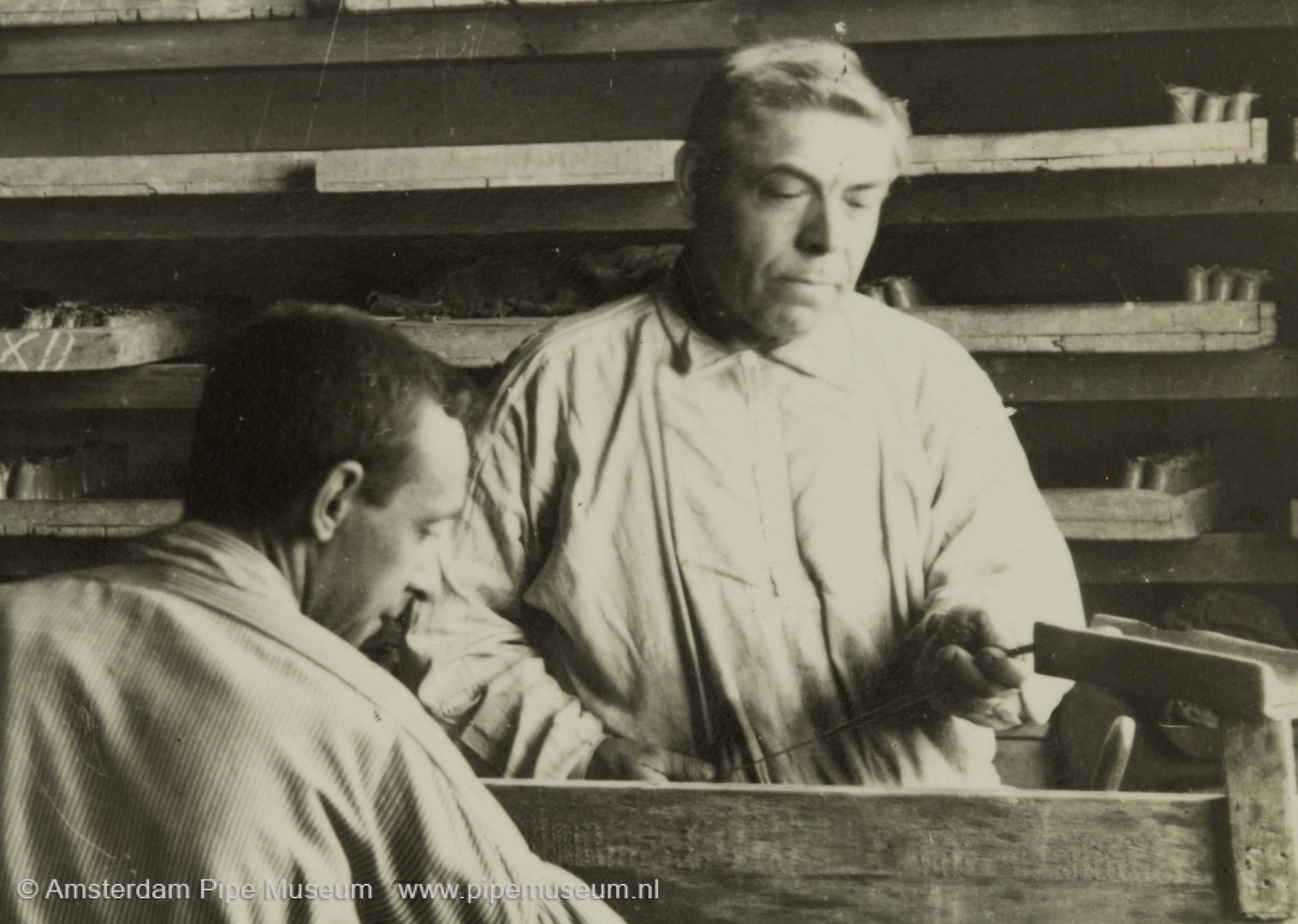
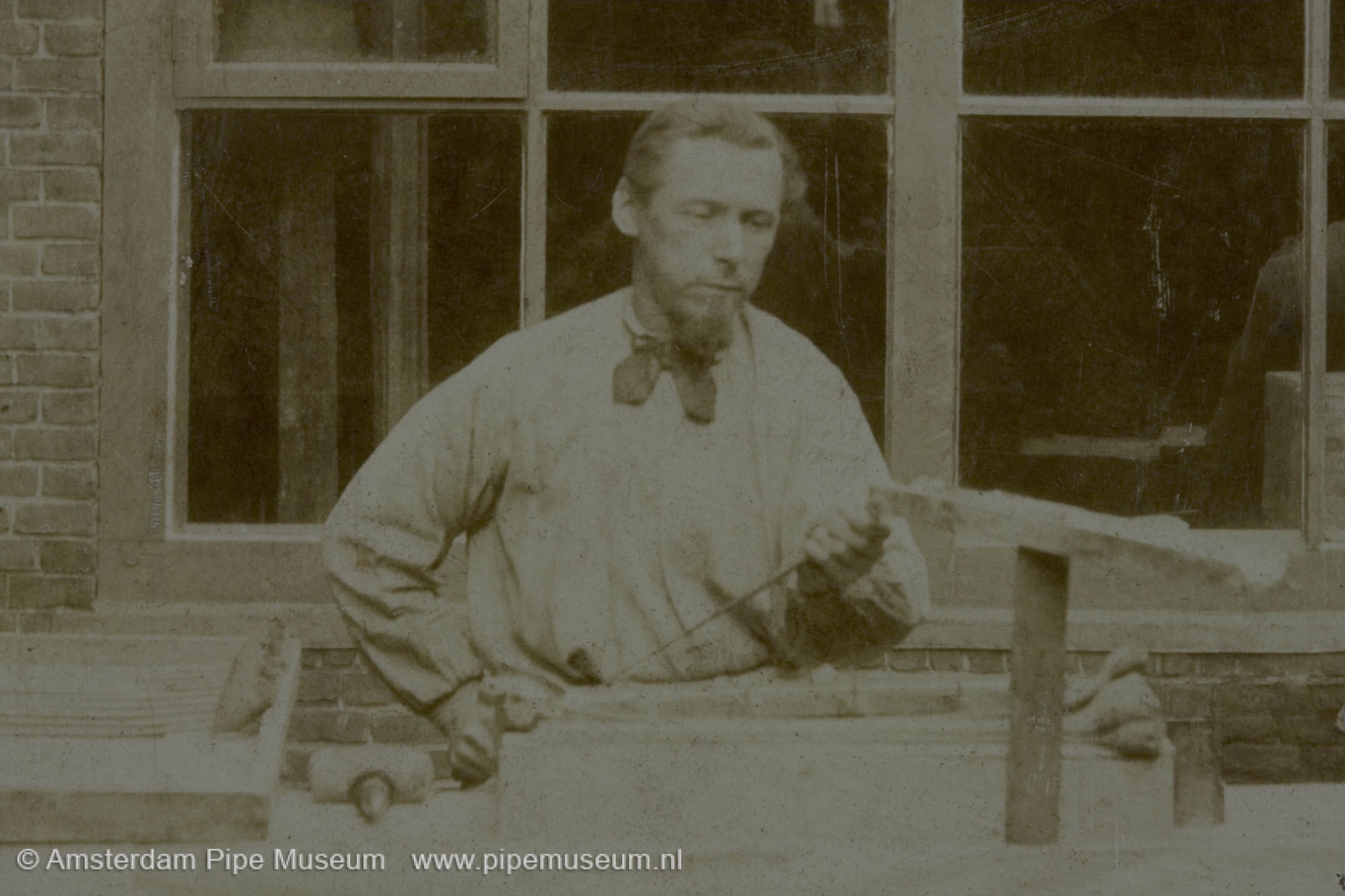
First this kaster pierces the clay with a wire, so forming the smoke tube. Then the wired roll is placed in a metal two-parted mould. While the mould is pressed together in a vice the bowl opening is pierced with a stopper. When removed from the mould, a smooth pipe is had. With a special type of knife the pipemaker removes the mould seams and cuts the stem to length. Again the pipes are dried for a few days.

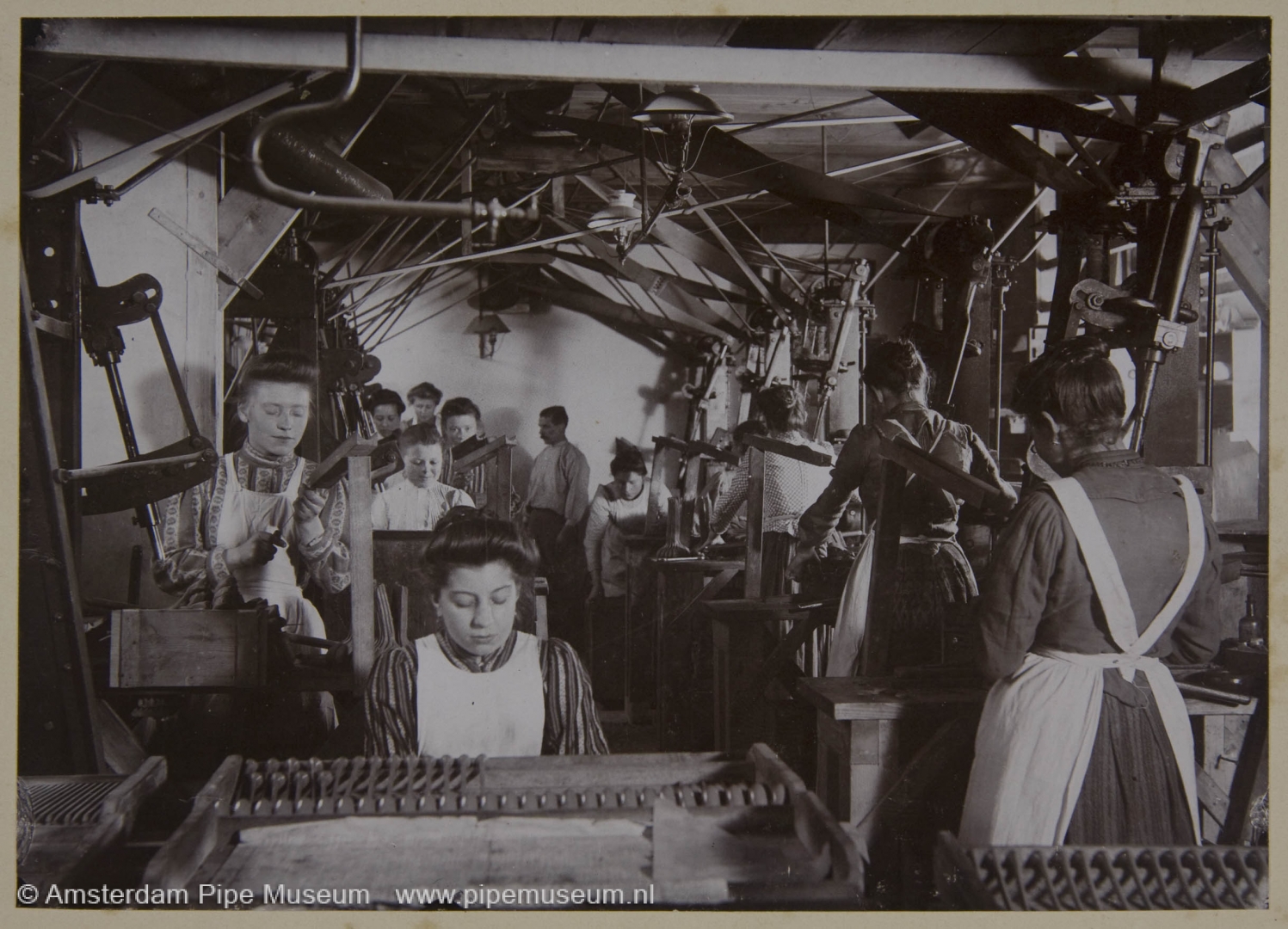
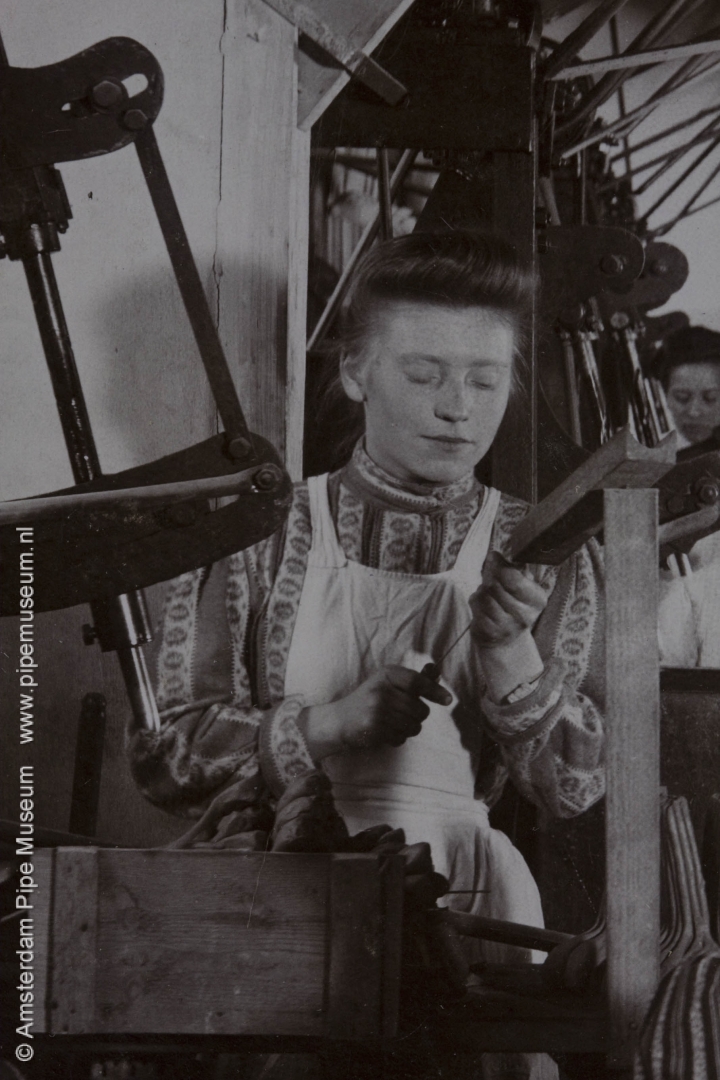
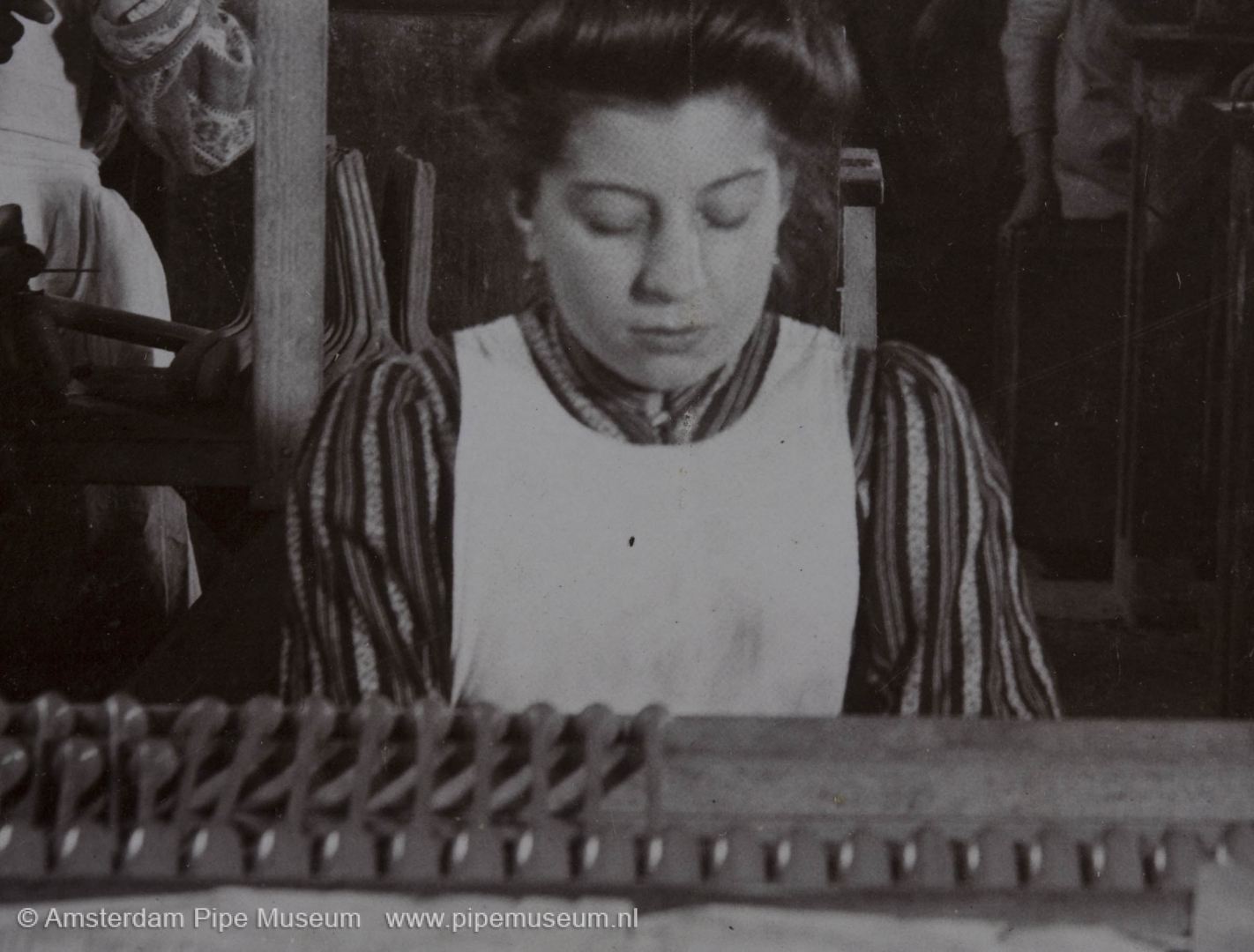
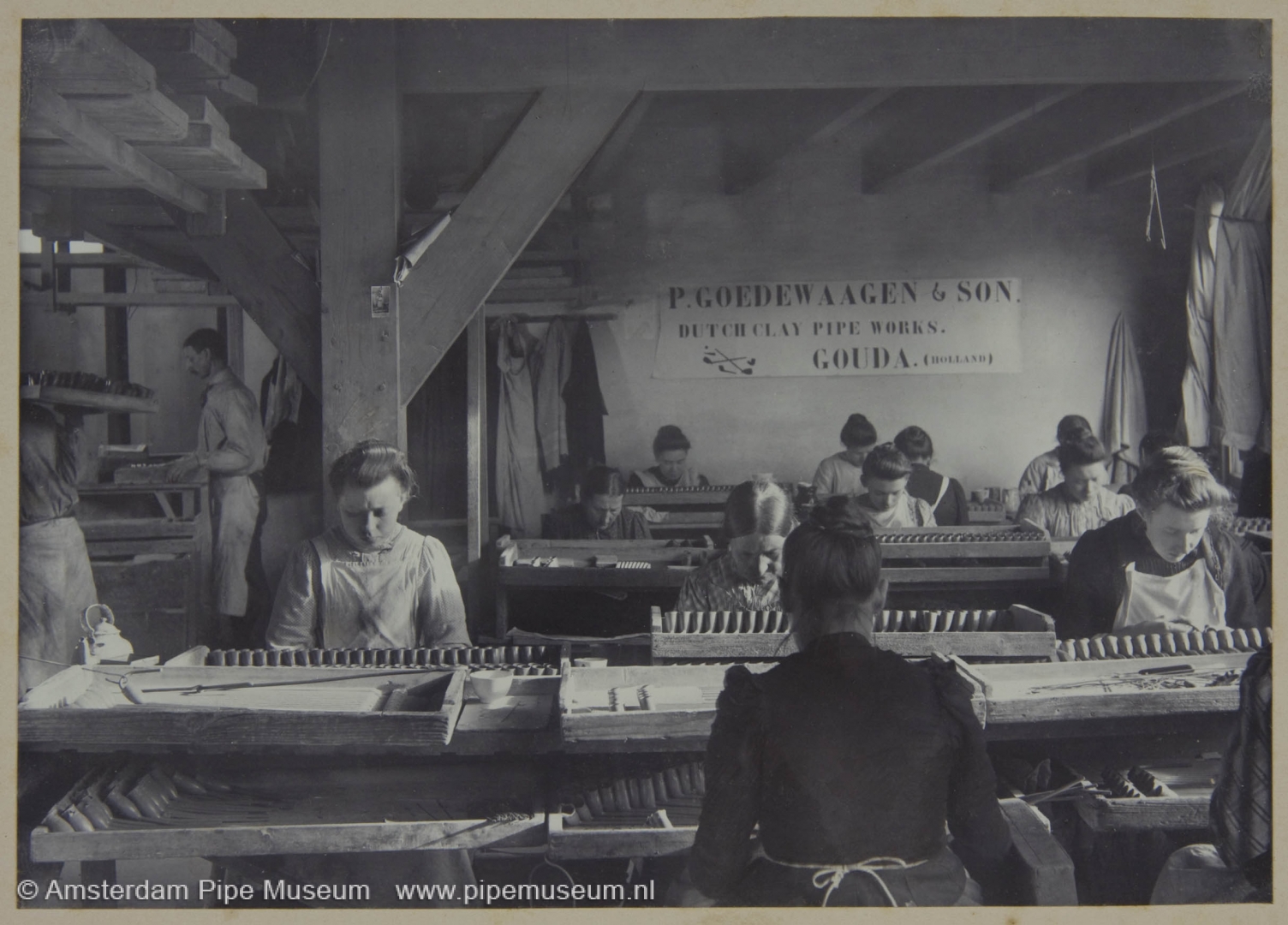
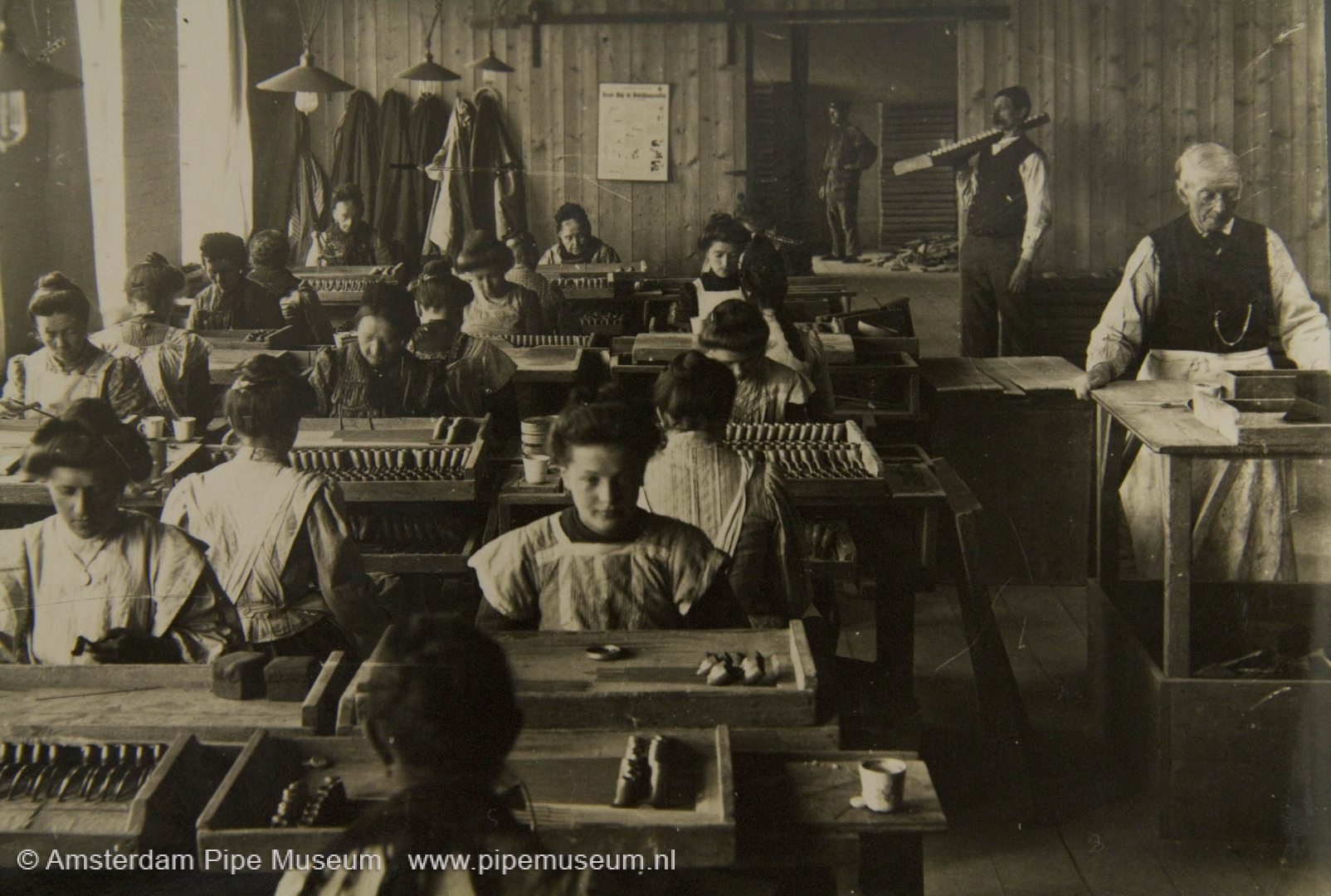
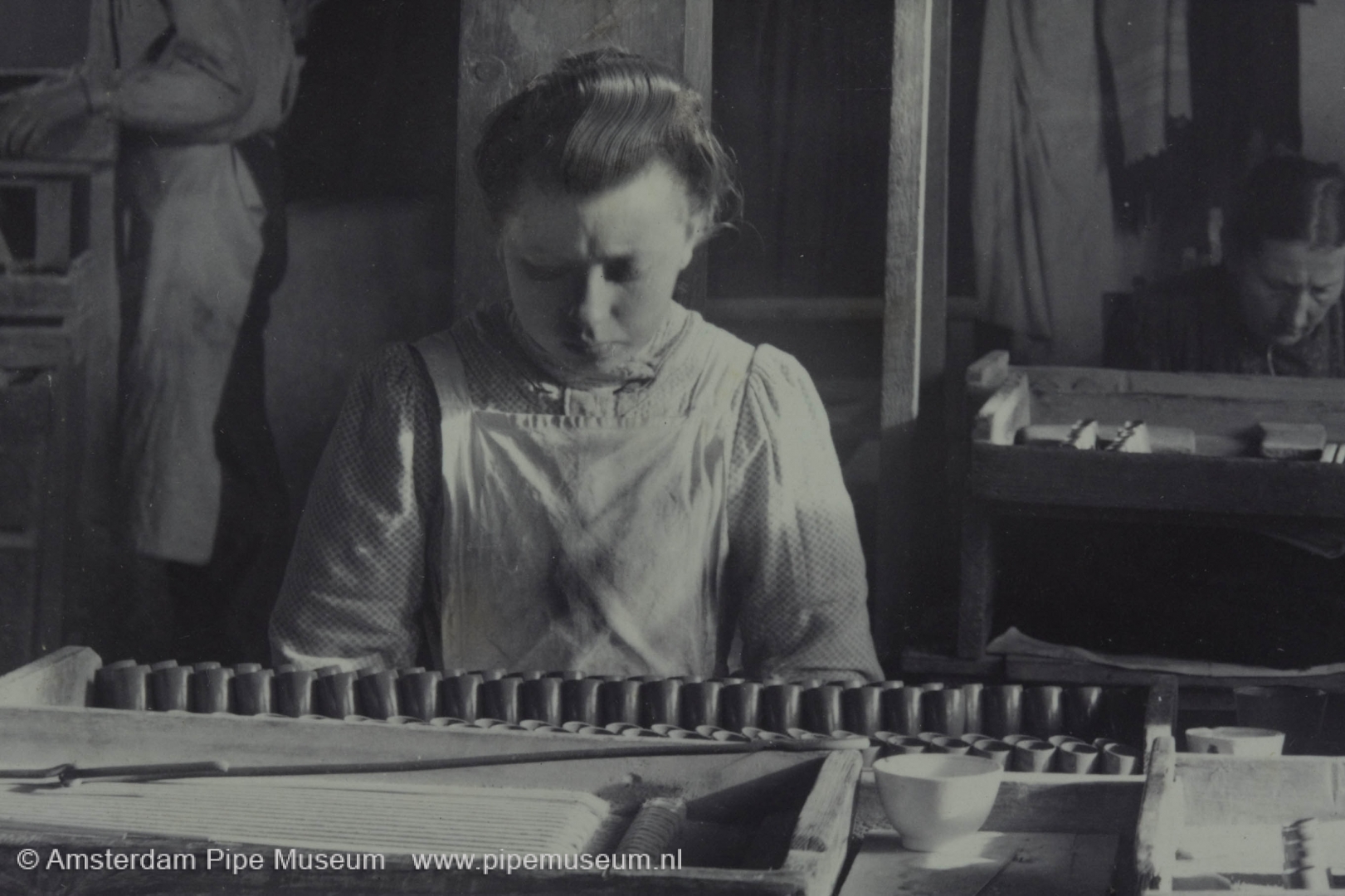
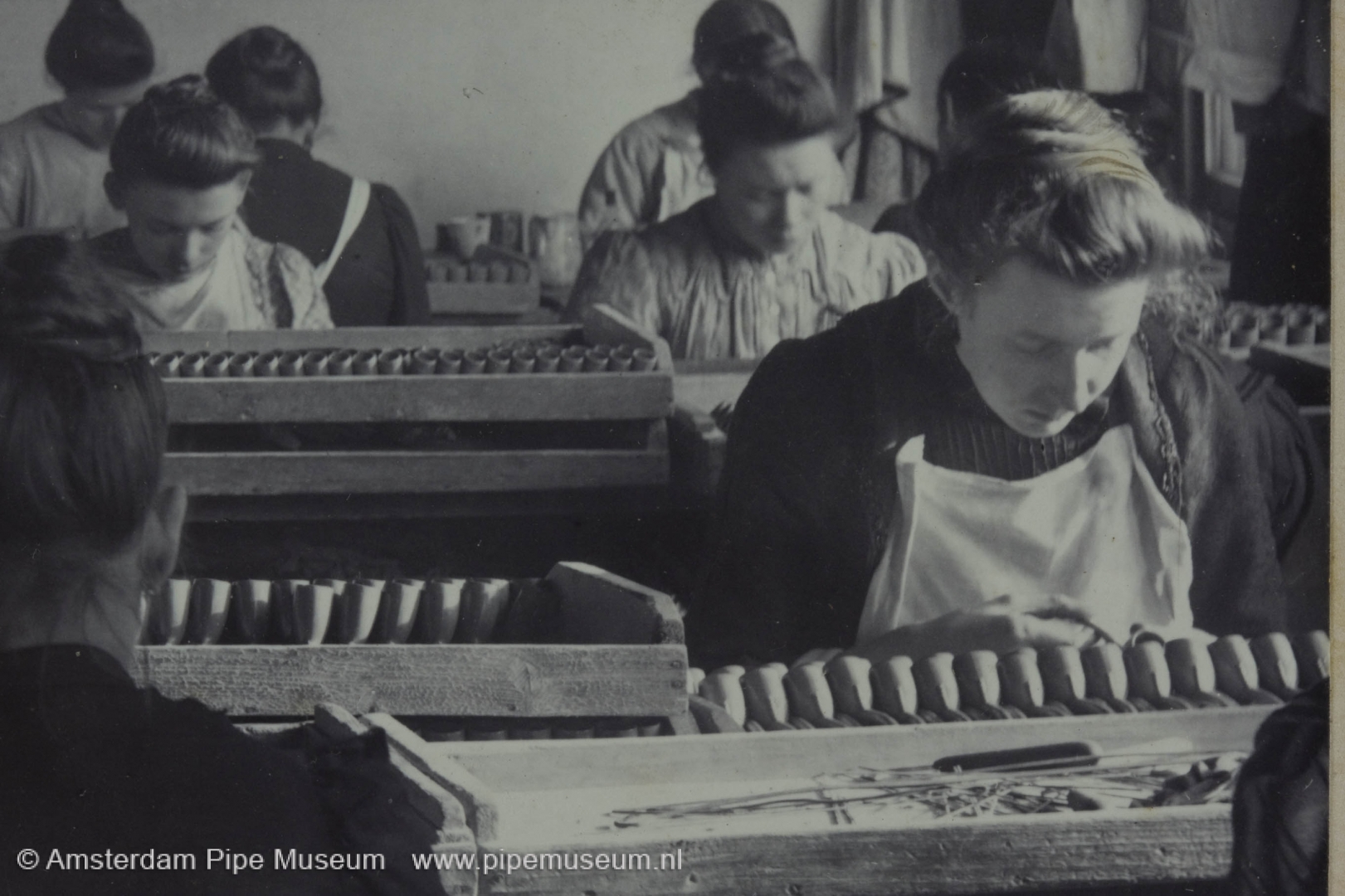
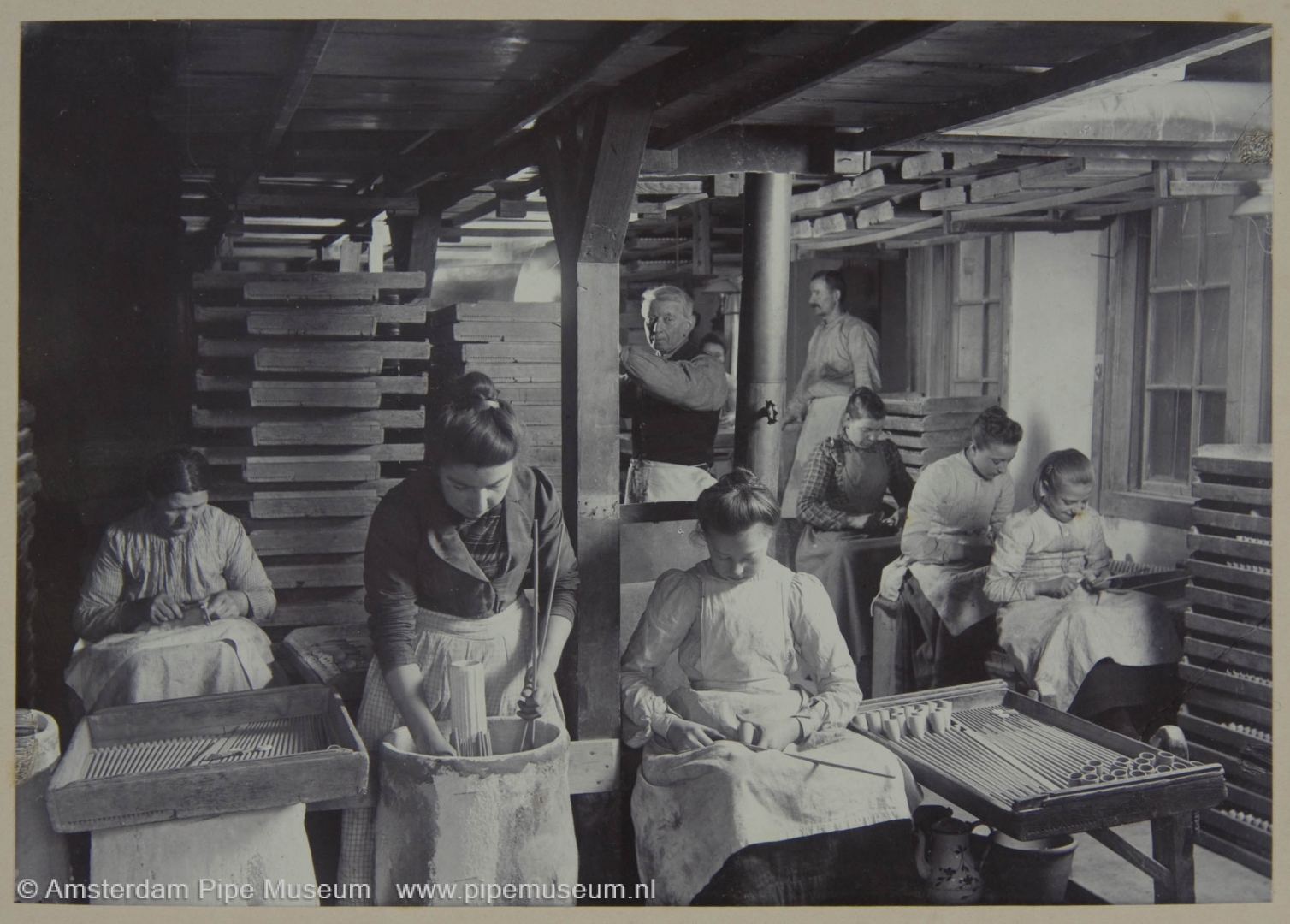
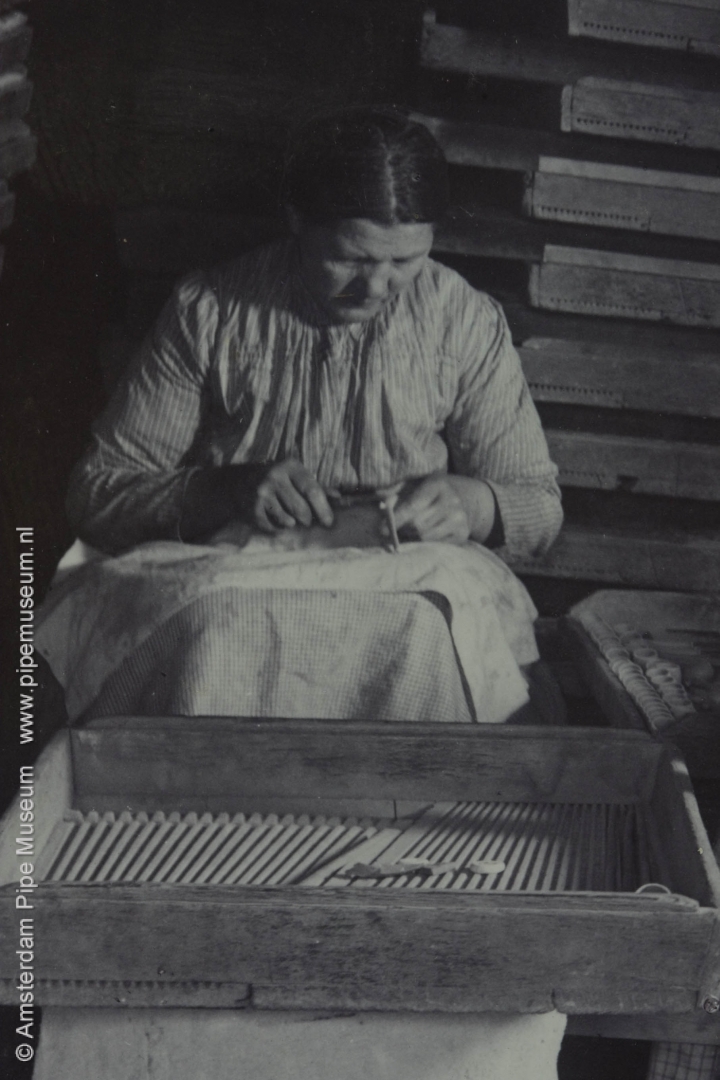
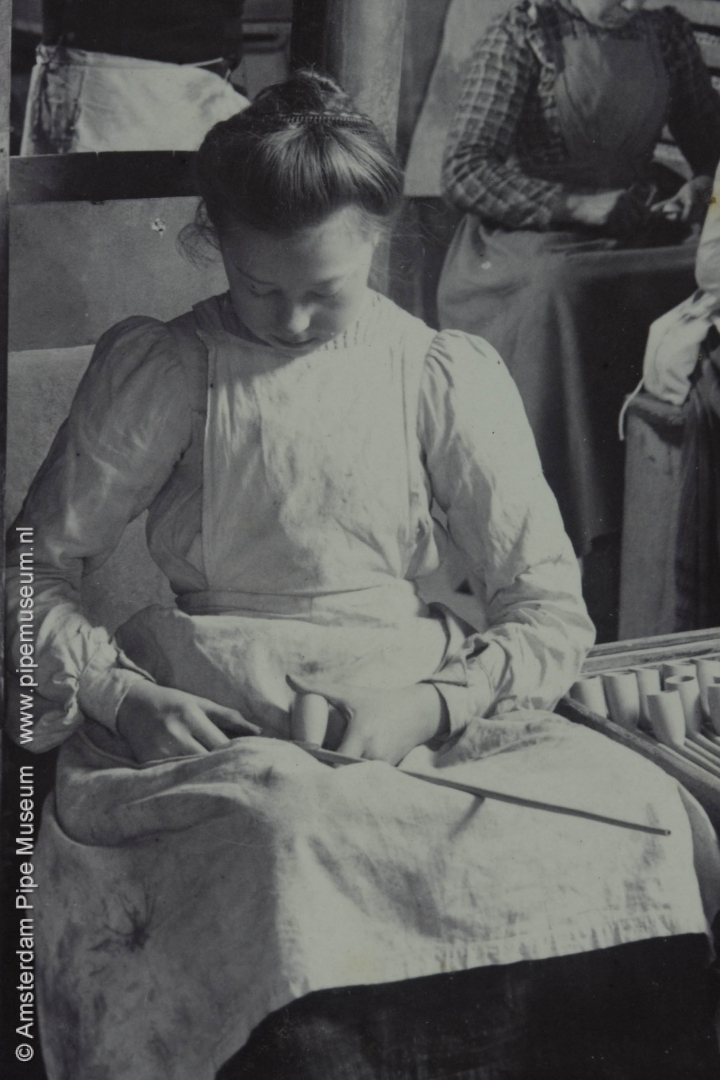
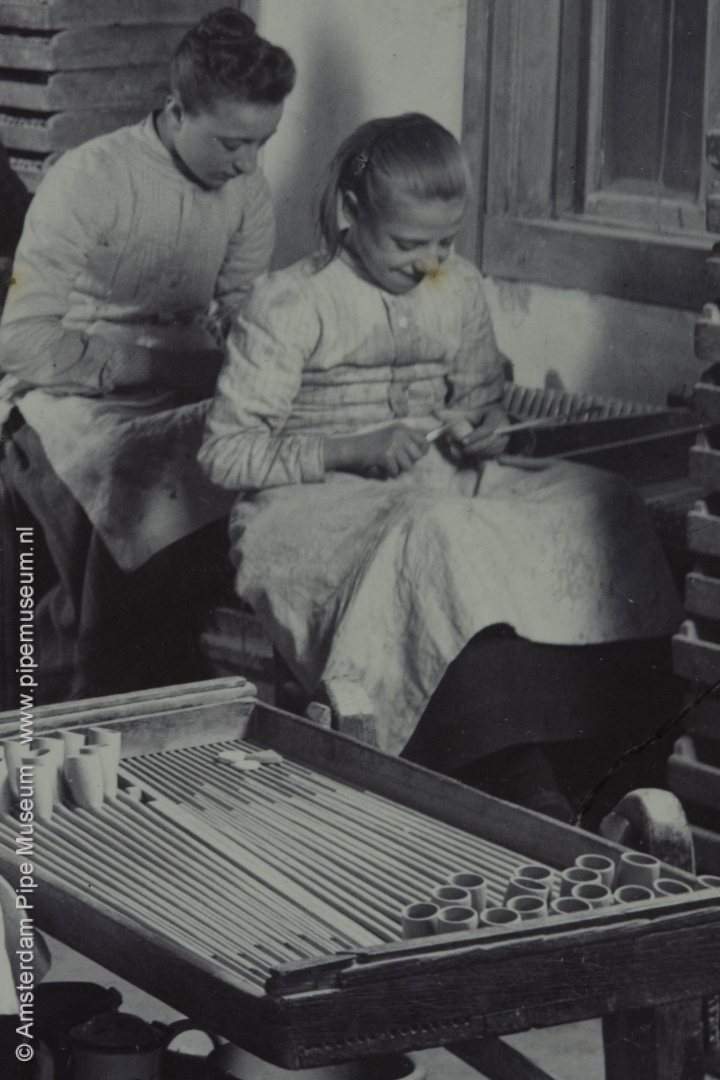
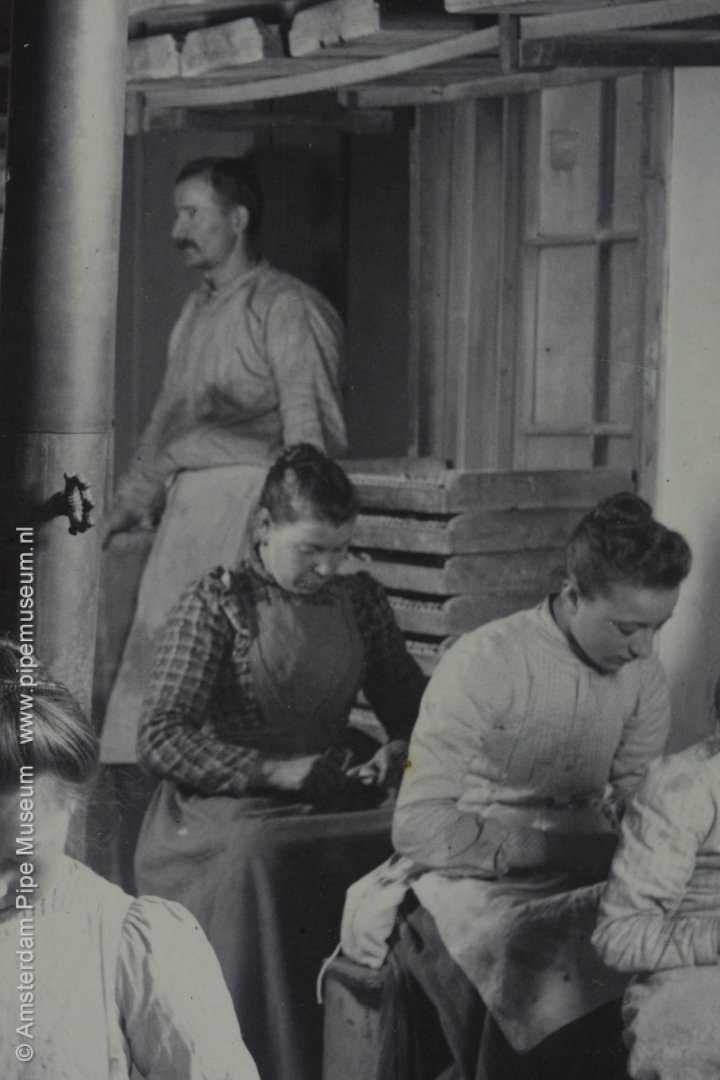
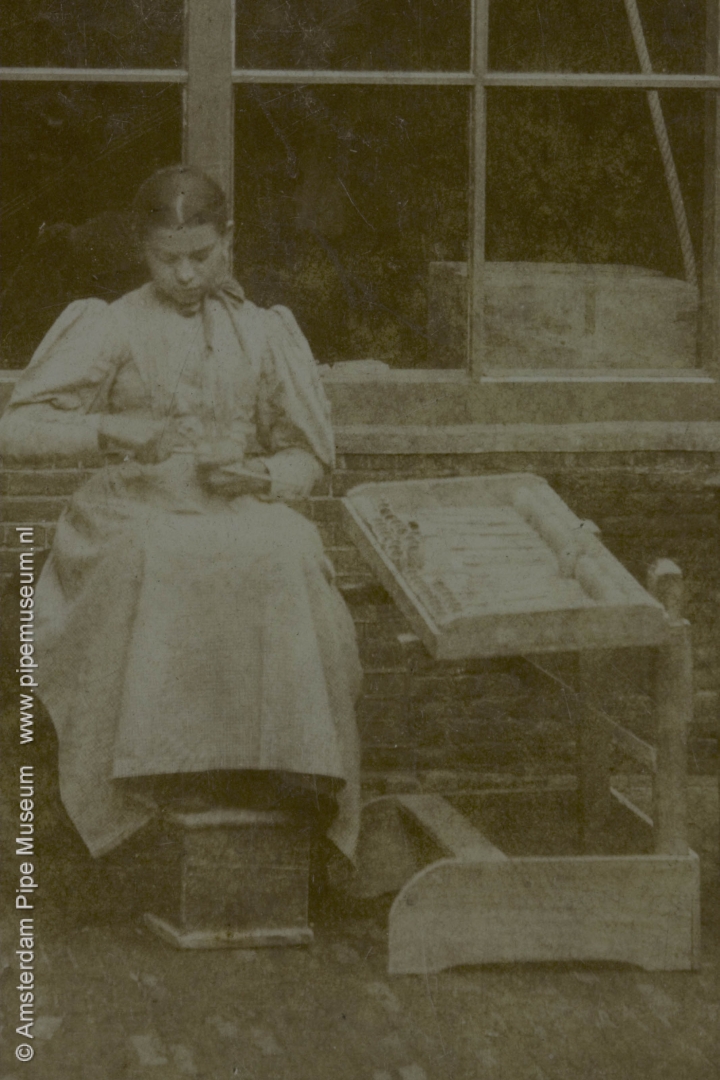
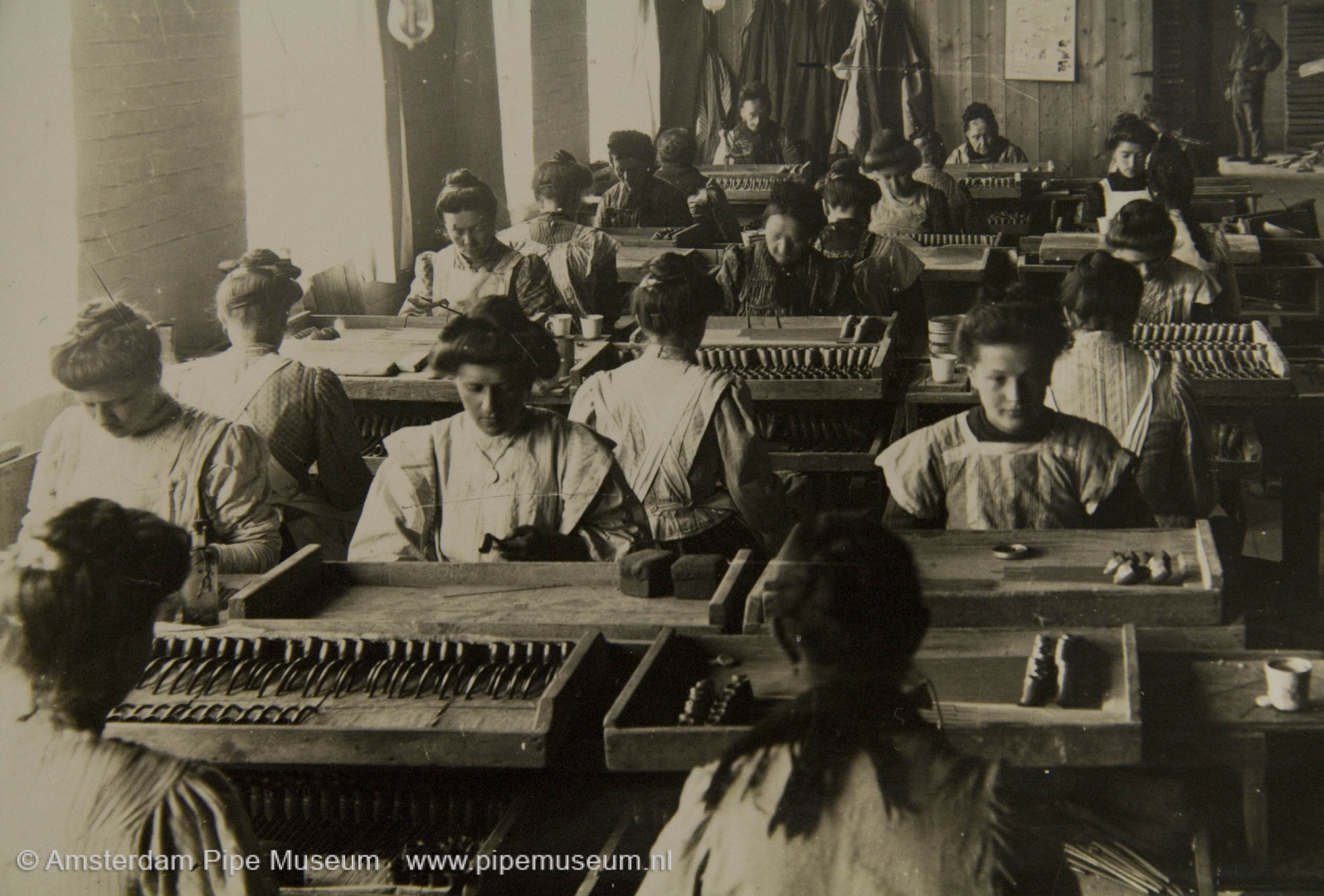
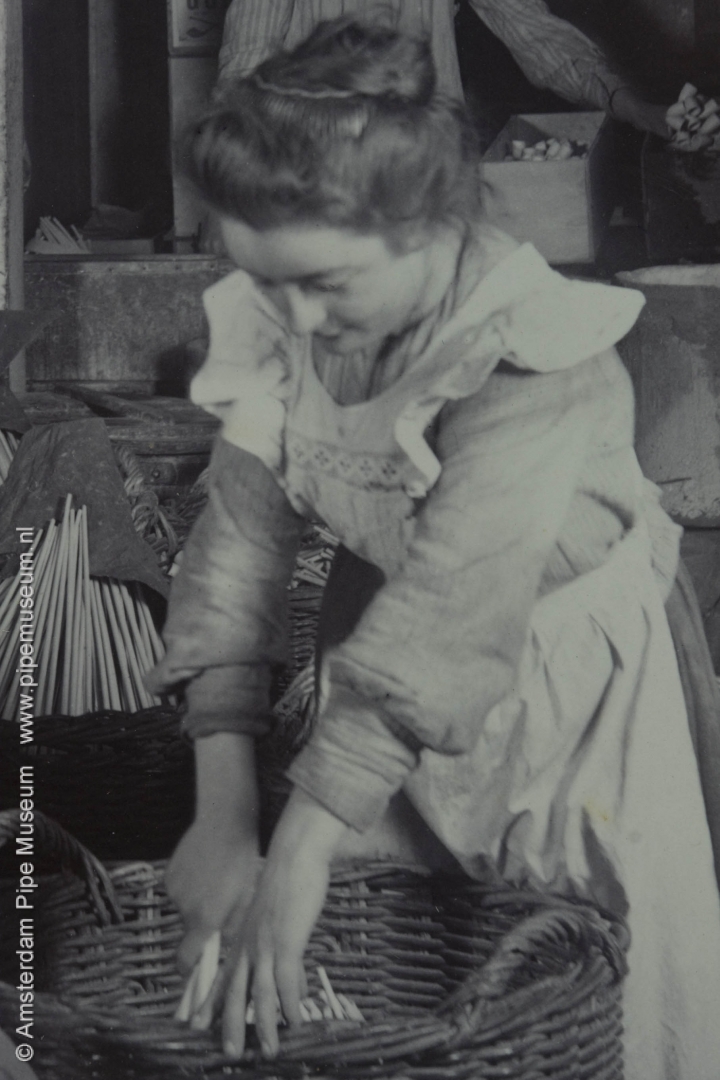
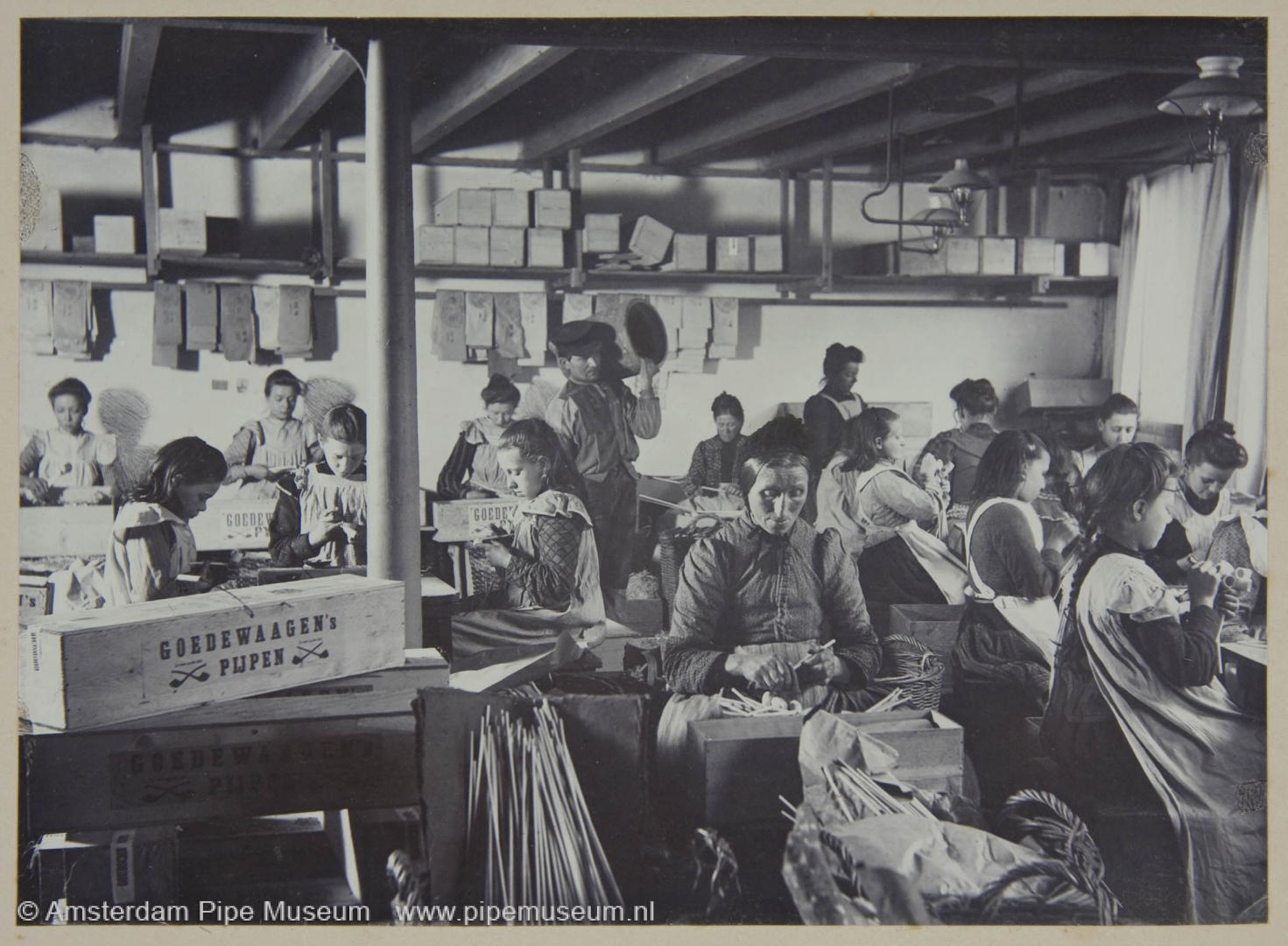
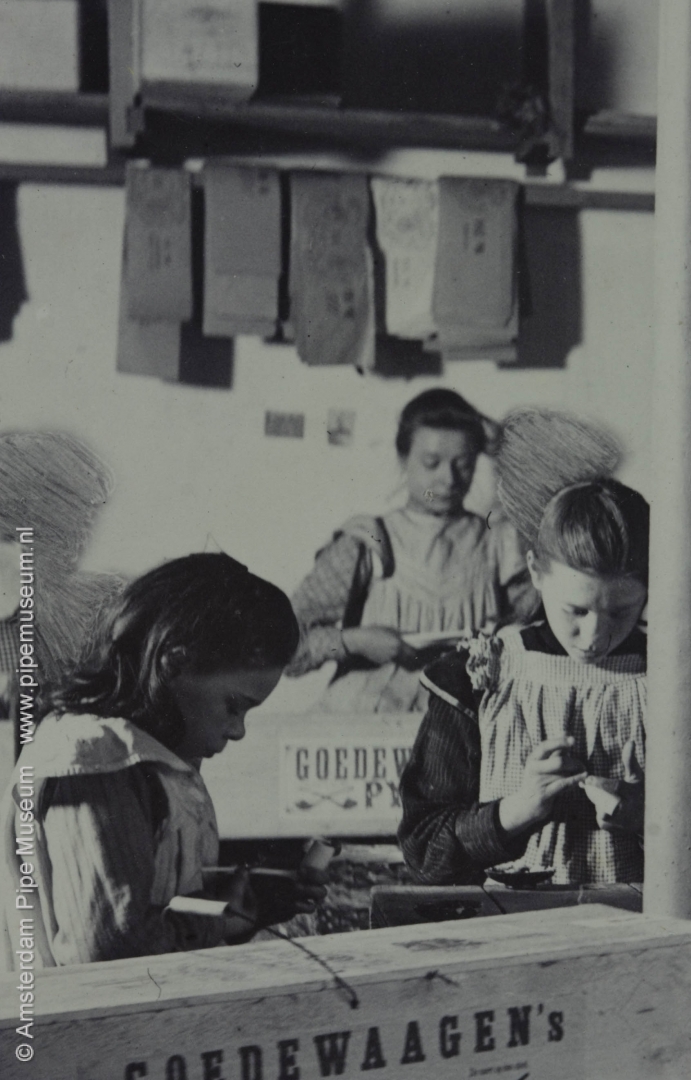
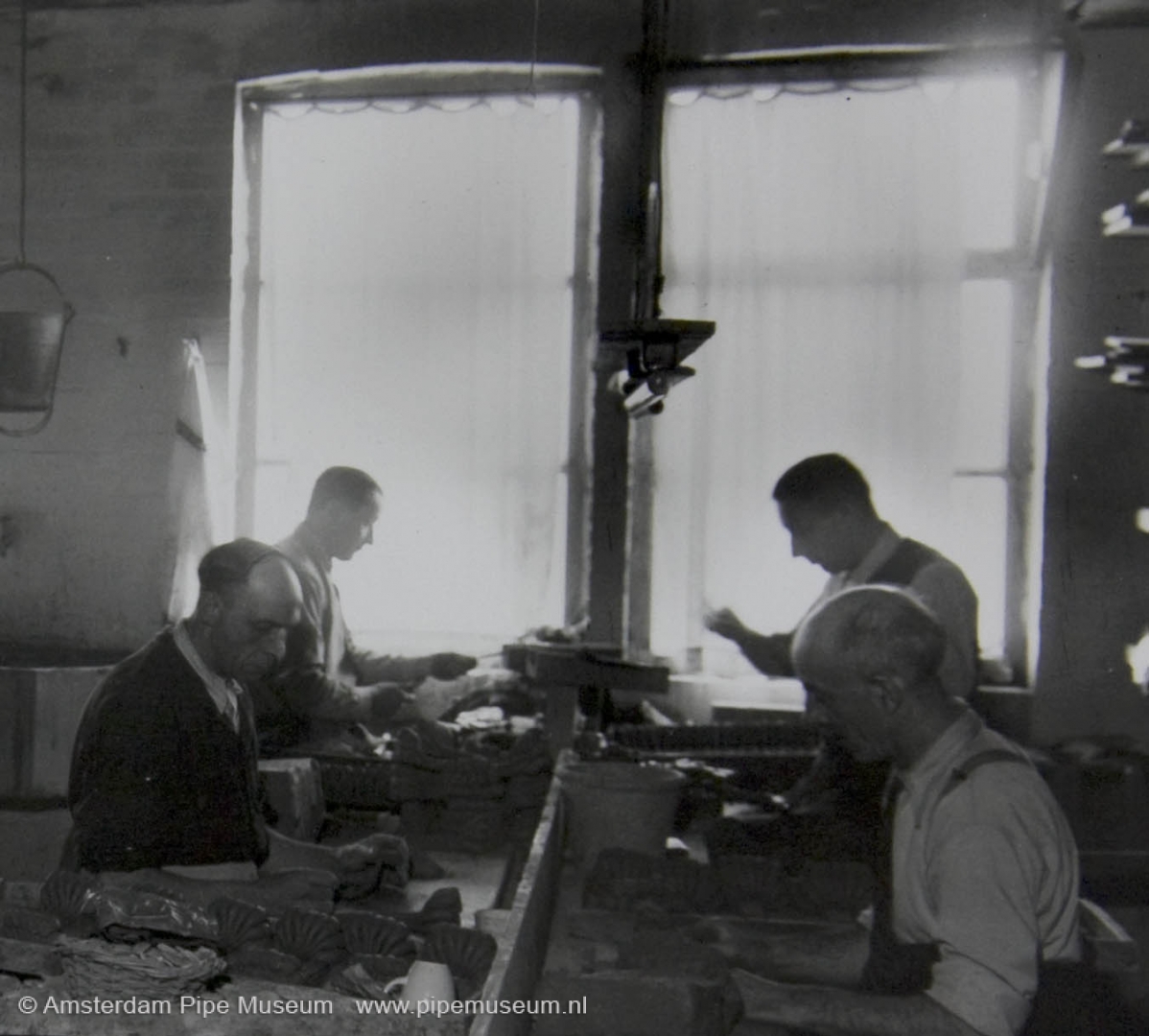
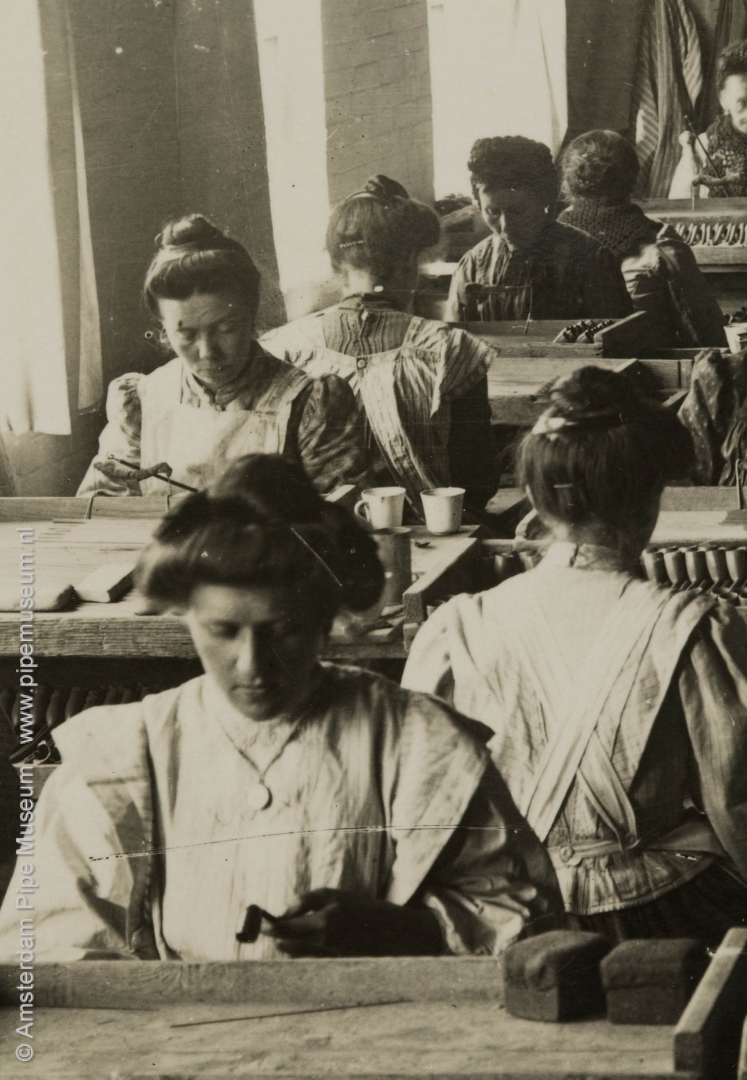
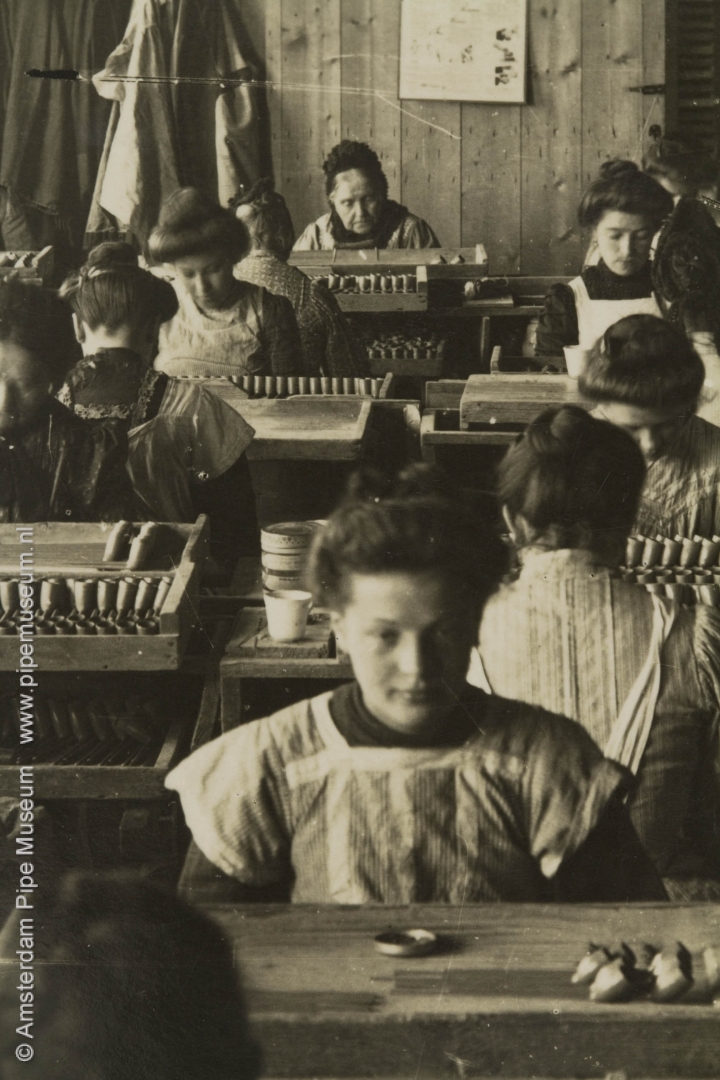
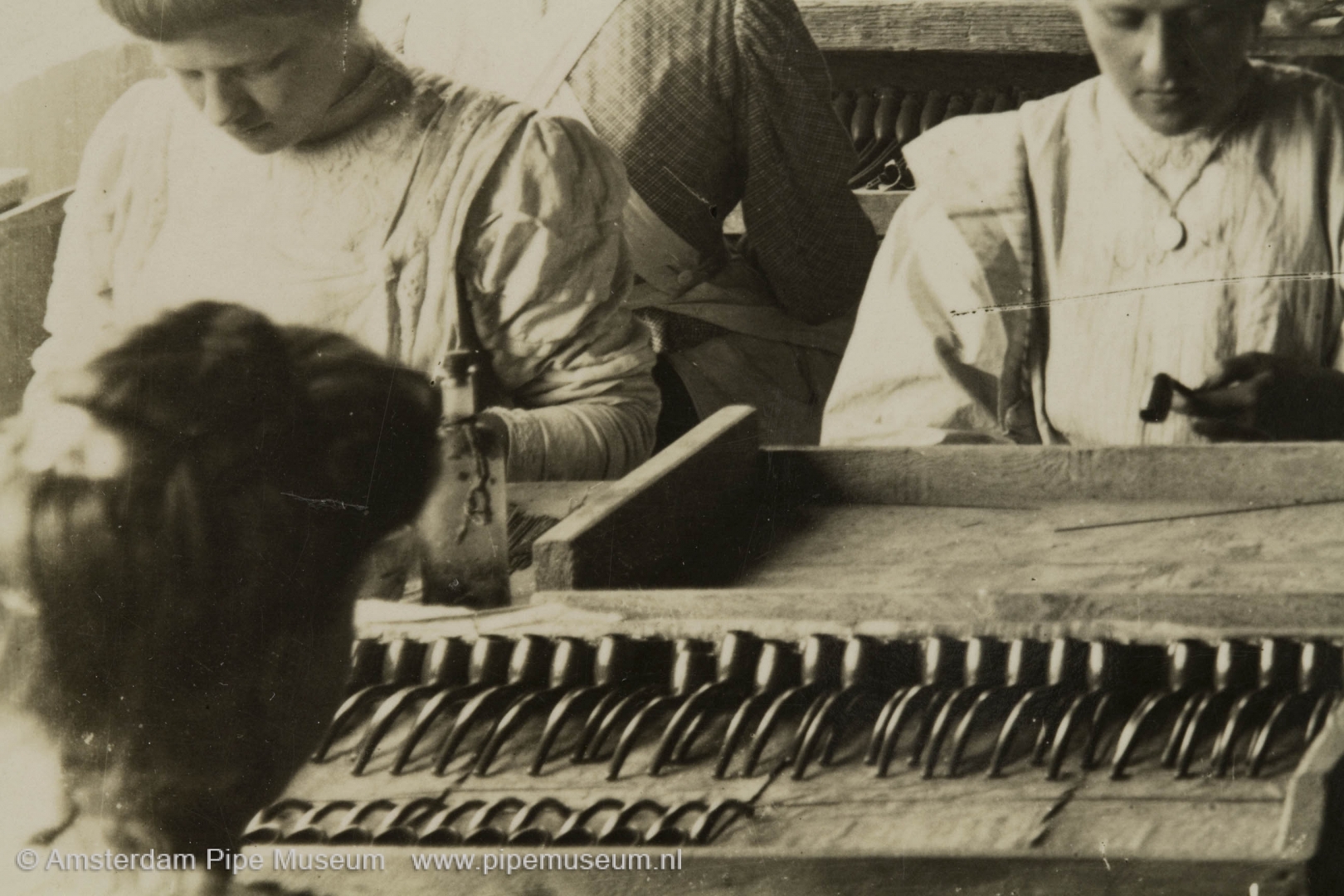
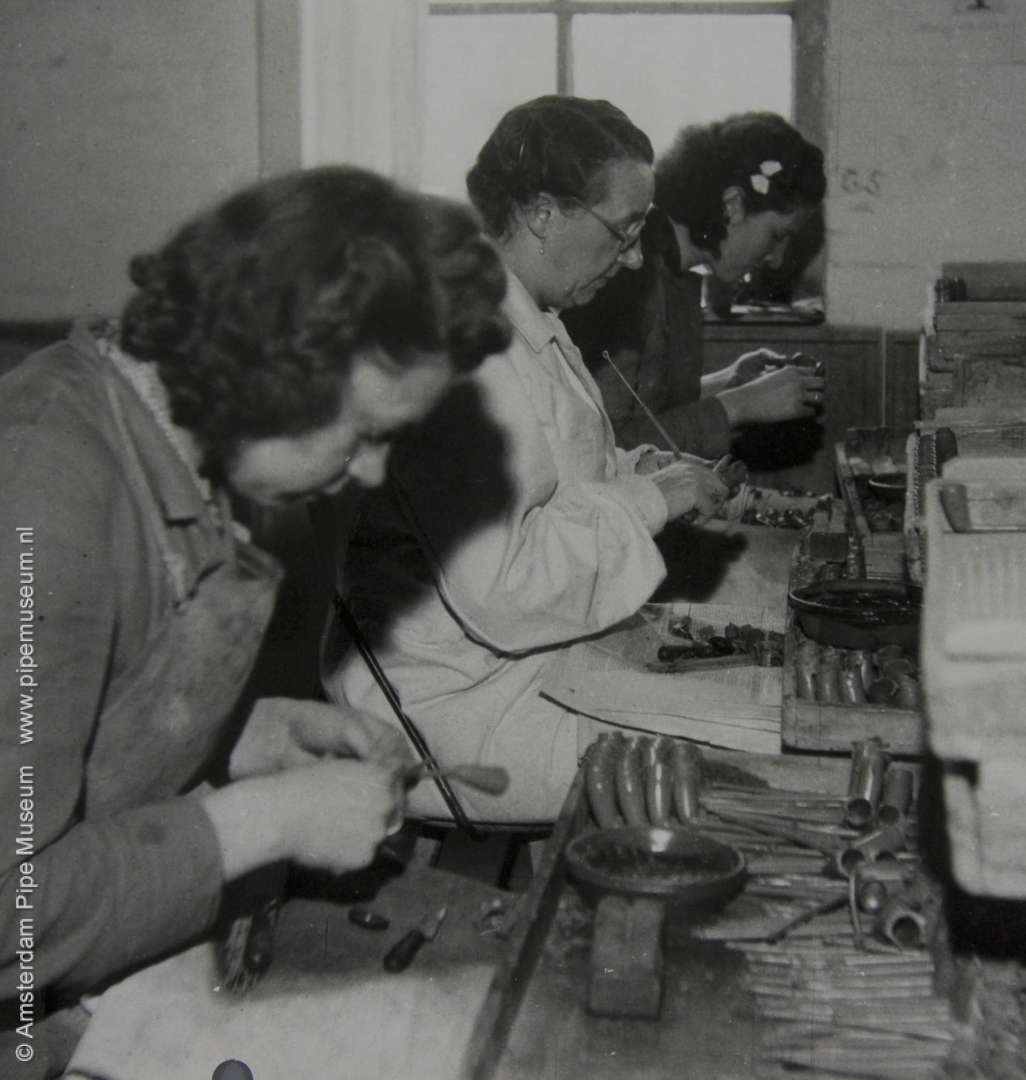
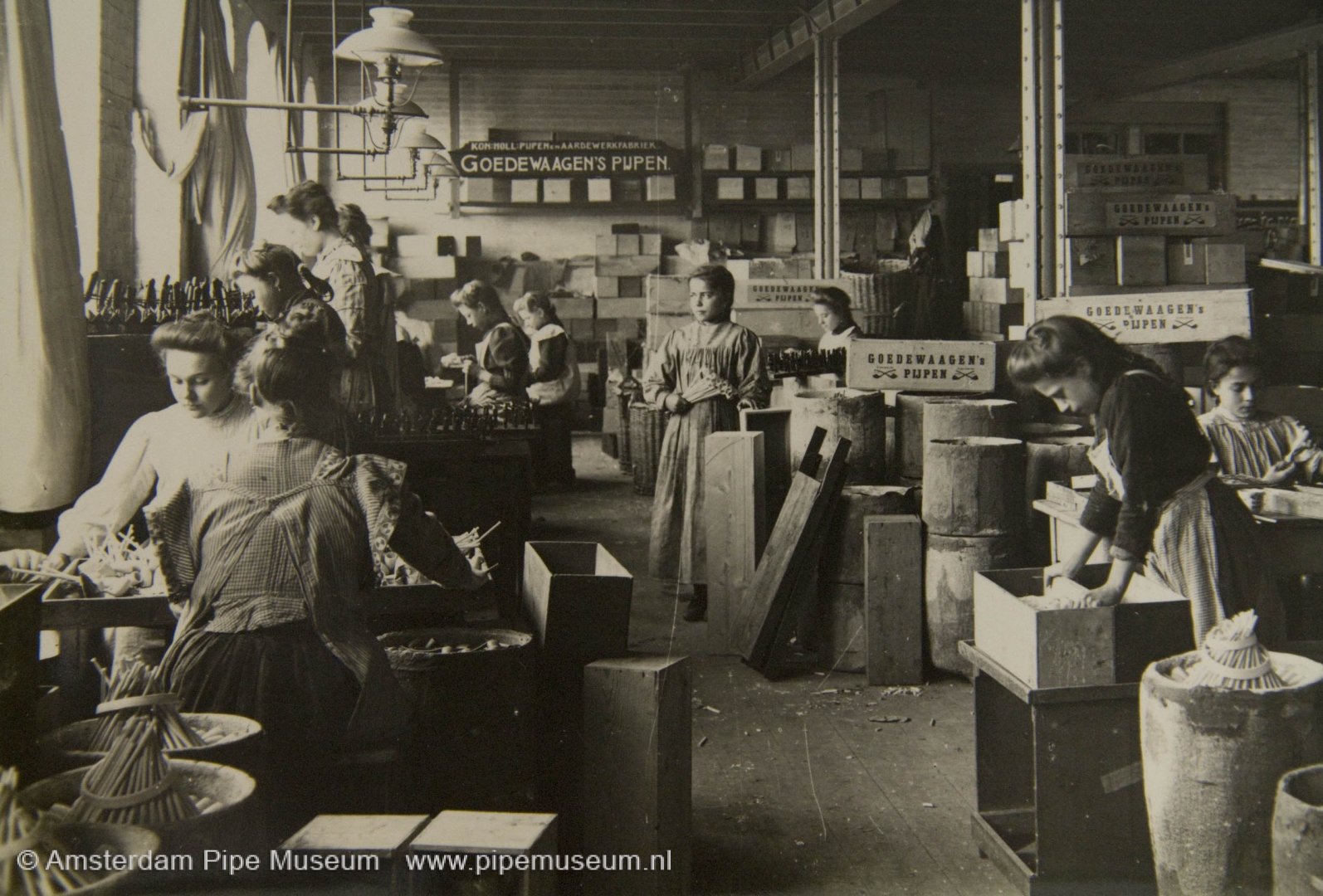
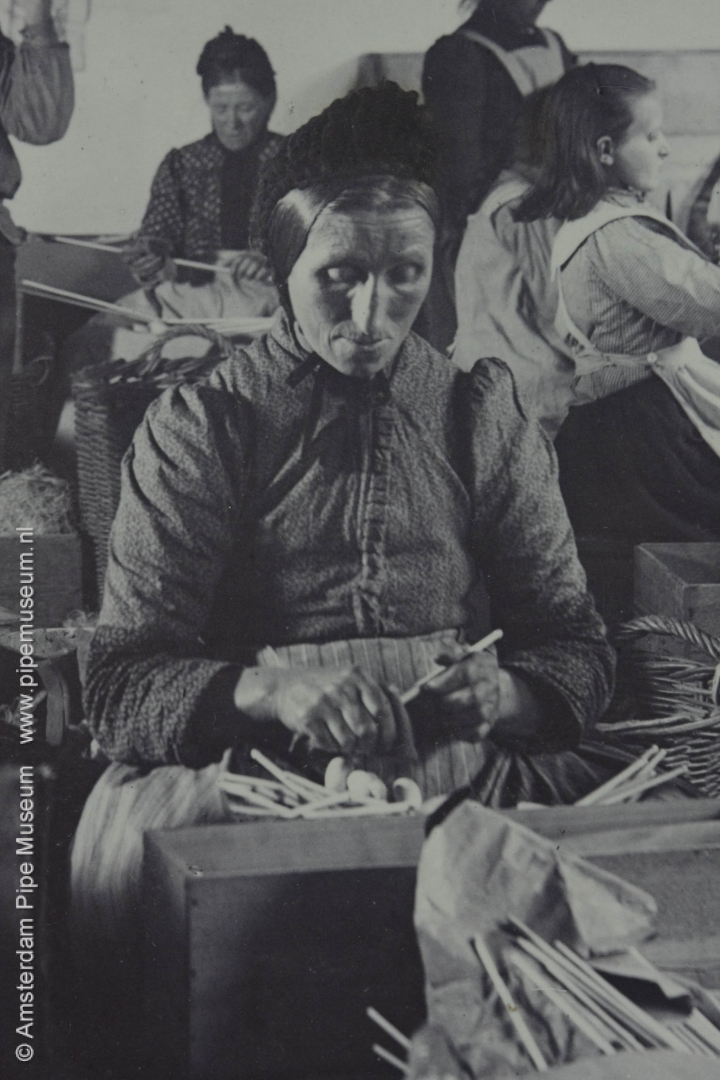
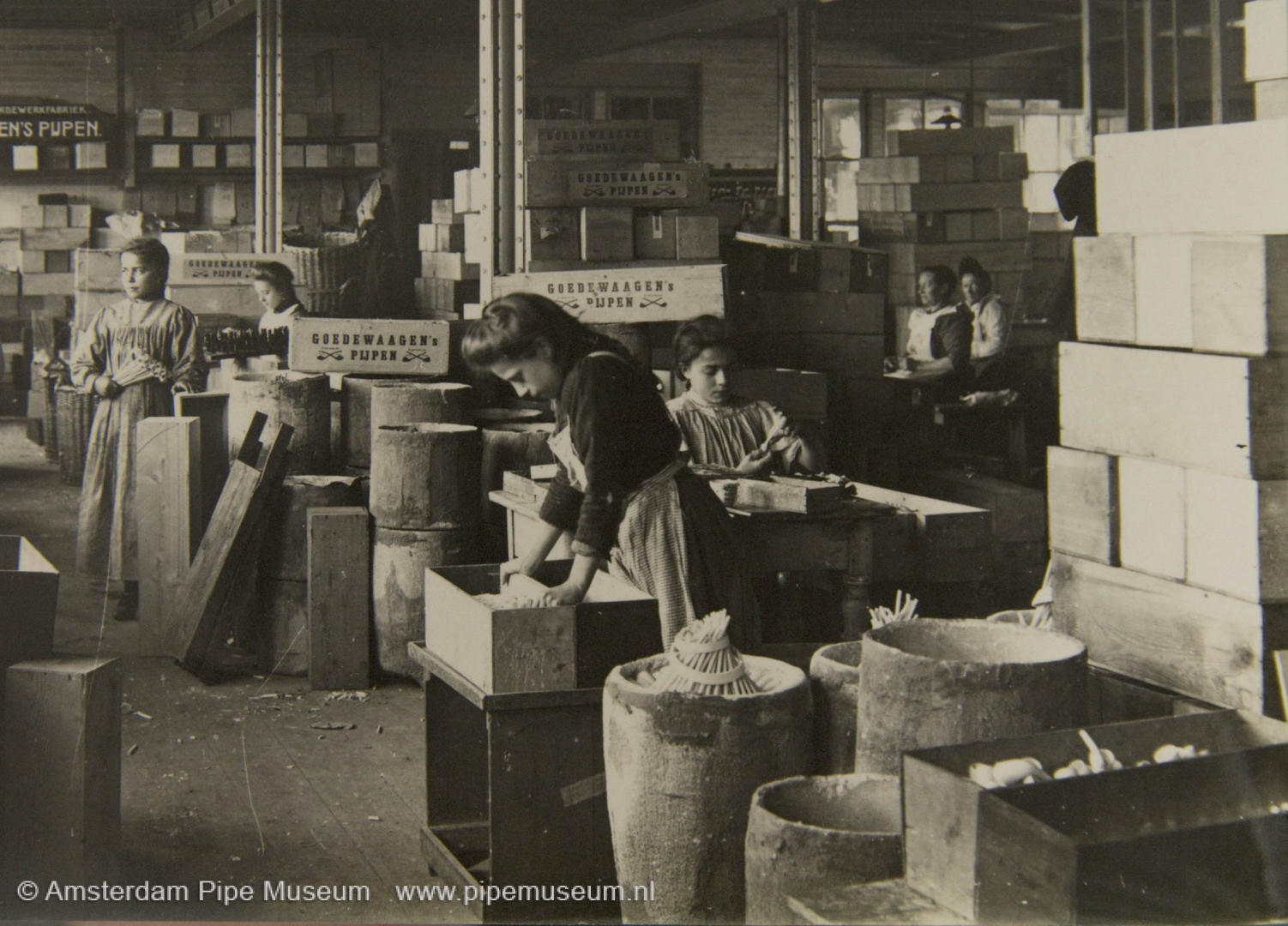
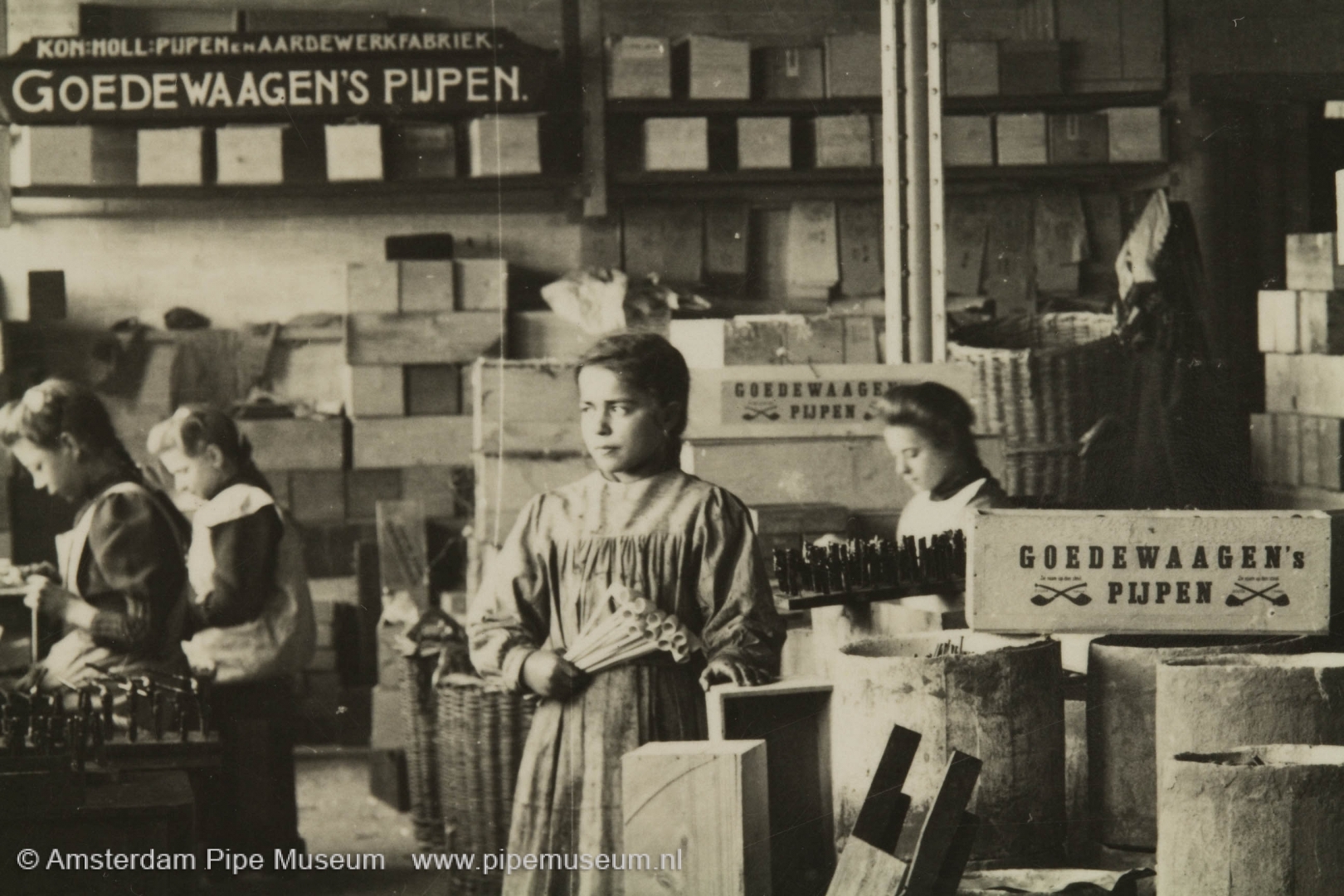
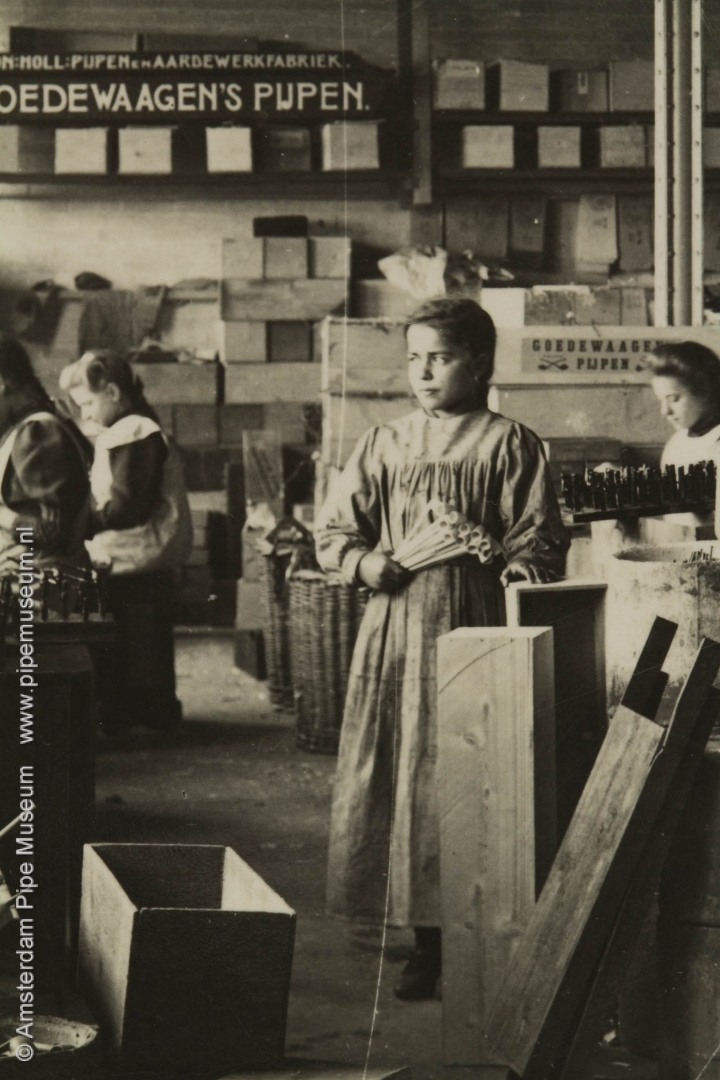
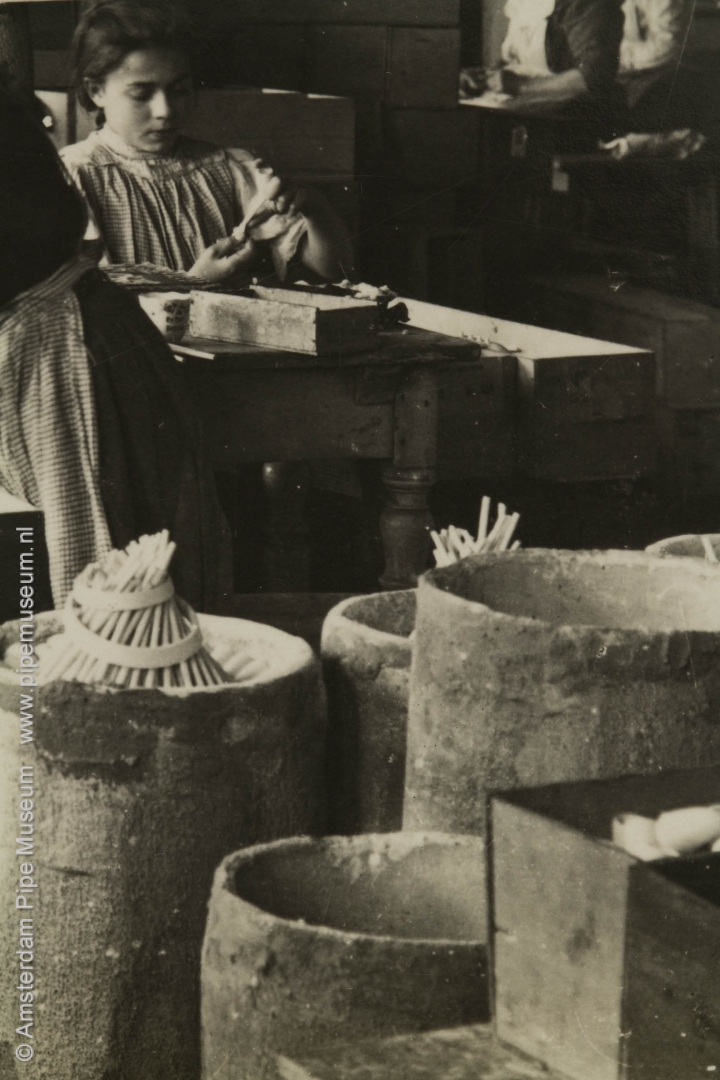
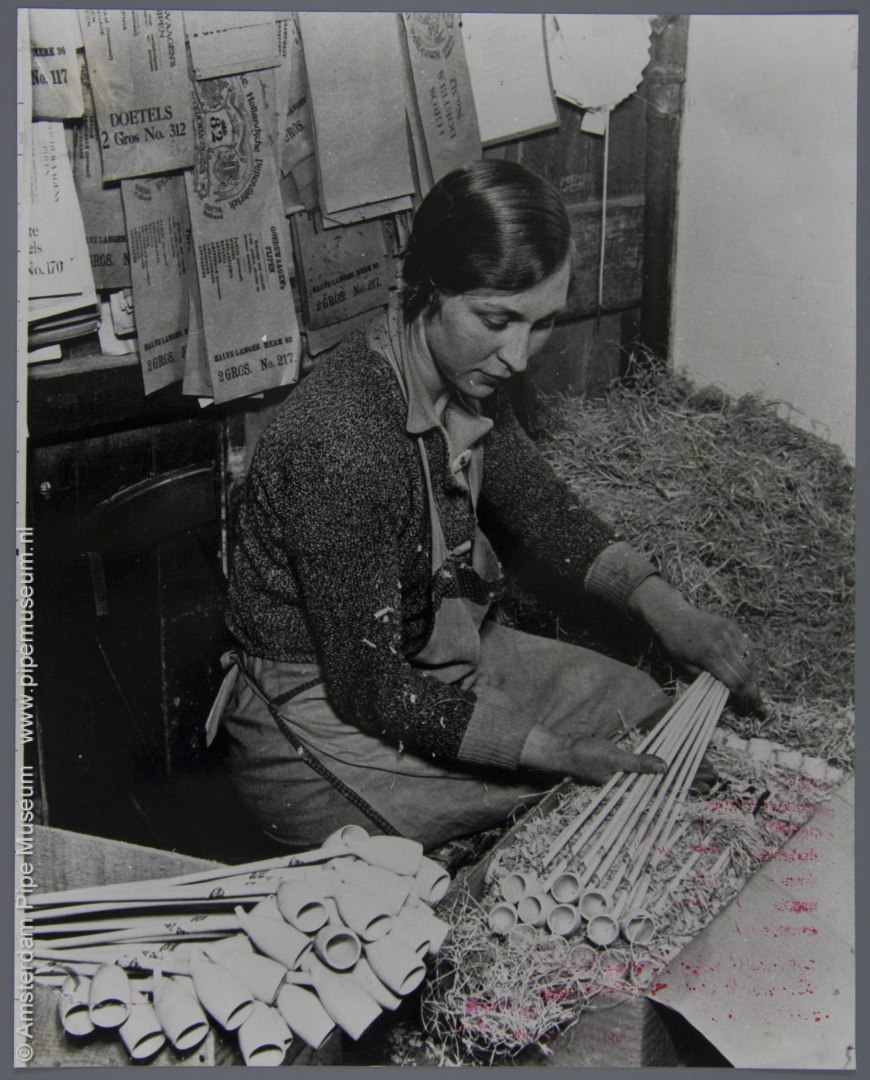
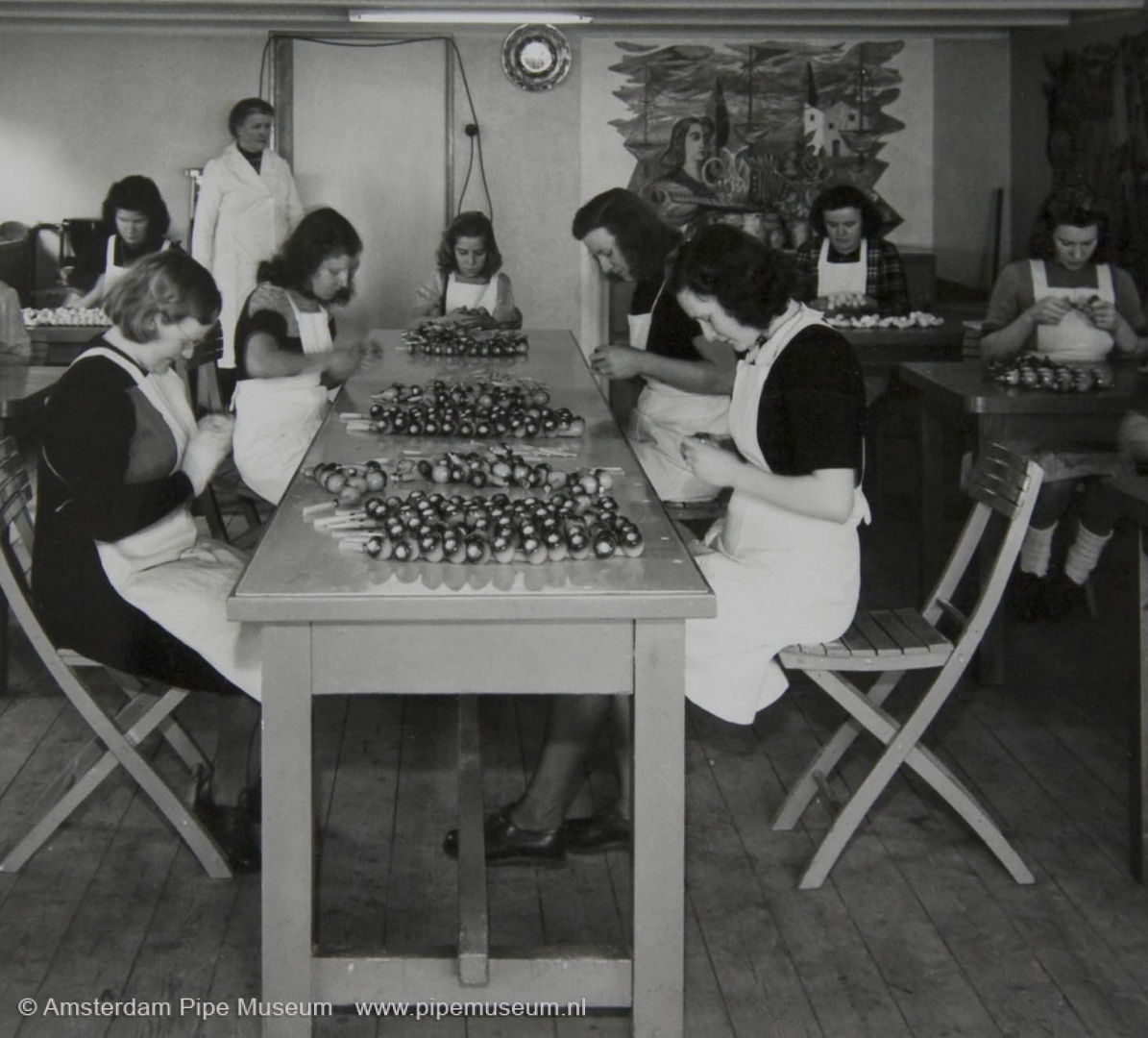
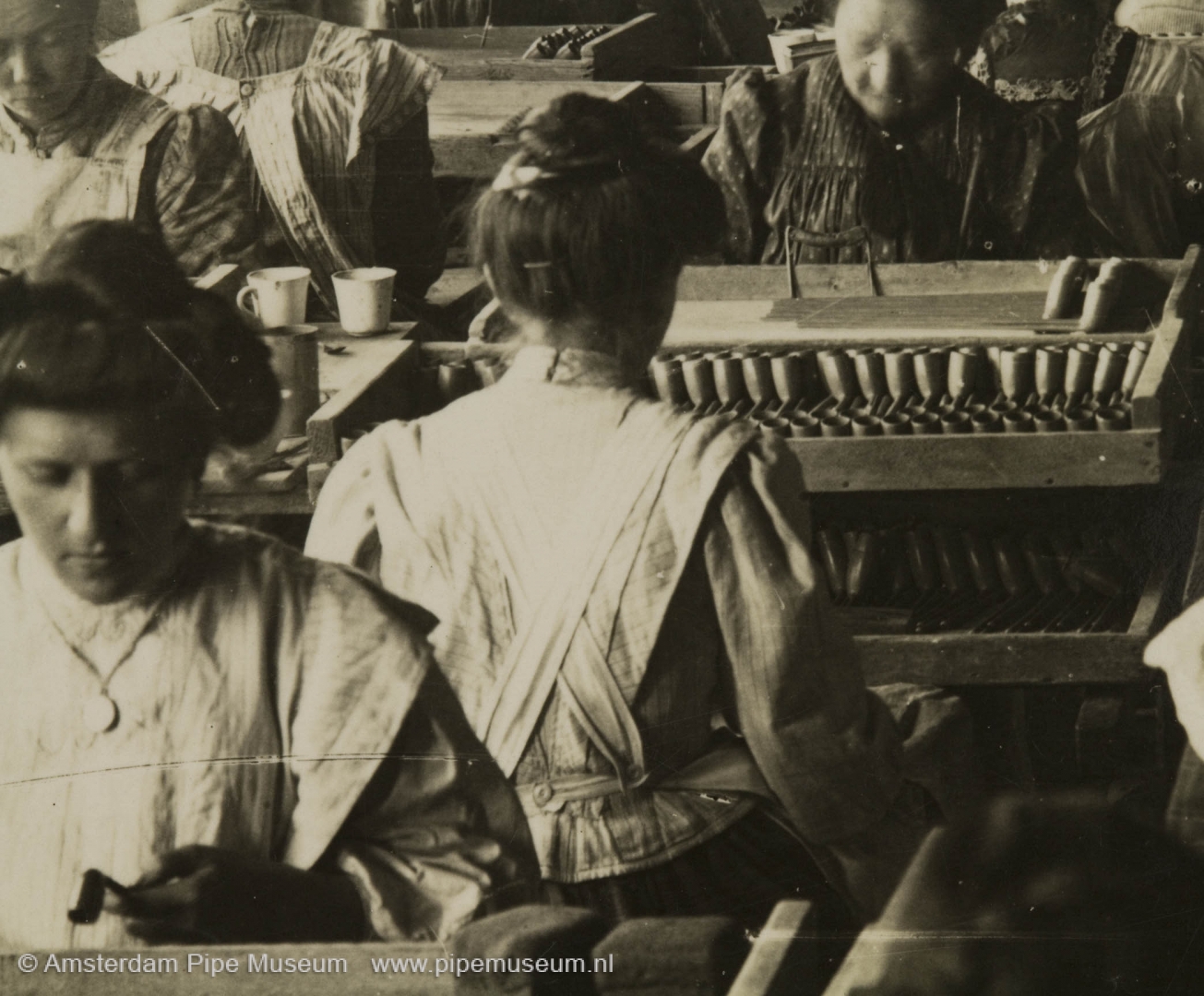
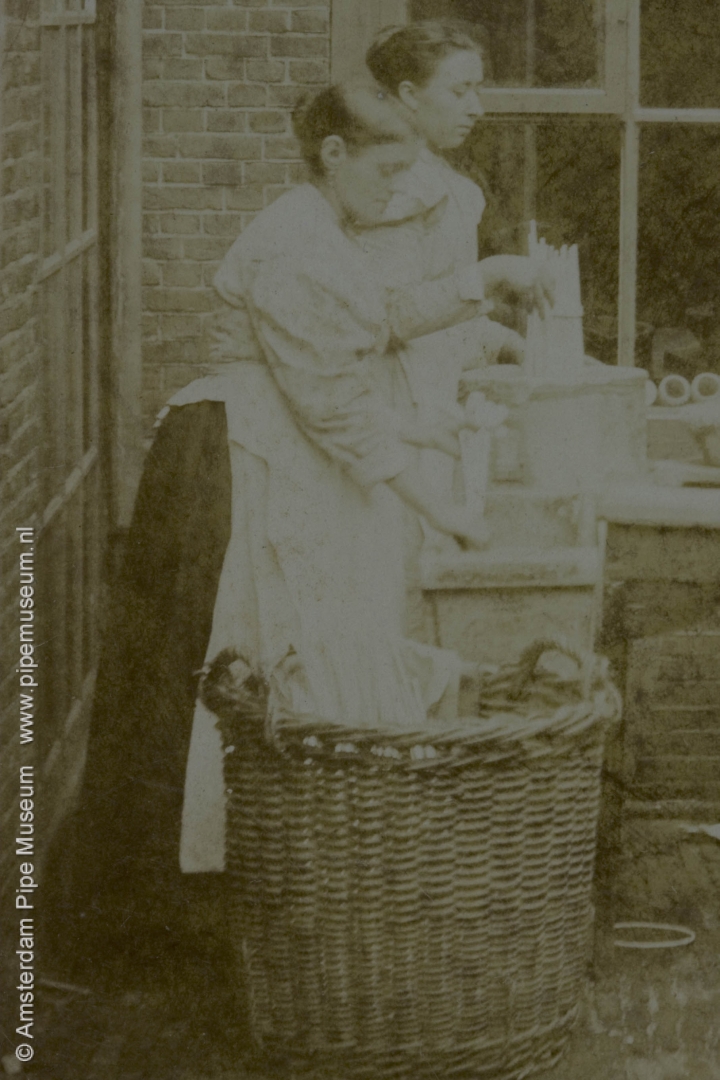
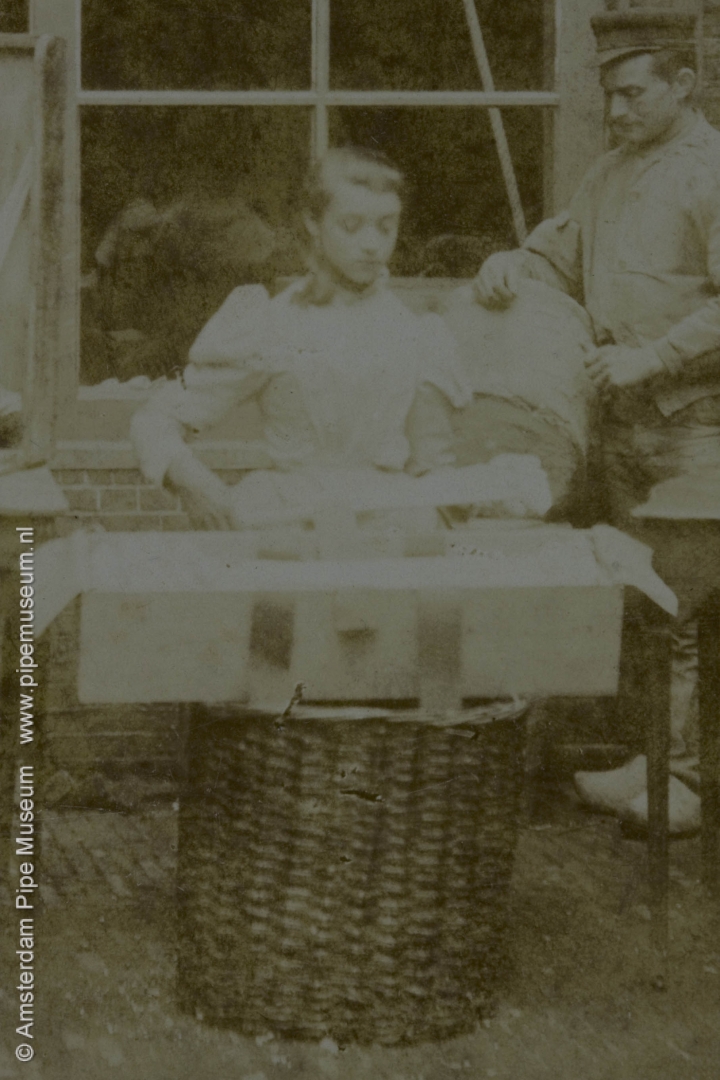
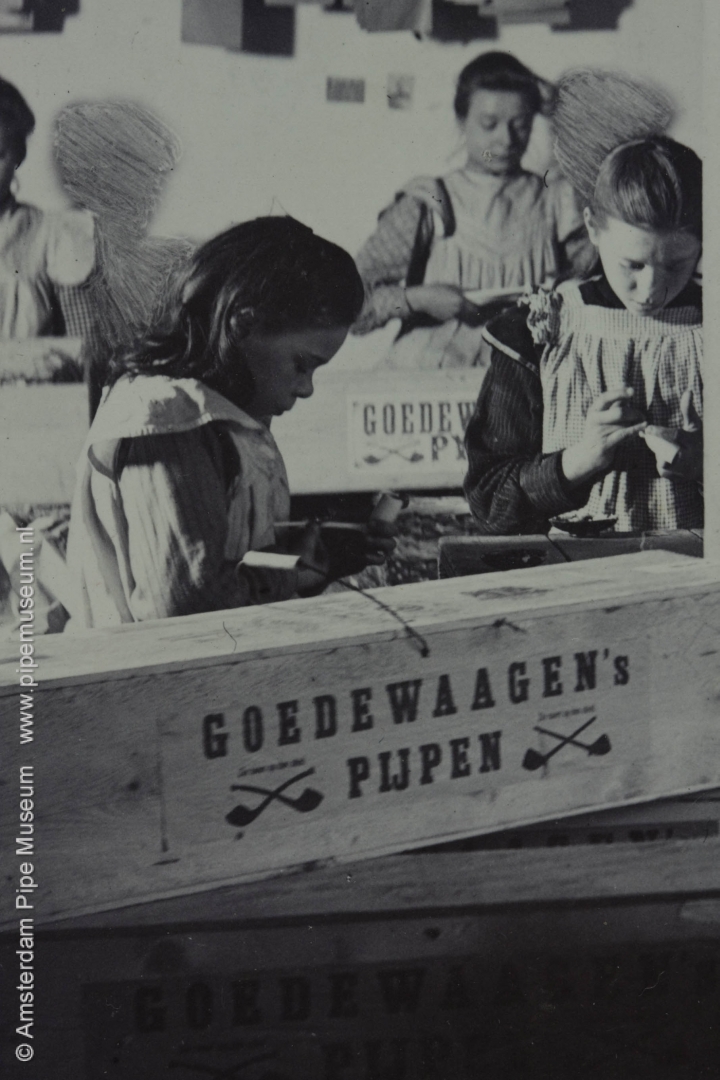
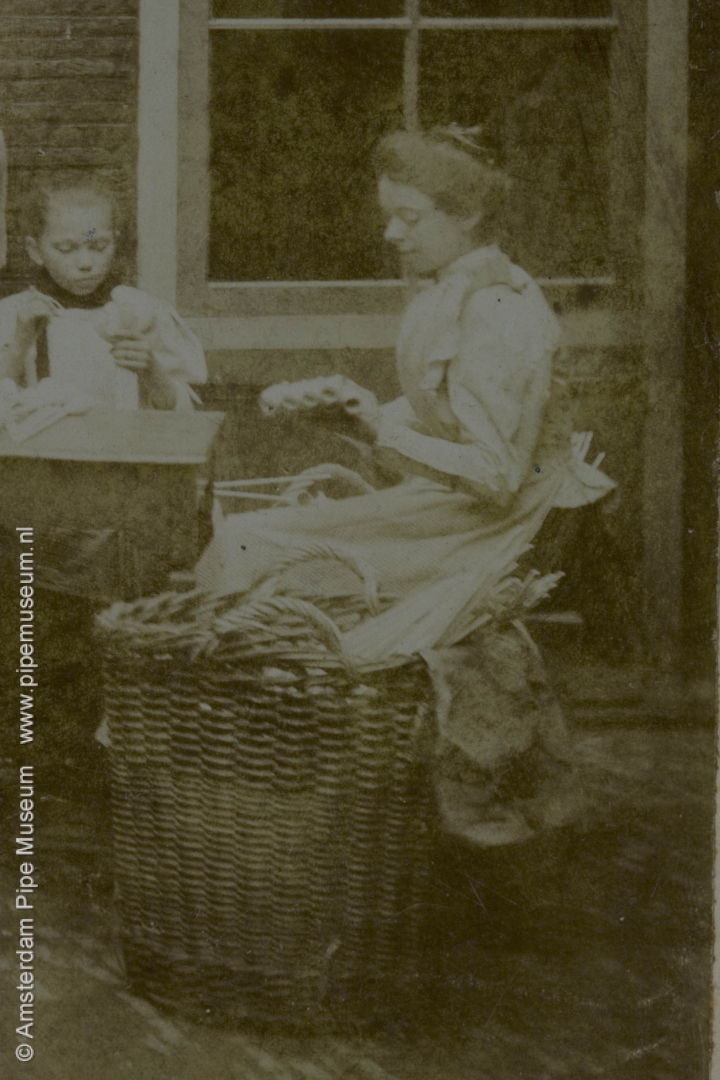
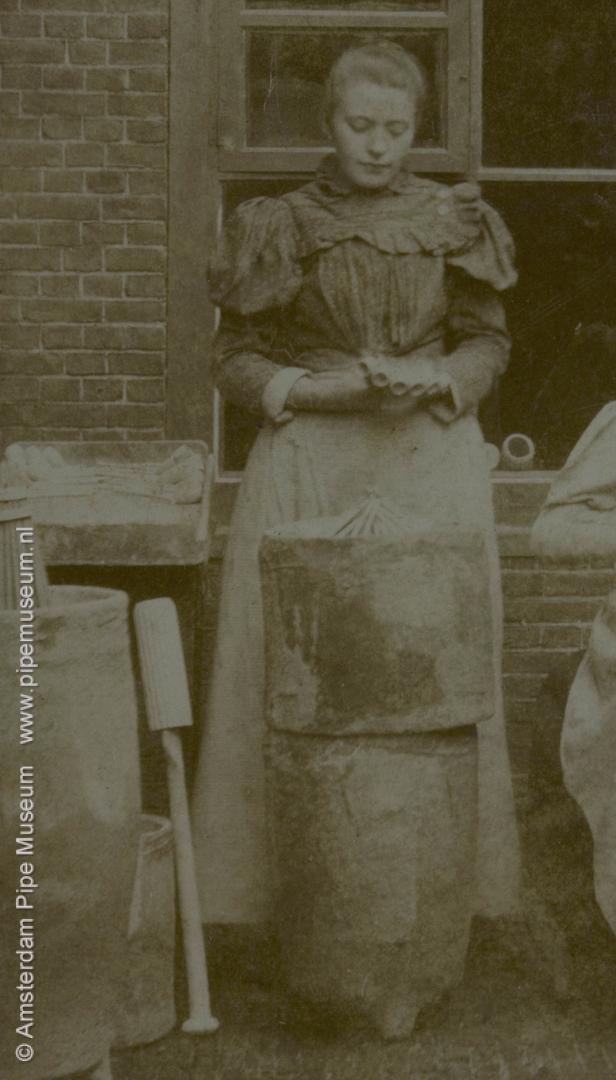
Being leather dry the pipes are brought to the women’s workshop, where women and girls take care of the finishing. First they cut of the mould seams and make the bowl opening nice smooth and round. Also they stamp the makers' mark. Their lap serves to hold the three specific tools.
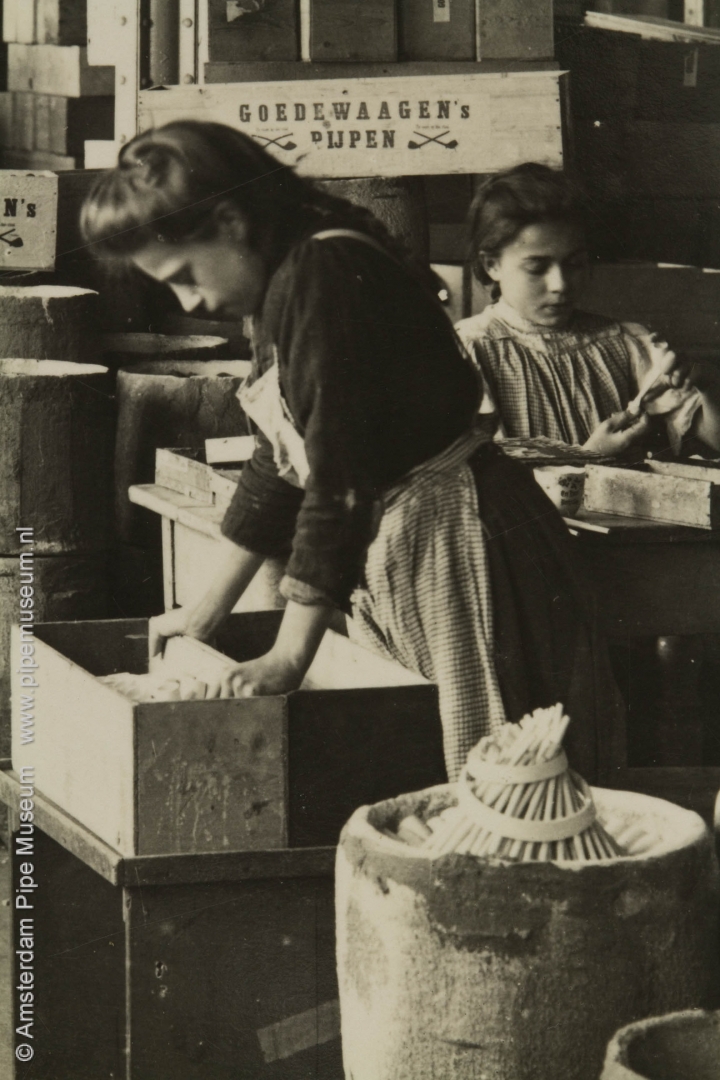
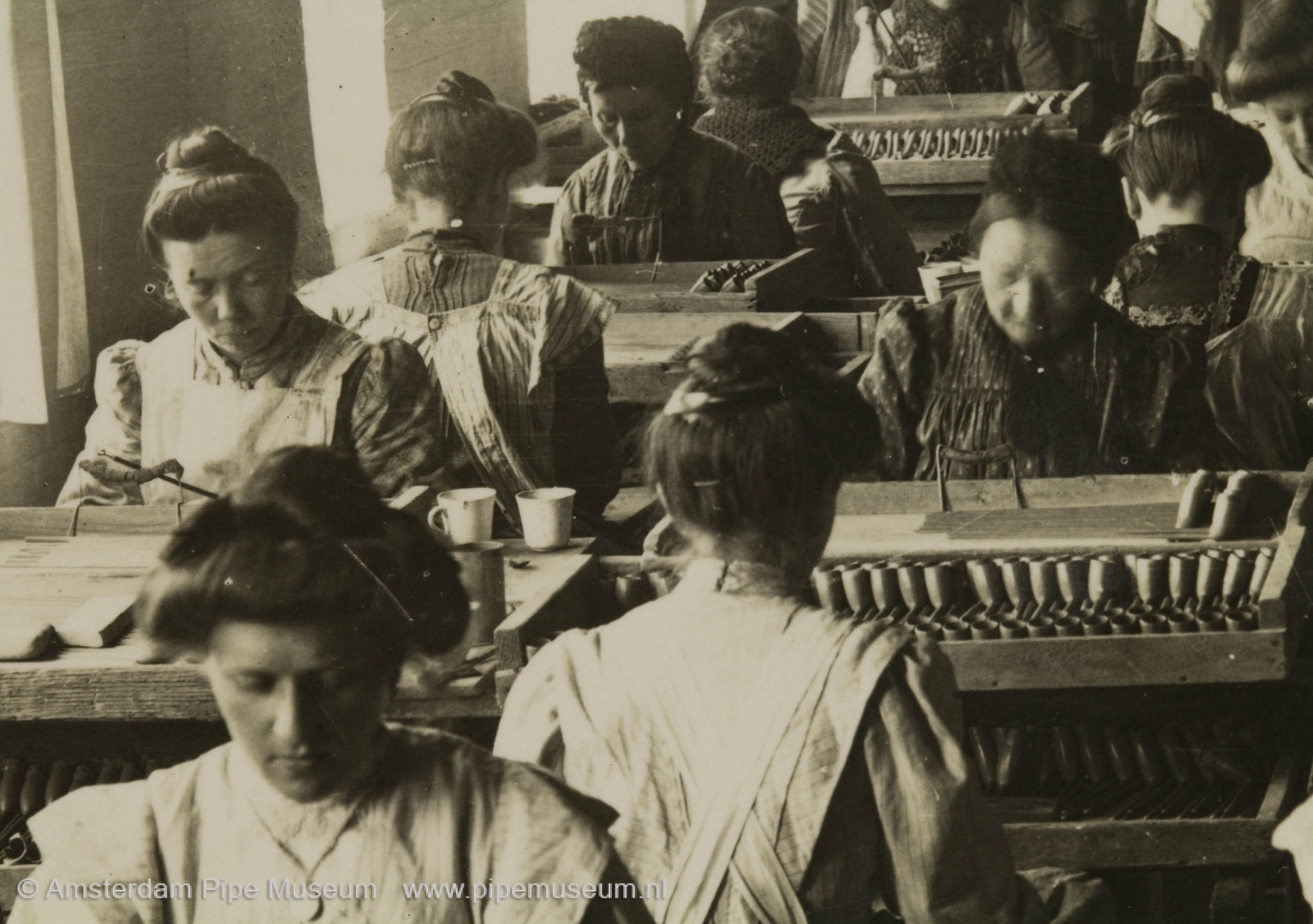
The best quality pipes are being polished to have a nice shine. This is done with a pin of agate that is moved along the surface of the almost dry clay. The women who take care of that job are called ‘glaasters’.

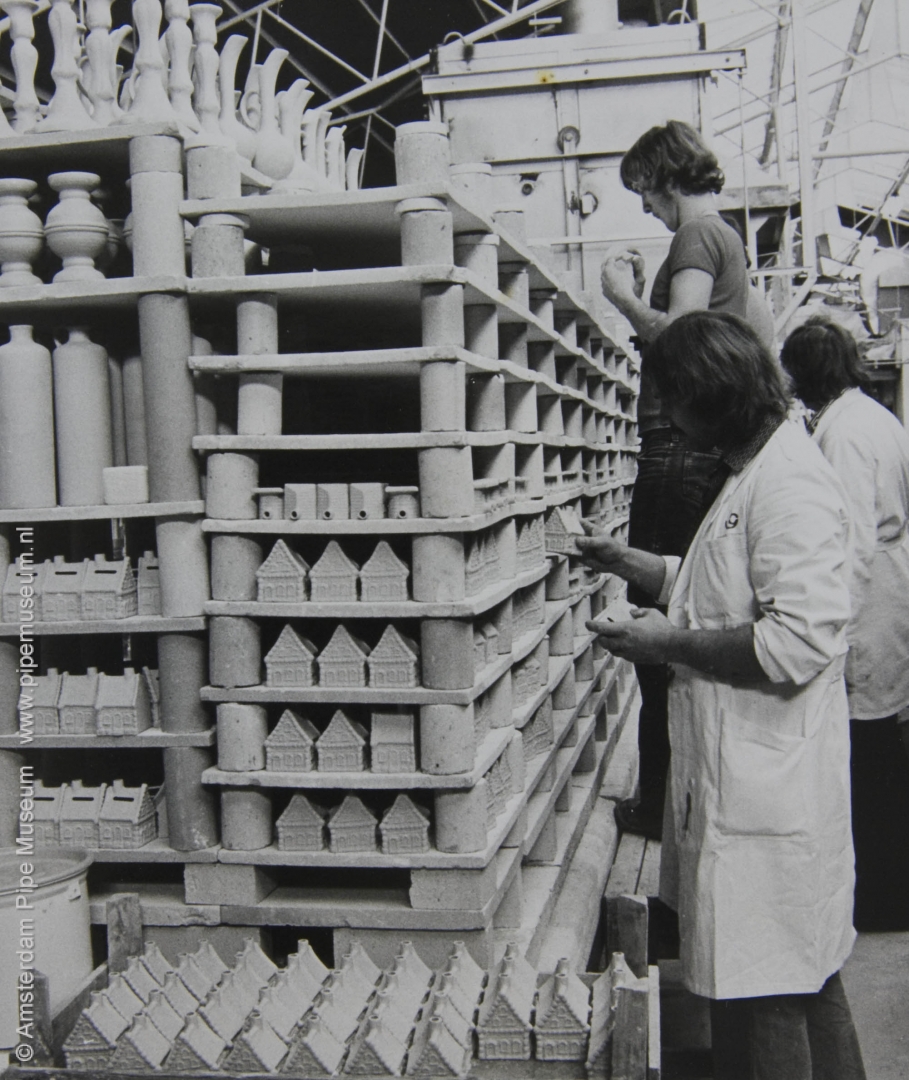
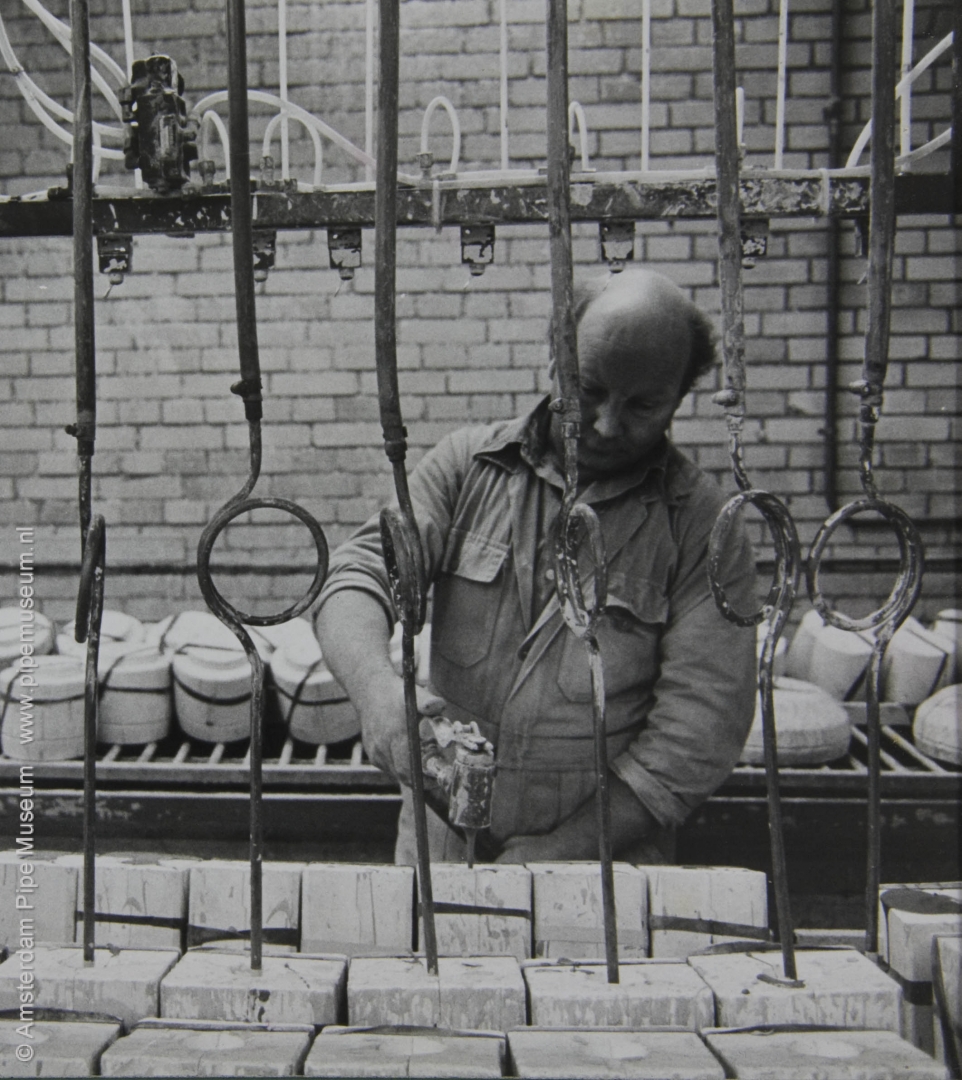
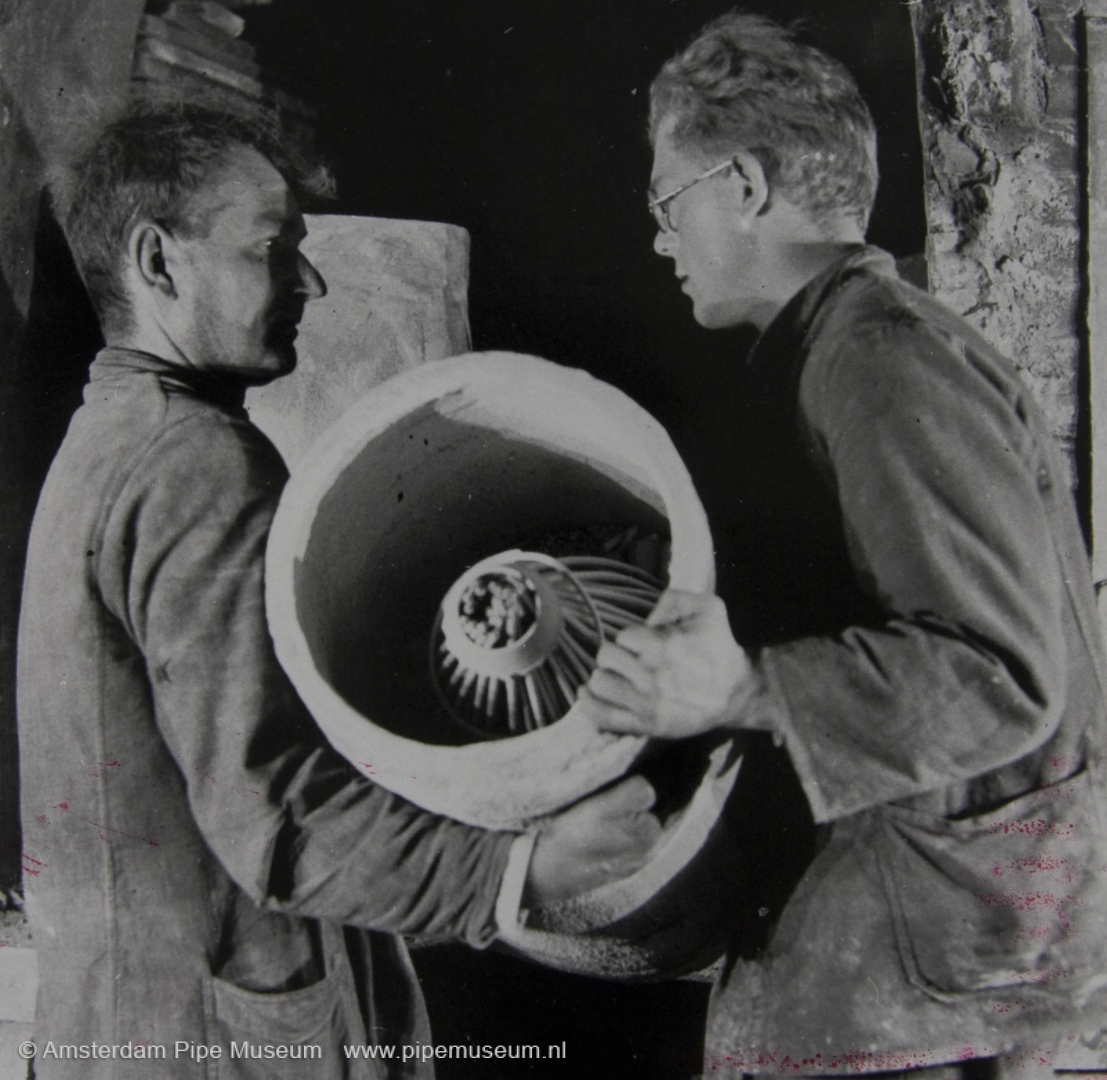
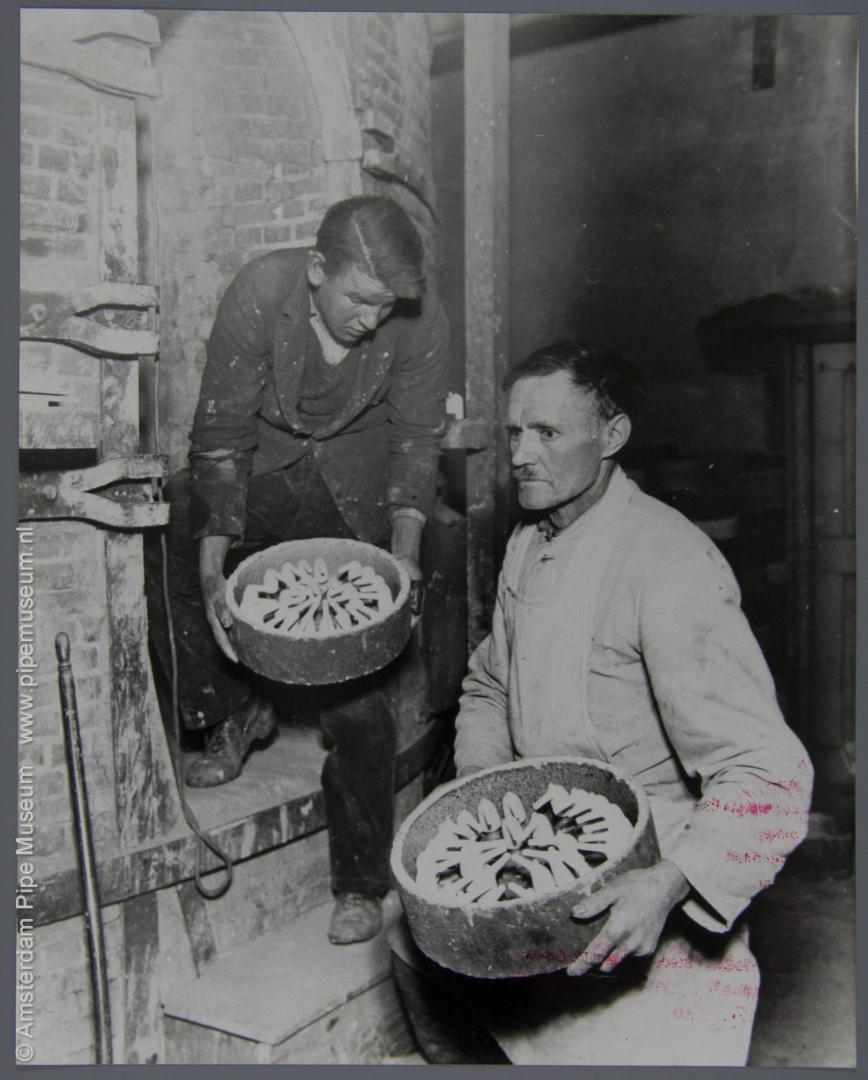
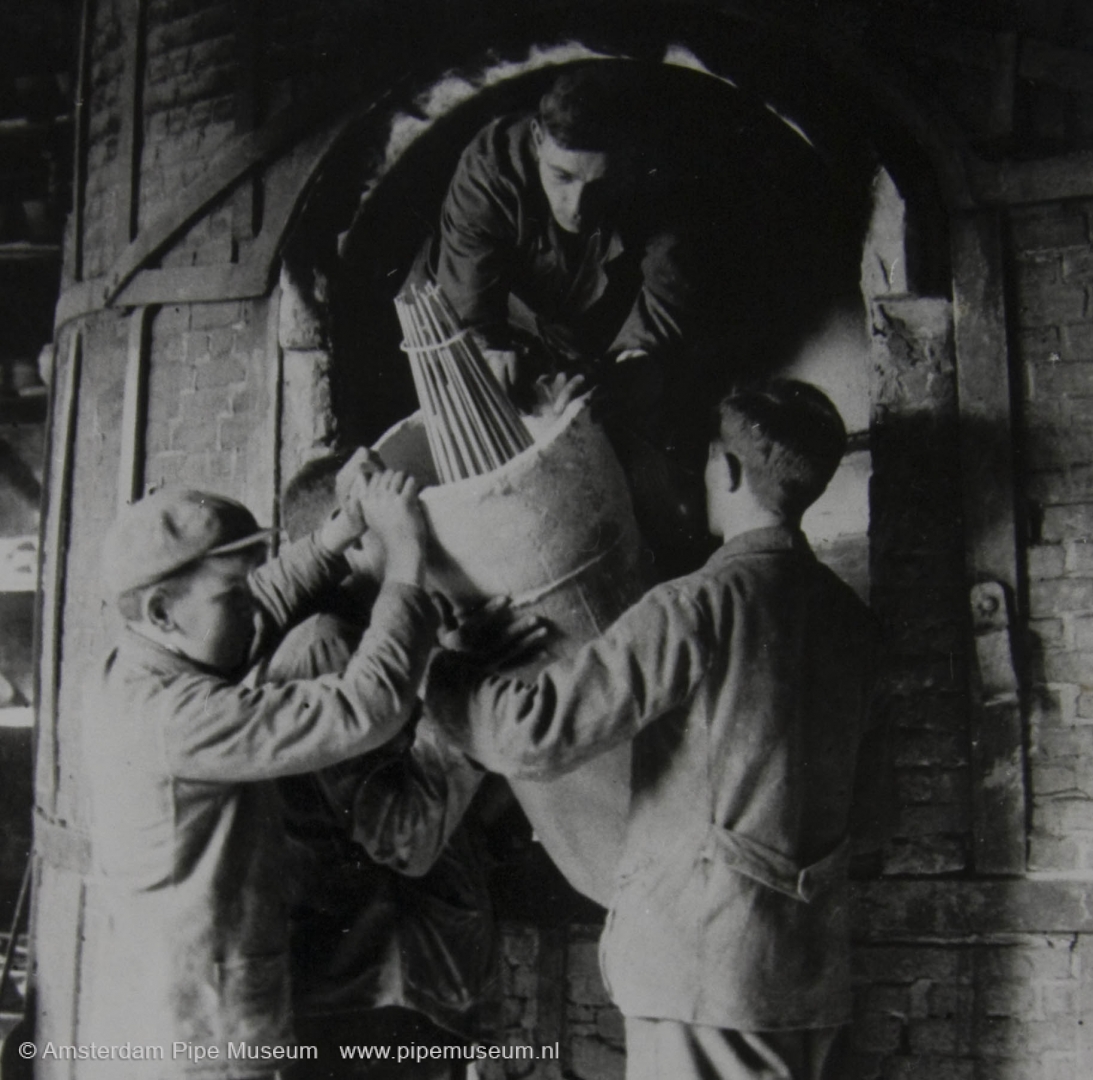
Now the pipe is ready to be backed in an ordinary potter’s kiln. To prevent discolouring of the fine white clay, the pipes are placed in saggars, covered with a lid. If this was not done the smoke and fire would discolour the pipes.

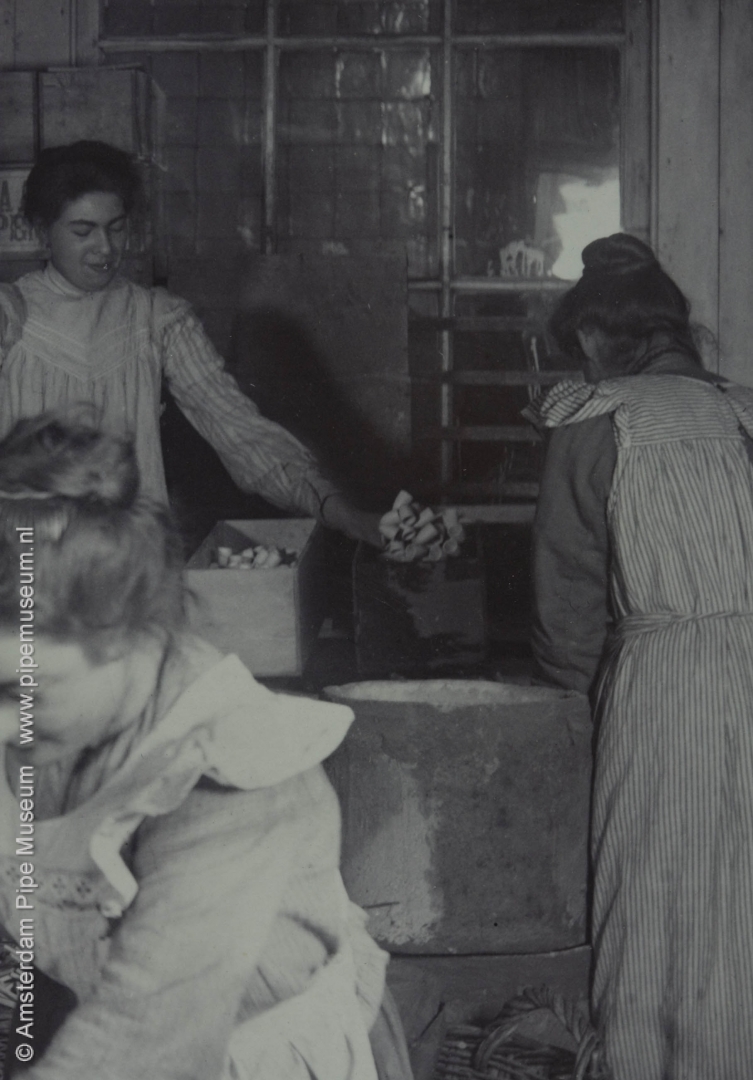
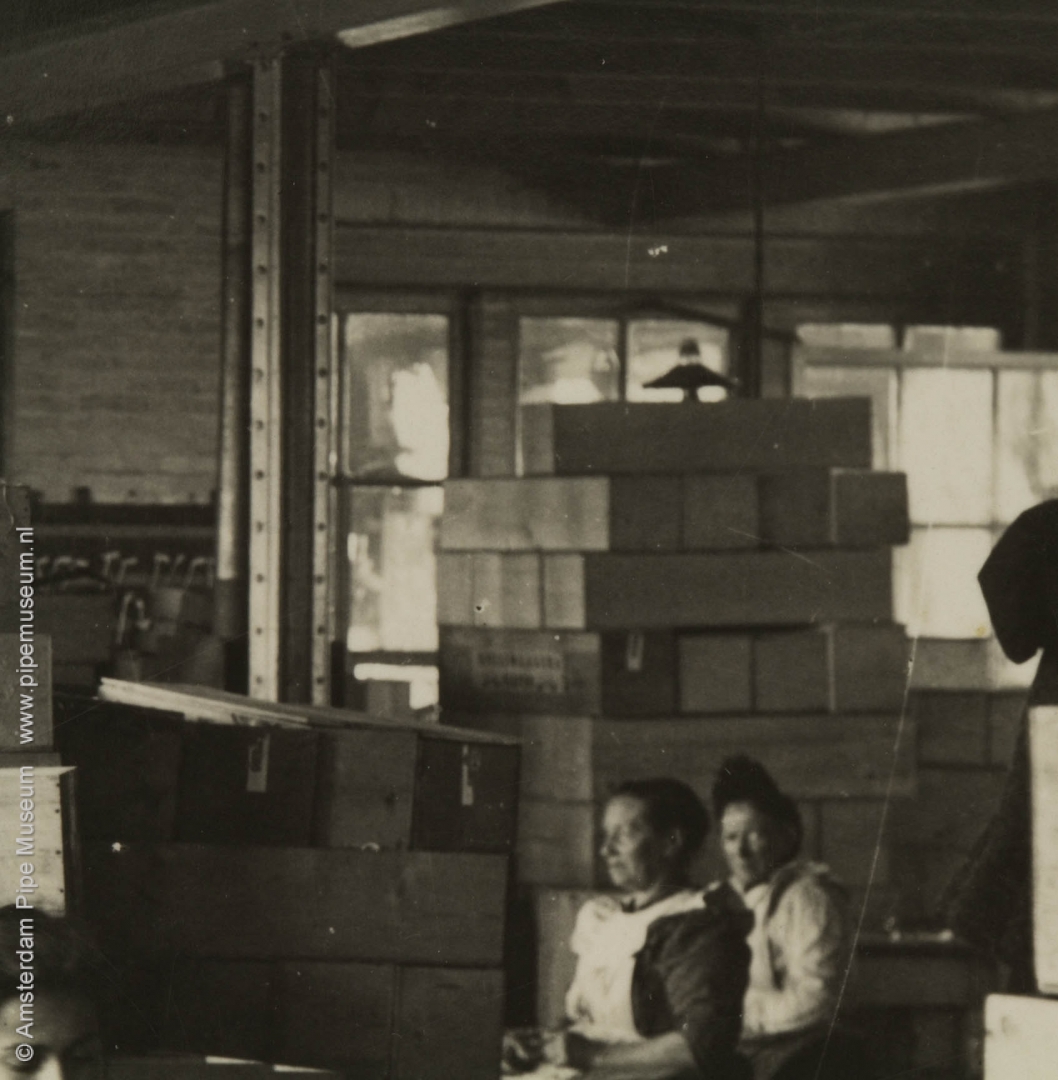
Back from the firing the pipes are ready to be sold. First they are checked on quality. The highest quality pipes are soaked in a wax-soap solution and rubbed with a cloth to have a perfect shine. Pipes are packed in wooden boxes and baskets. On the paper wrapper the pipemaker proudly presents his makers' mark, often framed with an attractive decoration.

the rolder making the basic shape of the clay pipe, firm P. Goedewaagen & Sons, Gouda, the Netherlands, 1890
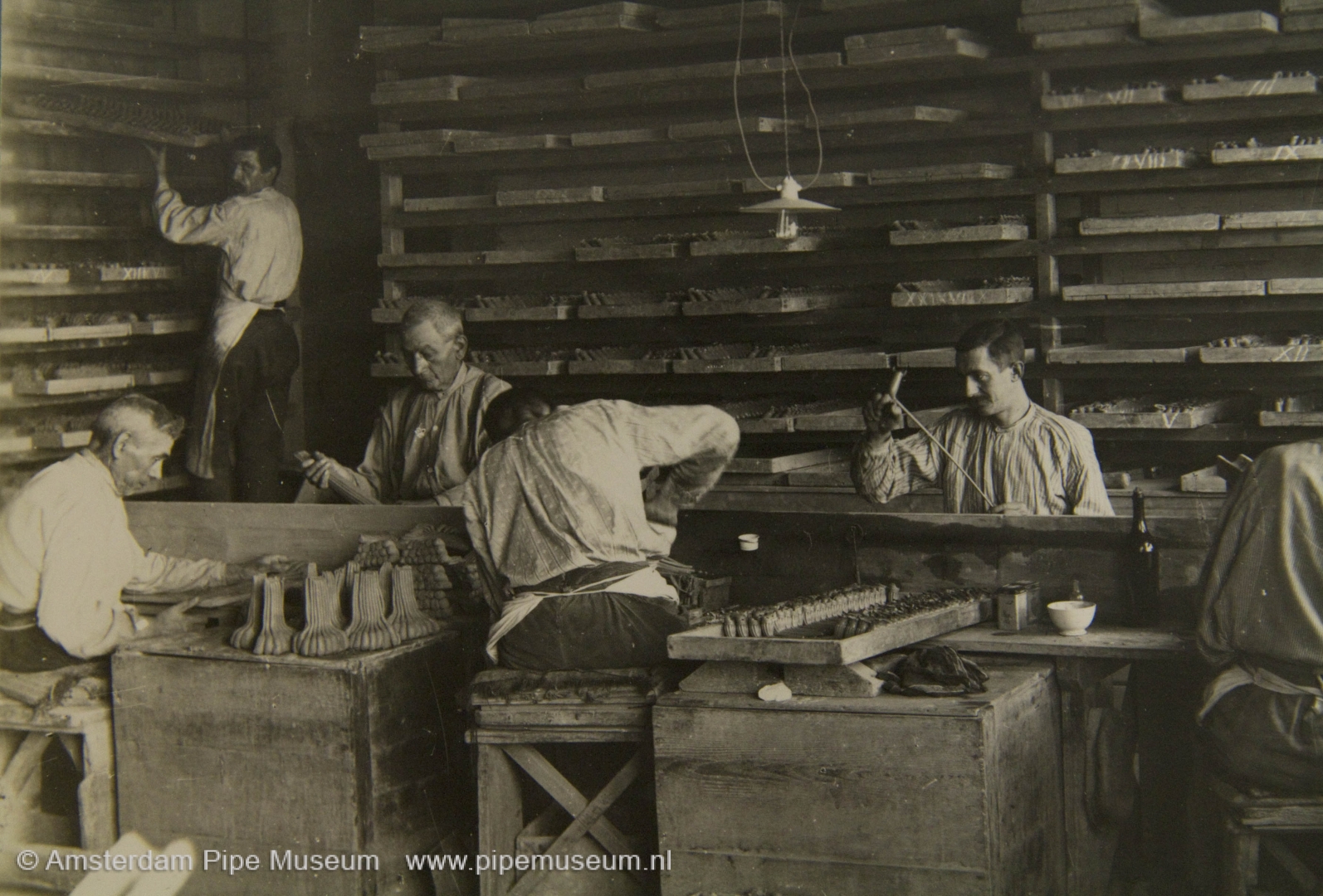
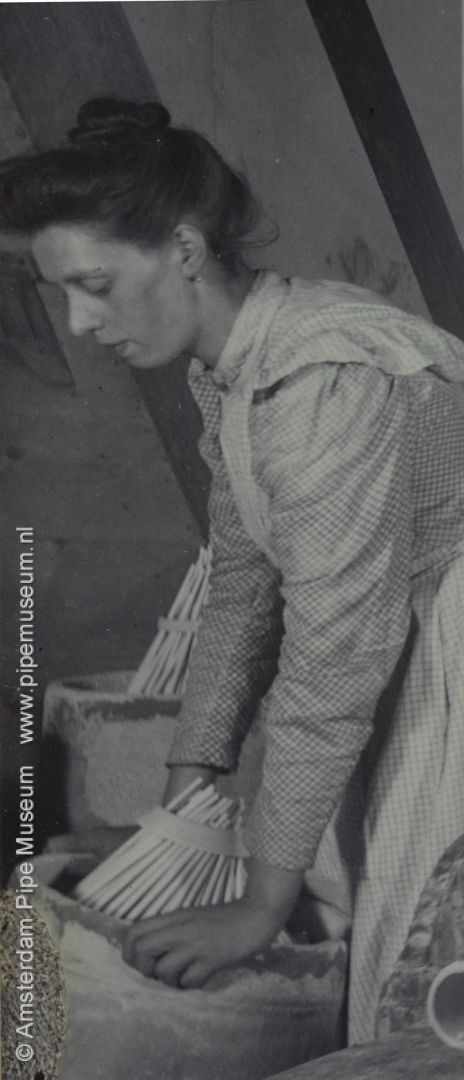
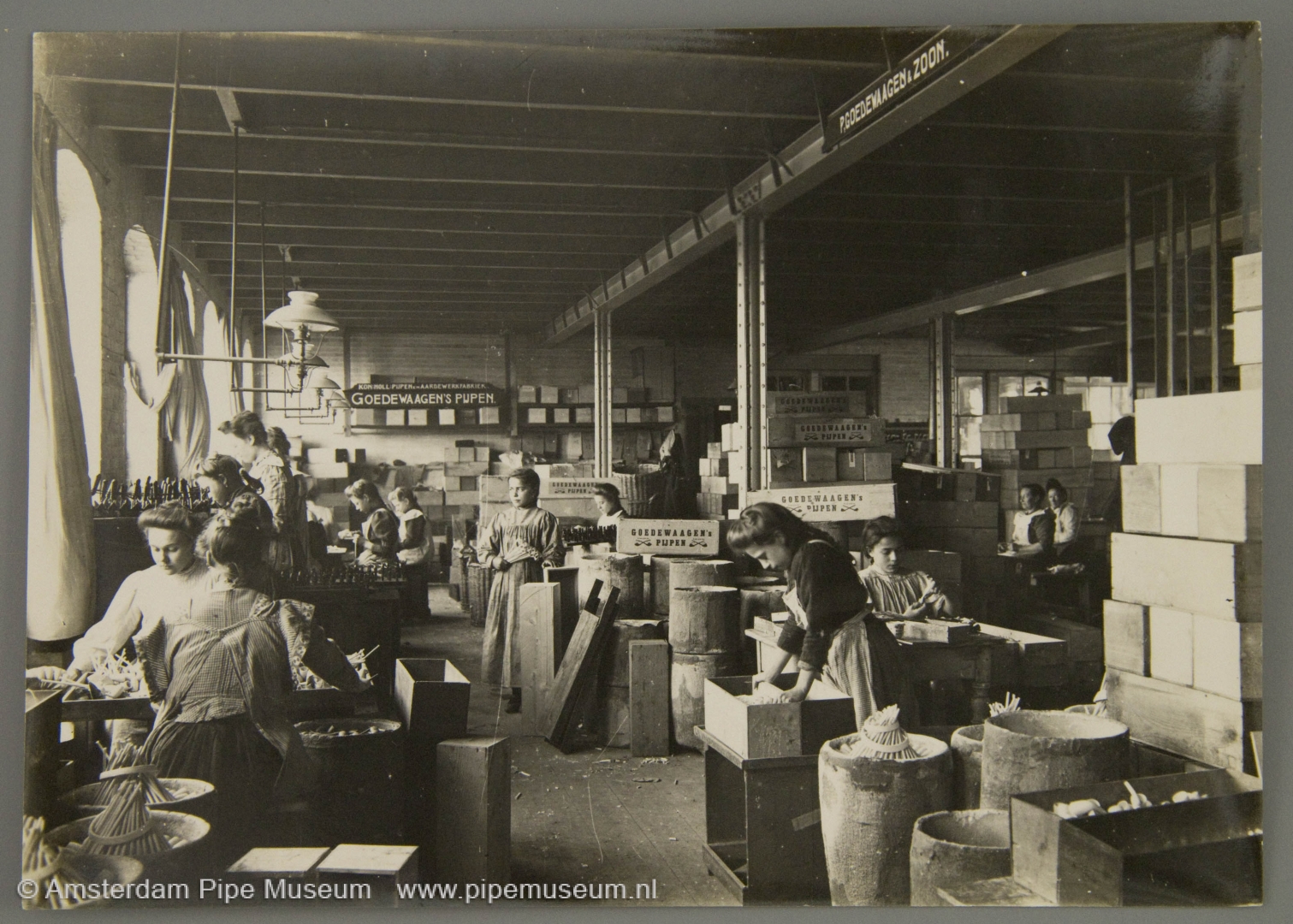
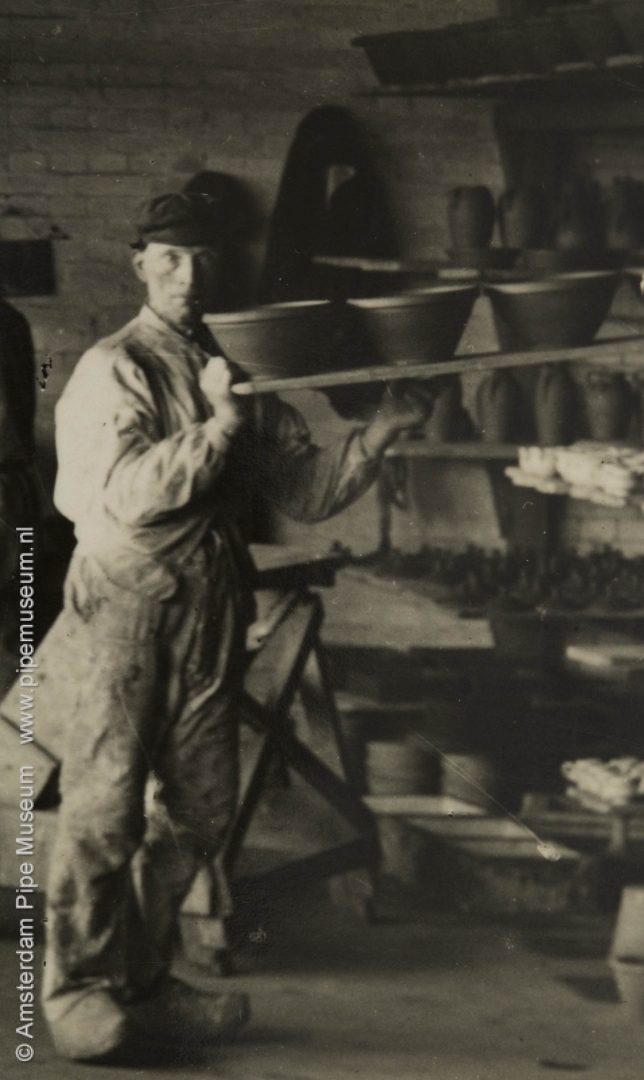
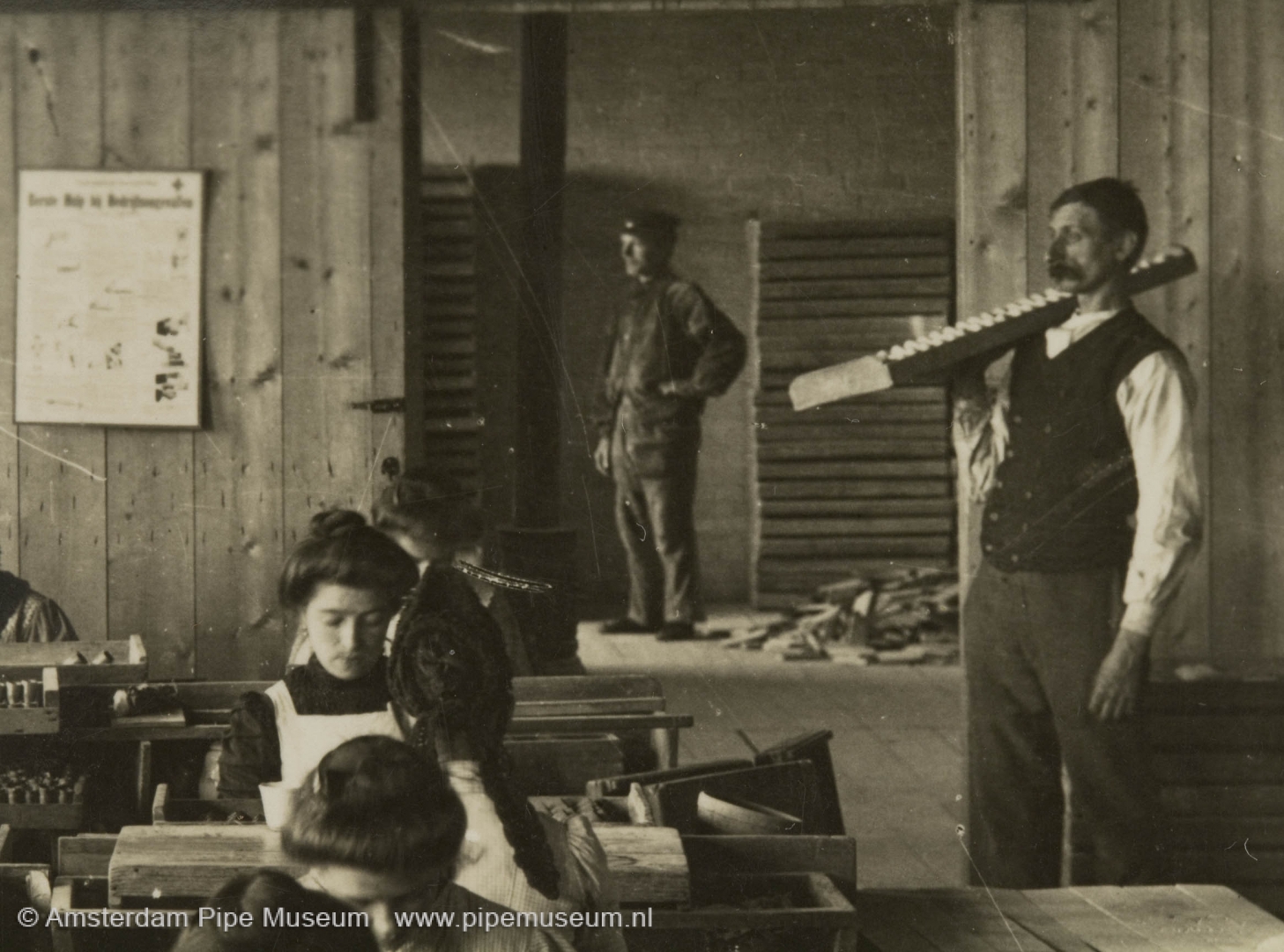
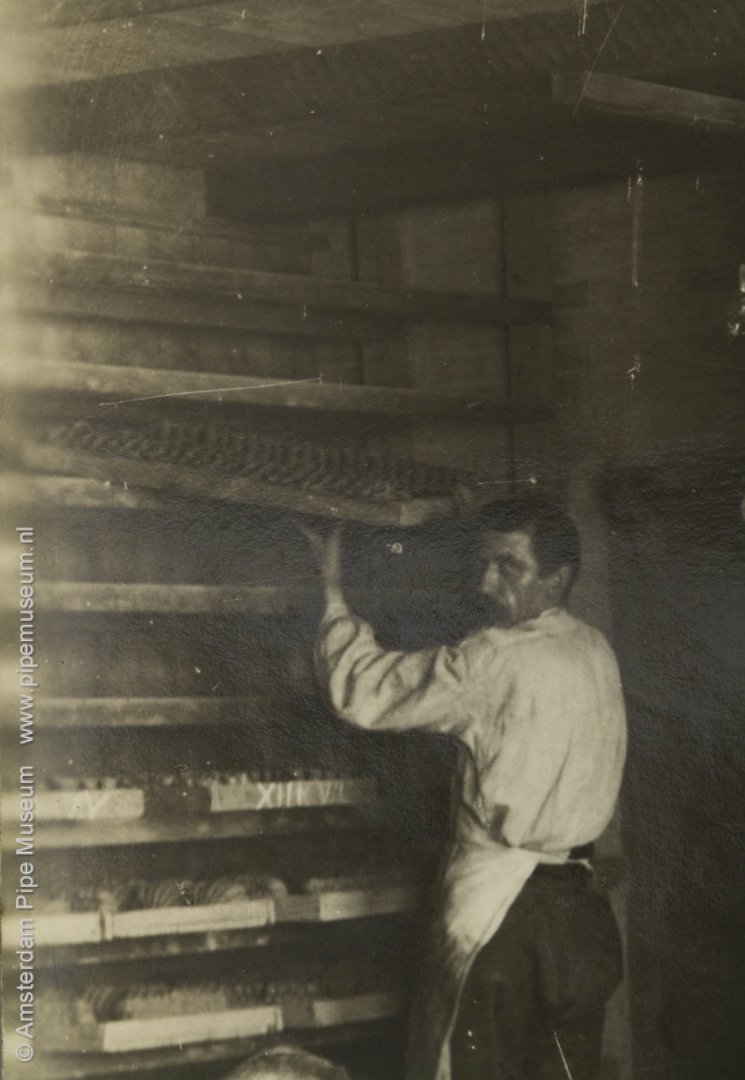
attic in a factory where the raw clay is waiting for preparation, firm P. Goedewaagen & Sons, Gouda, the Netherlands, 1908
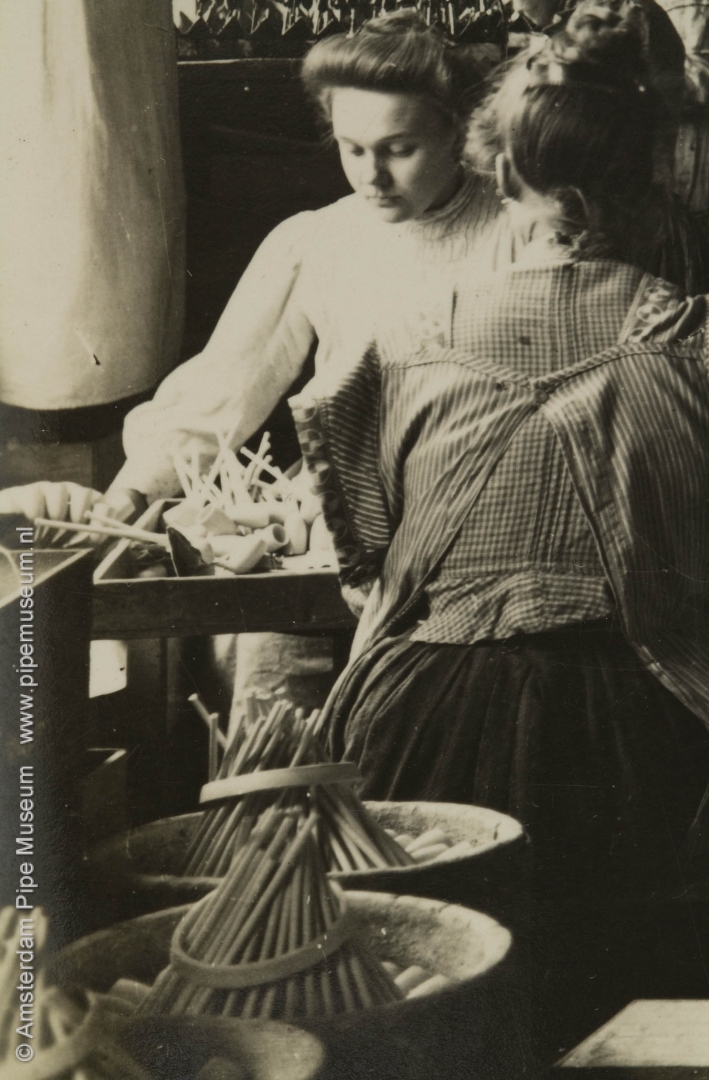
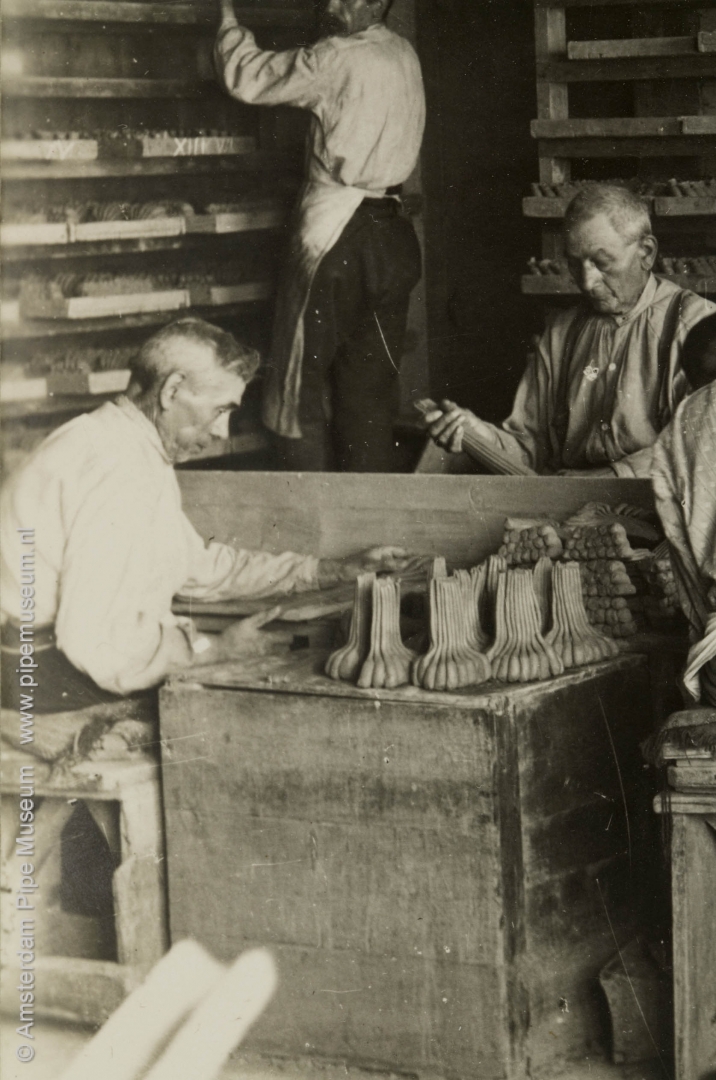
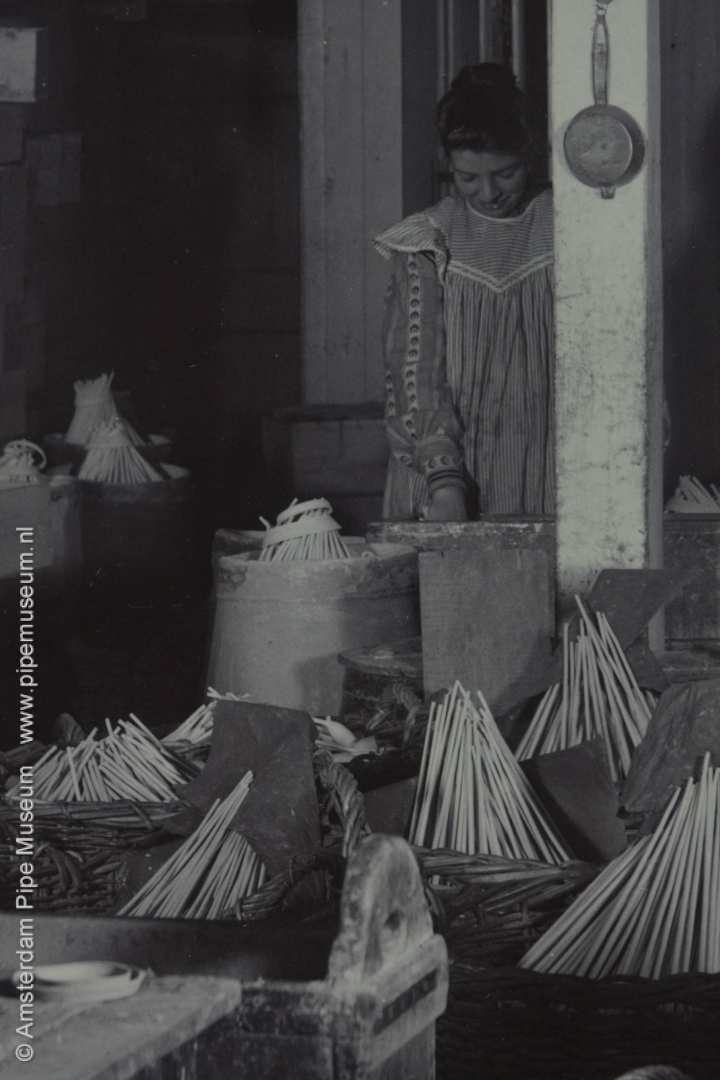
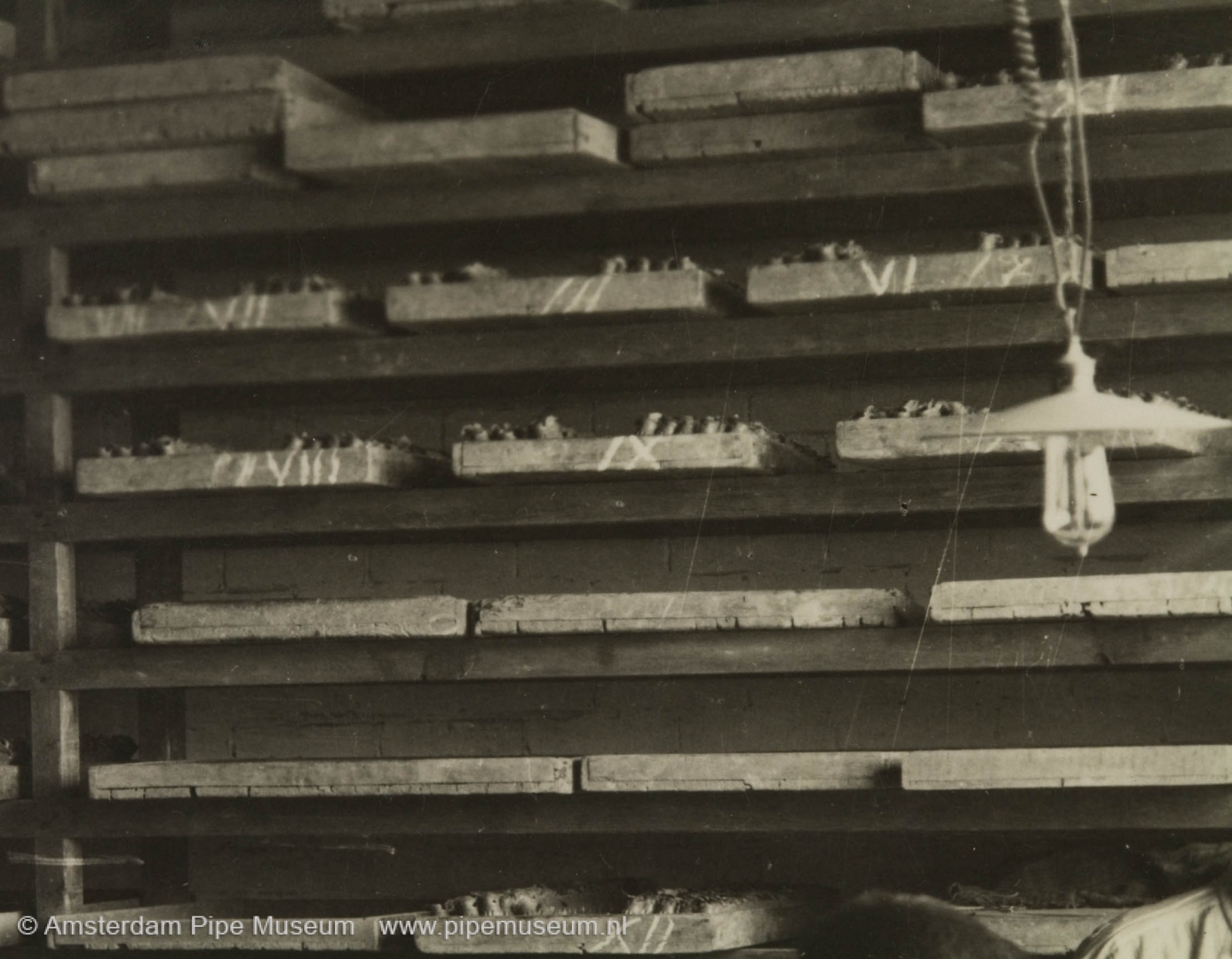
bunches of pre shaped pipes waiting for the actual moulding process, firm P.J. van der Want Azn, Gouda, the Netherlands, photograph by Arno Hammacher, 1963
the so-called rol, a massive piece of clay in the shape of a pipe, Royal Goedewaagen, Gouda, 1960-1965
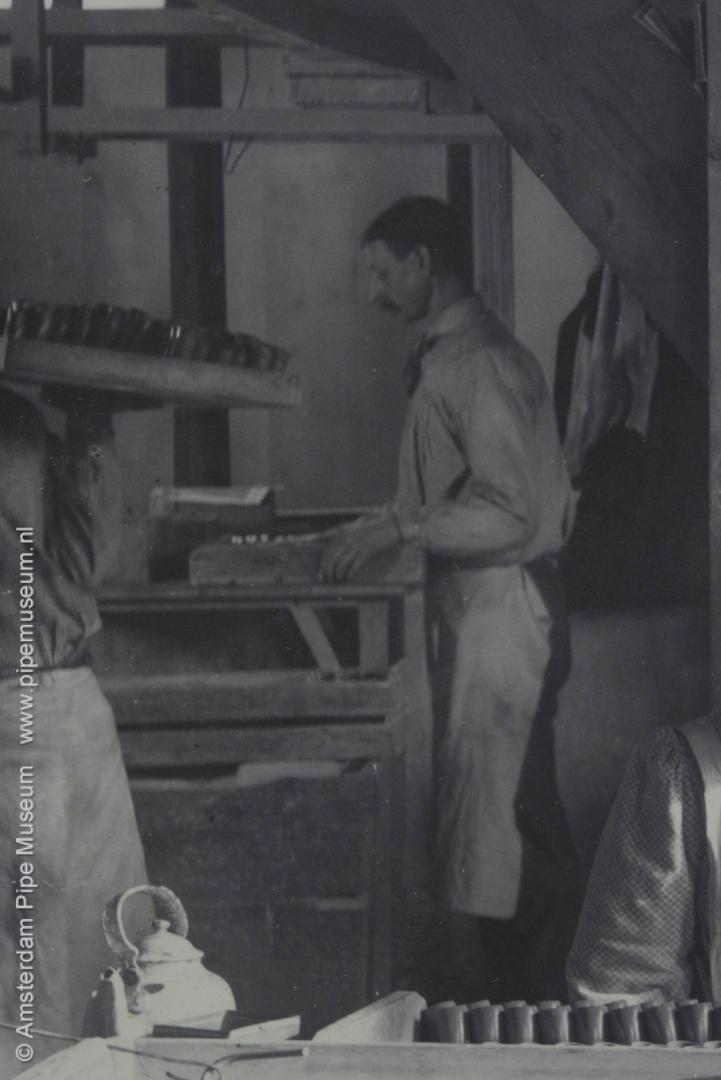
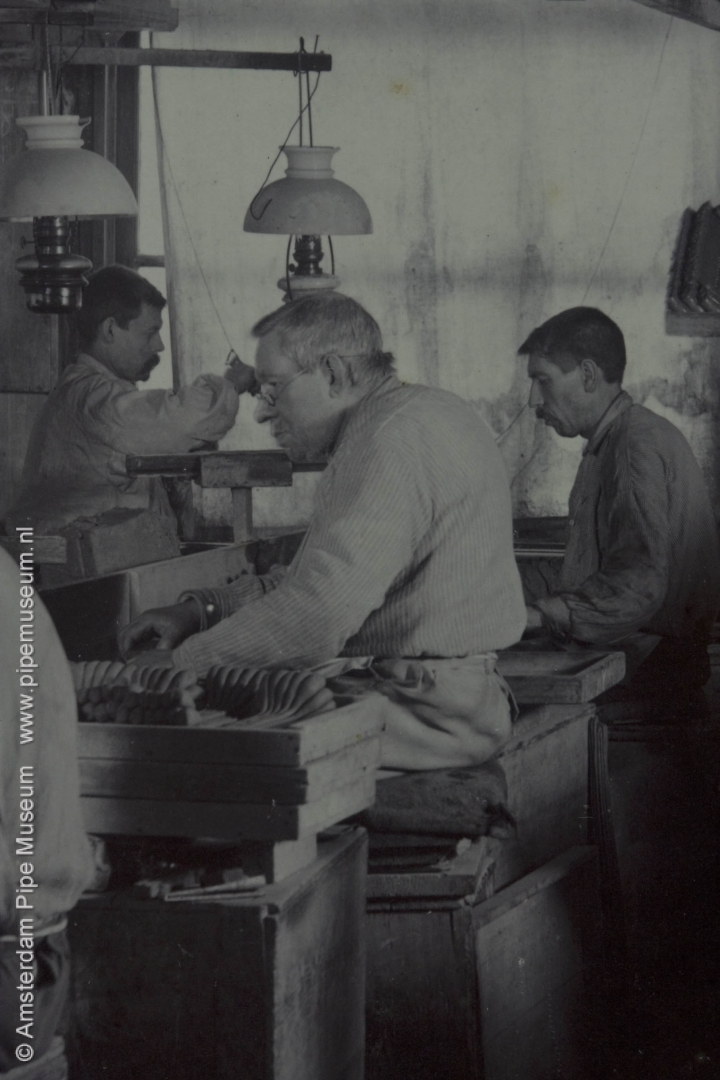
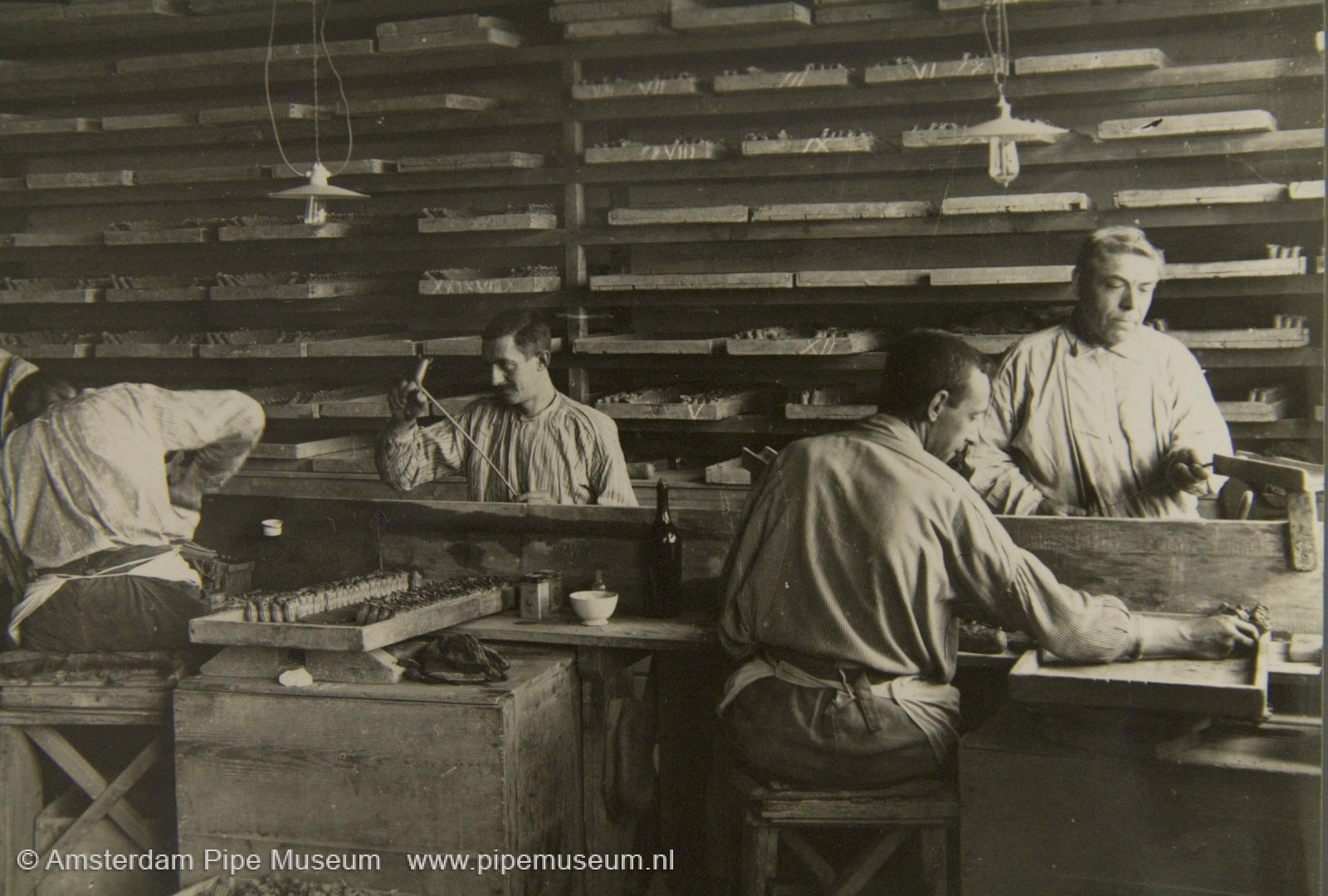
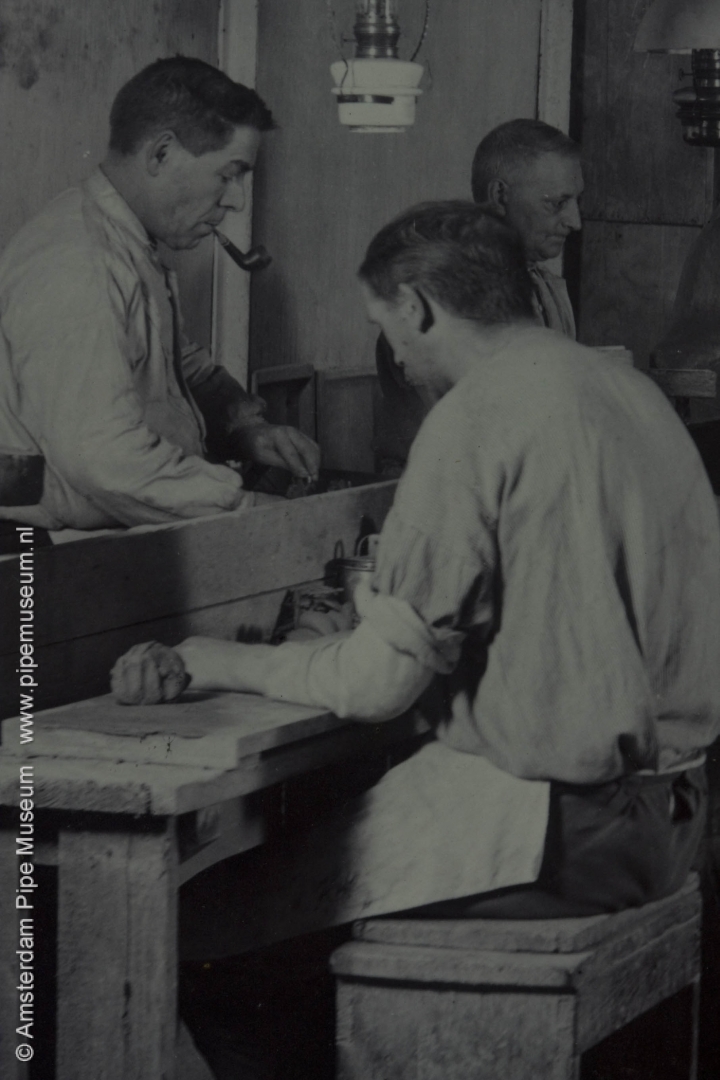
the so-called mannenwinkel where men and boys shape the pipes, firm P. Goedewaagen & Sons, Gouda, 1908
the vice with a brass mould on the top, Westerwald, Germany, 1900-1920
the kaster sitting behind his vice, Royal Goedewaagen, Gouda, the Netherlands, 1931
a brass press mould with a stopper and a wire, firm P. Goedewaagen & Sons, Gouda, 1870-1890
press mould for a typical Gouda bowl with on both sides an oval in which a man and woman pipe maker, firm P. Goedewaagen & Zoon, Gouda, the Netherlands, 1880-1890 press mould with engraved decoration dedicated to king William III of the Netherlands, Gouda, the Netherlands, 1874
the complete mould with commemorative inscription on the stem, Gouda, the Netherlands, 1874
press mould consisting of four parts for making the famous Jacob pipe, Félix Wingender, Chokier, Belgium, 1870-1900
press mould in three parts for a pipe with Manneken Pis, Henri Cuvellier, River Meuse region, Belgium, 1870-1880
the same Jacob press mould in closed position, Félix Wingender, Chokier, België, 1870-1900
press mould in two parts for a mignonette with a birds' claw, Belle, Serves, France, 1880-1900 press mould in three parts for a portrayal pipe of a genaral, Job Clerc, Saint-Quentin-la-Poterie, France, 1900-1920
the bowl in this pipe mould shows a zouave in full, Gisclon, Lille, France, 1860-1880
press mopuld in iron showing the bust of king George IV, Manchester, England, 1905-1915 pipe mould in two parts for a figural cigar holder, Duméril Leurs & Cie, Saint-Omer, France, 1860-1880
reamers to shape the rough pipe mould so that it becomes perfectly smooth, firm P. van der Want Gzn., Gouda, the Netherlands, 1800-1880
a series of mould makers tools for keeping the metal moulds in good condition, firm A. Debevere, Kortrijk, Belgium, 1860-1920
the schenkertje with a hook for the stem and a knife in the handle to cut the stems to length, firm P.J. van der Want Azn., Gouda, 1880-1920
the stamps to place the heel mark on the pipe, firm P. Goedewaagen & Sons, Gouda, 1880-1900
the disks to make the bowl opening round on a string with an example of the pipe, firm P. Goedewaagen & Sons, Gouda, the Netherlands1880-1900
knife to remove the crown of the moulded pipe, the pointed handle serves to smooth the bowlopening, Westerwald, Germany, 1900-1940
the smoeiijzers for smoothing the pipes, firm P. Goedewaagen & Sons, Gouda, 1880-1920
a woman trimming the pipes, firm P. Goedewaagen & Sons, Gouda, 1890
a pair of agate tools for quicker polishing of the pipes, firm A. Debevere, Kortrijk, Belgium, 1880-1920
the woman finishing the moulded clay pipes, Royal Goedewaagen, Gouda, 1931
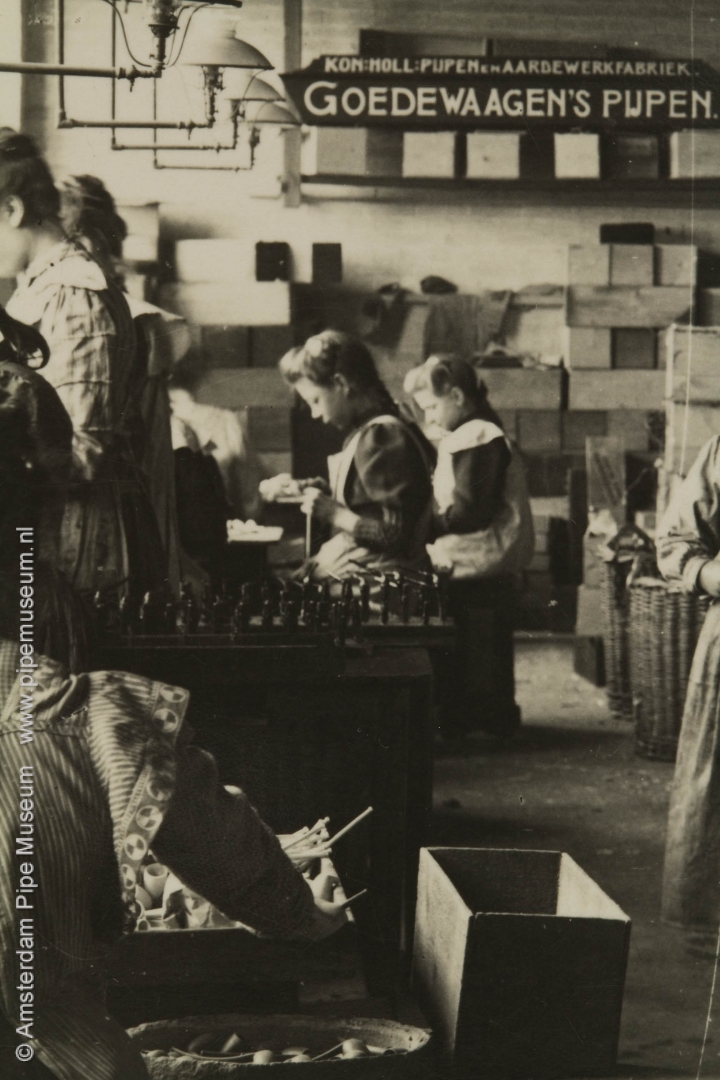
the workshop for the finishing of the pipes, firm P. Goedewaagen & Sons, Gouda, 1908
a wooden tray for stoving the long stemmed clay pipes, firm A. Debevere, Kortrijk, Belgium, 1900-1930
wooden block to bent the finished clay pipe, firm P. Goedewaagen & Zoon, Gouda, 1900-1920
the support for long pipes placed in the sagger when the pipes are backed, firm Van der Want, Gouda, the Netherlands, 1800-1850
in a potters' kiln a saggar with long pipes is lifted, Royal Goedewaagen, Gouda, 1931
the filling of the saggars with long stemmed pipes, Royal Goedewaagen, Gouda, 1931
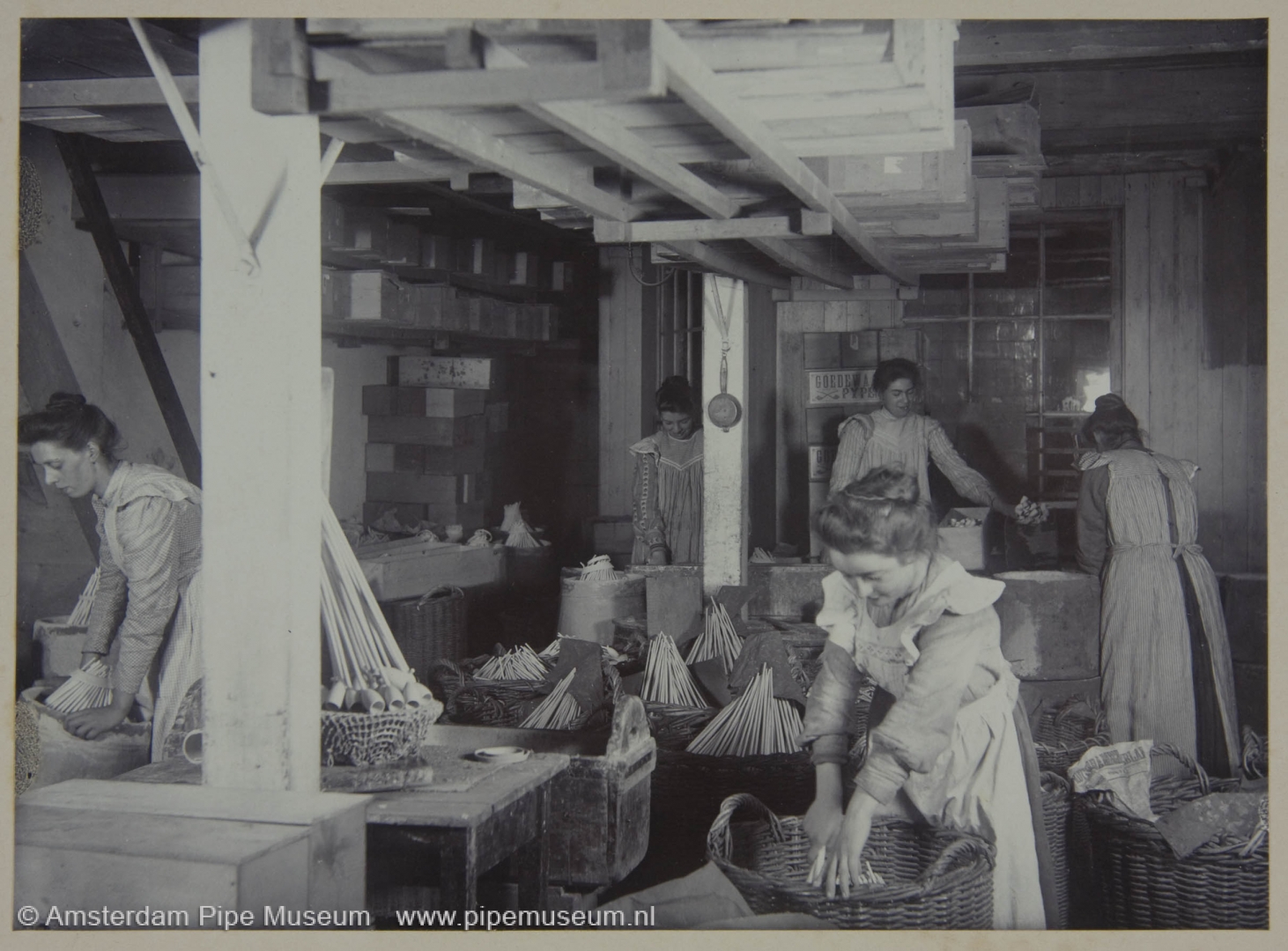
after the backing the pipes are sorted on quality and are packed, Royal Goedewaagen, Gouda, 1931
stamp for the packeage of pipes with the inscription Kabalen which is a large bowled pipe, Gouda, 1800-1850 printing block for product description on the wrapper, mentioning the bowl size of the pipe with grootkoppen, firm P. van der Want Gzn, Gouda, 1880-1900 stamp with the mark WS used for the advertisement of clay pipes, Gouda, 1780-1840
side view of the above stamp carved out of the part of an old pipe mould, Gouda, 1800-1850
All objects on this page are part of collections of the museum Pijpenkabinet, Amsterdam. © copyright Pijpenkabinet